Boris Becker Ends Zverev Coaching Role as New Opportunities Arise
Alexander Zverev has finally stepped into the territory that once felt closed to him. Two Grand Slam titles in a single season, a Wimbledon final in between, and the No. 1 ranking to cap it all. For German tennis, 2026 now has a clear headline act.
Roland Garros first. The US Open later. A run that dragged him out of the “nearly man” bracket and into the company of the sport’s serial winners. For years he collected almost everything else the tour could offer, but the majors resisted him. Not anymore.
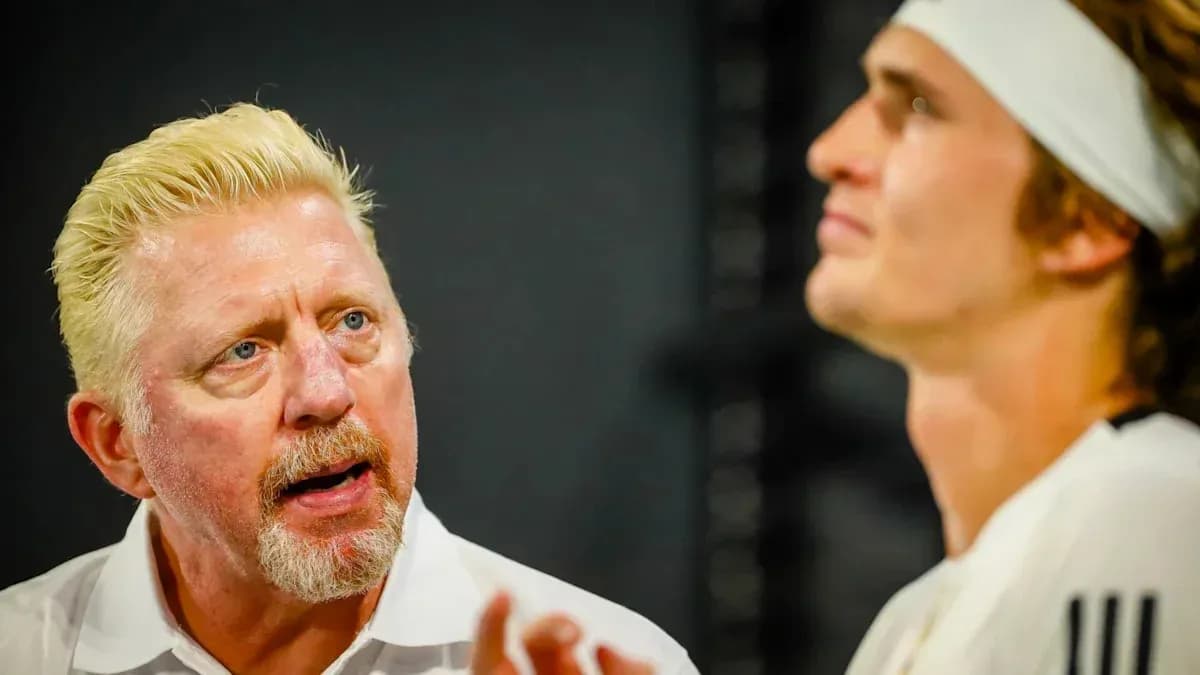
With that, the debate around his place in German tennis history sharpened. Statistically, only Boris Becker stands in front of him in the men’s game. The two have crossed paths as player and mentor, and for a time their alliance looked like the natural bridge between eras.
That bridge is now very much closed.
Becker shuts the door on Zverev reunion
Speaking to Der Spiegel, Becker was asked if he could ever imagine coaching Zverev again. His response left no room for interpretation.
"I have to be the boss in the ring. If a family member then has a different opinion, in a language I don't understand, in this case Russian, then it's unacceptable."
No diplomacy. No soft landing. Just a clear reminder that in his view, a coach must run the show, not negotiate it.
Becker described how deeply involved he had been during their time together.
"I was in his box at many matches, I was on the practice court, and I actively supported him."
The partnership, as he framed it, was never smooth. It rarely is when a generational champion tries to guide a current star still forging his own identity.
"We've had our ups and downs. I'm 30 years older than him; I have children his age. You have to tell these young people what they don't like to hear sometimes."
That line cuts to the heart of their dynamic. Becker sees himself as the blunt truth-teller, the voice that pushes, irritates, and ultimately sharpens. He knows it can sting. He also knows it can fuel.
"That might motivate them even more; they think, 'What's he talking about? I'll show that old guy.' That's okay. The main thing is that he wins. And he did this year."
The result is undeniable. Zverev finally conquered Paris, then New York, and reached the Wimbledon final in between. The world No. 1 ranking followed, even if some critics question the “validity” of his rise in an era shaped by shifting schedules and absences. The trophies, though, sit firmly on his side of the argument.
A legend back on the market
Becker may be done with Zverev, but he is not done with coaching.
"There have been several inquiries; of course I won't mention any names! Let's see what happens next year."
That tease alone will perk up ears across the ATP Tour. A six-time Grand Slam champion, a former world No. 1, and a proven motivator hinting at a return is not a minor subplot. For ambitious players searching for an edge, the opportunity to bring Becker into their corner is a serious proposition.
His praise for Zverev after that first Roland Garros title earlier this year was genuine and fulsome, yet the undertone remains: respect, but not perfect harmony. The student has climbed the mountain. The old master is ready to pick his next project.
Zverev now carries German tennis on his shoulders. Becker, watching from just off court, sounds ready to shape someone else’s climb.