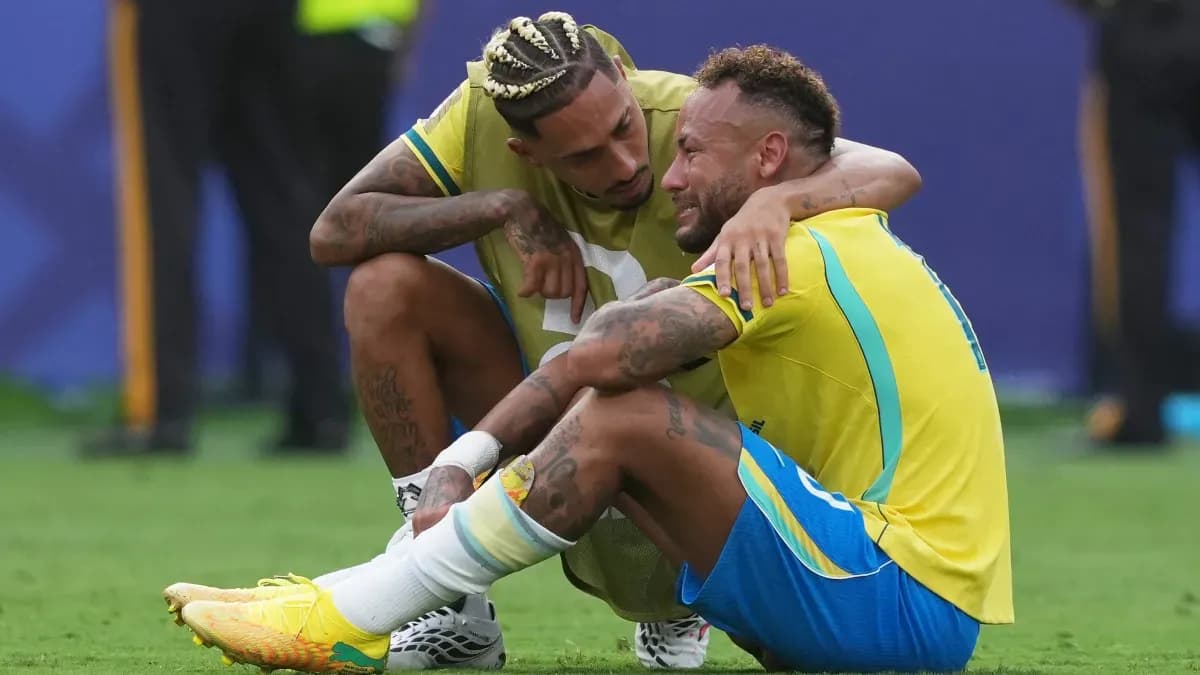
Why Brazil Fell Short at the 2026 World Cup: Ancelotti’s Side Exits Early Against Norway
Brazil’s fans have faced repeated disappointments over the last twenty years, and their early elimination in the Round of 16 at the 2026 World Cup feels like another chapter in that saga. A 2-1 loss to Norway, led by Erling Haaland, at MetLife Stadium marked the end of Carlo Ancelotti’s hopes for this tournament.
This marks the fifth time since Brazil's last World Cup win in 2002 that they have failed to reach the semifinals. Their sole semifinal appearance during this period ended in a crushing defeat against Germany on home turf.
What Went Wrong for Brazil?
The main issue throughout the tournament was Brazil’s inability to finish scoring opportunities. Football can be cruel that way. They underperformed expected goals (xG) in four out of five matches. In total, they scored 10 goals from 12.02 xG, but removing their dominant game against Haiti—which saw four goals on just 1.75 xG—reveals a harsher reality: six goals from 10.27 xG in other matches.
In the knockout stage versus Norway, Bruno Guimaraes had a penalty saved, and Endrick missed a critical one-on-one chance with only the goalkeeper to beat. These moments defined the match. Brazil’s opener against Morocco also exposed issues, with Igor Thiago failing to capitalize on chances and being sidelined after that.
Vinicius Jr. was one of the few bright spots upfront, but he lacked sufficient support from teammates.
The midfield was a major weakness, forcing Ancelotti to adjust his preferred tactics. Casemiro, despite a strong club season with Manchester United, struggled to impact the World Cup games and showed signs of fatigue at age 34. He remained useful in aerial battles but became a liability elsewhere. Ancelotti substituted him twice at halftime yet continued starting him.
Lucas Paqueta also underperformed until injury ruled him out. Bruno Guimaraes carried most of the midfield burden, tasked with defending, controlling possession, resisting pressing, and creating opportunities. It was an overwhelming responsibility that hindered his effectiveness.
Brazil’s defense was supposed to be a strength, featuring Marquinhos and Gabriel, two players from Champions League finalist clubs. Instead, both faltered when it mattered most. Gabriel, especially, struggled against Haaland, who scored Norway’s opening goal in the Round of 16.
The defenders frequently dropped too deep without applying pressure, allowing opponents space and time. This pattern was clear on Haaland’s second goal, where no one challenged his shot from close range.
The absence of Raphinha and Lucas Paqueta significantly weakened Brazil’s squad depth. Losing Raphinha was particularly damaging since he provides balance as a top-class off-ball winger alongside Vinicius Jr.’s direct style. Young Bournemouth player Rayan replaced him but couldn’t match Raphinha’s influence, leading to a noticeable drop in quality.
In the match against Norway, Ancelotti was tactically outplayed by Stale Solbakken. Brazil acknowledged their midfield weaknesses and decided to cede possession, hoping Norway would struggle with the ball. Norway played patiently, waiting for chances to feed Haaland, while Brazil were eventually forced to take risks and chase the game.
"That was our plan, to keep the ball as much as we could and from the beginning we knew we would have the ball," said Solbakken after the match. "We wanted to be slow. Perhaps what we did wrong in the first half was we played two or three balls into the middle where they counter-attacked against us, that's why we made the substitutions. That's why we played in the outside zones."
The tactic backfired on Brazil, undoing their strategy to control the game. Although Ancelotti is regarded among the world’s best coaches, this match saw him outcoached decisively.