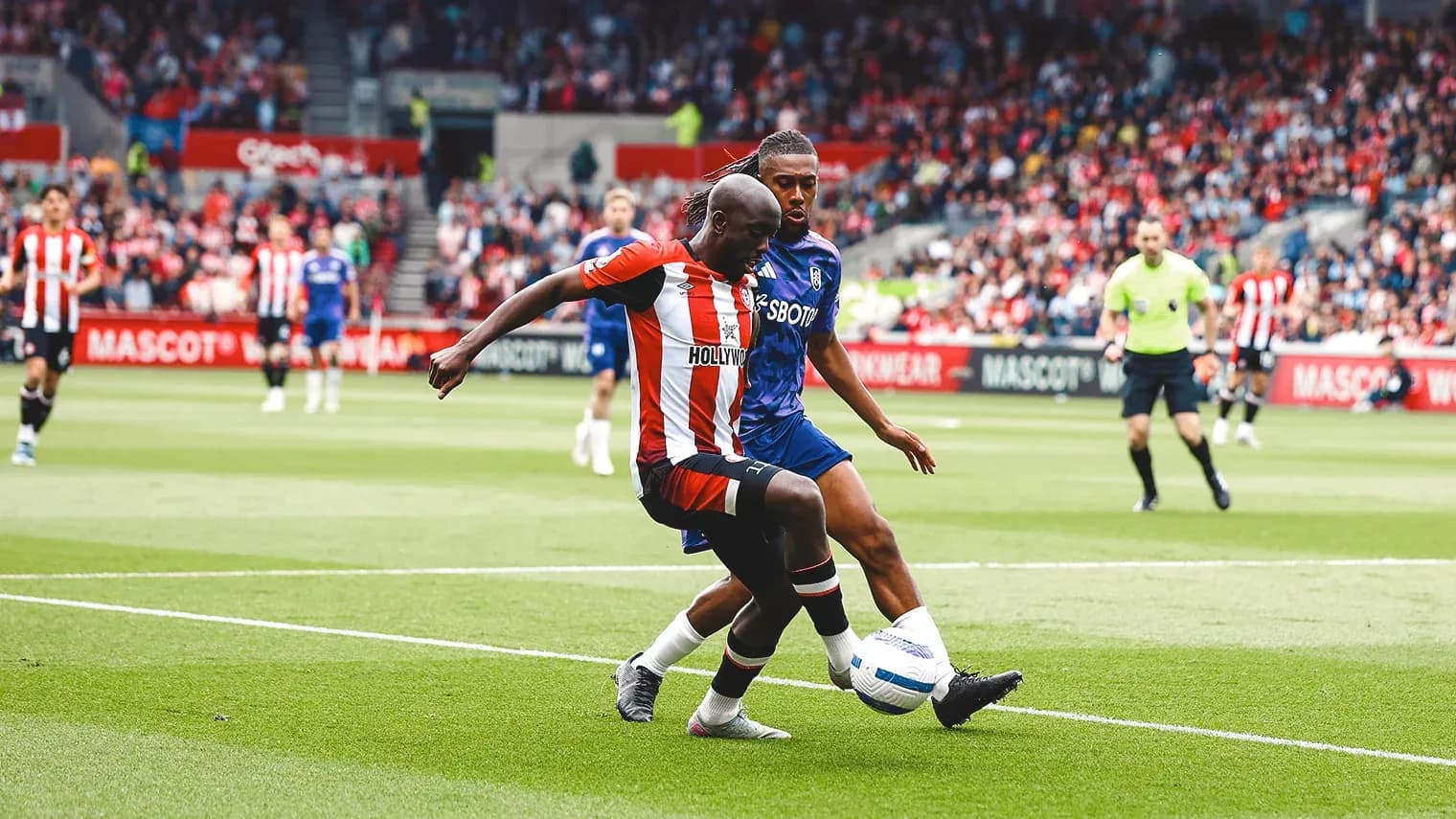
Brentford vs Fulham: Tactical Analysis of a Goalless Draw
Brentford and Fulham played out a 0–0 that was tactically rich despite the lack of goals at Brentford Community Stadium, with both sides in matching 4-2-3-1 structures but very different interpretations of risk and territory. Brentford, under Keith Andrews, leaned into verticality and penalty-box occupation, while Marco Silva’s Fulham prioritised control and circulation, edging possession but never registering a shot on target.
The only card of the match arrived early and framed Fulham’s midfield aggression. On 6', Sasa Lukic was booked for a foul, a yellow card that underlined Fulham’s intent to disrupt Brentford’s central progression at source. That caution did not trigger an immediate change in his defensive intensity, but it did subtly shape Fulham’s risk profile in duels around their own box thereafter.
The first structural change came just before the interval. On 43', Fulham made their opening substitution: Samuel Chukwueze (IN) came on for Alex Iwobi (OUT). This was a like-for-like switch in nominal position but a clear tactical recalibration. Iwobi had been part of a more possession-oriented right side, combining with Timothy Castagne and Harry Wilson. Chukwueze’s introduction tilted the right flank towards direct running and transition threat, preparing Fulham to exploit space if Brentford continued to push their full backs high.
The second wave of changes reshaped Fulham’s attacking spine on 67'. Raul Jimenez (IN) came on for Rodrigo Muniz (OUT), and Joshua King (IN) came on for Emile Smith Rowe (OUT). Muniz had been a penalty-box reference, occupying centre-backs Sepp van den Berg and Nathan Collins; Jimenez offered more back-to-goal play and wider roaming, attempting to drag Brentford’s centre-backs out of their compact line. Smith Rowe had been a connective No. 10, dropping between Lukic and Tom Cairney; King’s arrival signalled a more vertical, runner-oriented central presence, better suited to attacking second balls and counter-attacks.
Fulham’s final double substitution arrived on 81', addressing both left-back load and midfield freshness. Oscar Bobb (IN) came on for Tom Cairney (OUT), and Antonee Robinson (IN) came on for Ryan Sessegnon (OUT). Cairney had been Fulham’s main tempo-setter; replacing him with Bobb injected dribbling and line-breaking intent between Brentford’s midfield and defence. Robinson, meanwhile, provided more athletic coverage and overlapping threat than Sessegnon, crucial as Brentford continued to attack their right side through Michael Kayode and Dango Ouattara. No substitutions were recorded for Brentford; Andrews trusted his starting XI for the full 90.
Tactical Overview
Tactically, the match was defined by a clash between Brentford’s box-focused attacking and Fulham’s possession-first control. Brentford’s 4-2-3-1 behaved almost like a 2-3-5 in settled attacks. Full backs Kayode and Keane Lewis-Potter advanced high and wide, pinning Fulham’s wingers and forcing their back four to compress horizontally. Yehor Yarmolyuk and Mathias Jensen acted as a double pivot, with Jensen often stepping higher to connect with Mikkel Damsgaard between the lines. Ahead of them, Dango Ouattara and Kevin Schade attacked the half-spaces, while Igor Thiago worked as a classic No. 9, constantly occupying the central channel.
The shot profile underlines Brentford’s approach: 12 of their 13 attempts came from inside the box. They generated 4 shots on goal and 3 blocked efforts, translating to an xG of 1.36. The volume and location of their attempts reflect sustained territorial pressure rather than speculative shooting. Nine corner kicks further emphasise how often they forced Fulham deep and how effectively they kept second phases alive around the area. Yet, despite this, Brentford did not force a single recorded save from Bernd Leno; Fulham’s last-line defending and blocking, particularly from Joachim Andersen and Calvin Bassey, turned promising situations into deflections rather than clean efforts on target.
Fulham’s 4-2-3-1 was more conservative in its final-third risk but more secure in its first and second phases. With 52% possession, 435 total passes and 81% accuracy, they circulated the ball with relative comfort, especially through Lukic and Cairney. However, their control rarely translated into penetration. Fulham finished with 10 total shots, but none on goal, with 5 blocked and only 7 from inside the box. That imbalance – more blocks than shots on target – speaks to Brentford’s compact defensive shell around the D and their willingness to contest shooting lanes rather than over-commit to tackles.
Out of possession, Brentford’s Defensive Index in this match would read as structurally disciplined but goalkeeper-light. Caoimhin Kelleher did not register a single save, a product of Fulham’s inability to test him rather than any risk-free game state. Collins and van den Berg formed a stable central pairing, rarely being dragged into wide channels thanks to the work of Kayode and Lewis-Potter, who managed Fulham’s wide players and overlapping full backs without requiring constant cover. The front four, particularly Damsgaard and Schade, contributed by screening passes into Fulham’s pivot and forcing play wide, where Brentford could compress space and block crosses.
Fulham’s defensive work was more goalkeeper-dependent. Leno made 4 saves, all crucial in preserving the clean sheet against Brentford’s concentrated box presence. The defensive unit in front of him, however, deserves equal credit: 5 blocked shots, strong aerial work from Andersen and Bassey, and disciplined tracking from Castagne and Sessegnon/Robinson. The early yellow card for Lukic at 6' for a foul did not destabilise the double pivot; instead, Fulham adjusted their pressing triggers, with Cairney and later King stepping higher while Lukic held position more conservatively to avoid a second booking.
Statistical Analysis
Statistically, the match leans towards Brentford as the more dangerous side. They trailed in possession (48% to 52%) and passing volume (384 to 435), but out-produced Fulham in total shots (13 to 10), shots on goal (4 to 0), and corners (9 to 3). Their xG of 1.36 versus Fulham’s 0.74 confirms that Brentford carved out the higher-quality chances. Fouls (8 for Brentford, 13 for Fulham) and cards (0 vs 1) show Fulham had to lean more heavily on disruptive defending, particularly in midfield.
From an Overall Form perspective, Brentford’s ability to generate consistent box entries and limit Kelleher’s involvement suggests a robust home template, even if the finishing touch was missing. Fulham’s performance reads as a defensively resilient but offensively blunt away display: solid in structure, capable in possession, but with a low attacking ceiling on the day, underscored by zero shots on target despite a higher share of the ball.