Brighton Dominates Chelsea in 3–0 Victory at Amex Stadium
Brighton’s 3–0 home win over Chelsea at the Amex Stadium was a controlled, structurally coherent performance built on early momentum, midfield control and intelligent game management. In a Premier League Round 34 fixture refereed by Craig Pawson, the hosts combined a front‑foot 4‑2‑3‑1 with sharp execution in the final third, while Chelsea’s 5‑4‑1 never translated defensive numbers into defensive stability or attacking threat. The halftime scoreline of 1–0 only partially reflected Brighton’s superiority; by full time, the underlying metrics – 15 shots to 6, 9–0 shots on target, xG 2.14 to 0.37 – had caught up with the scoreboard.
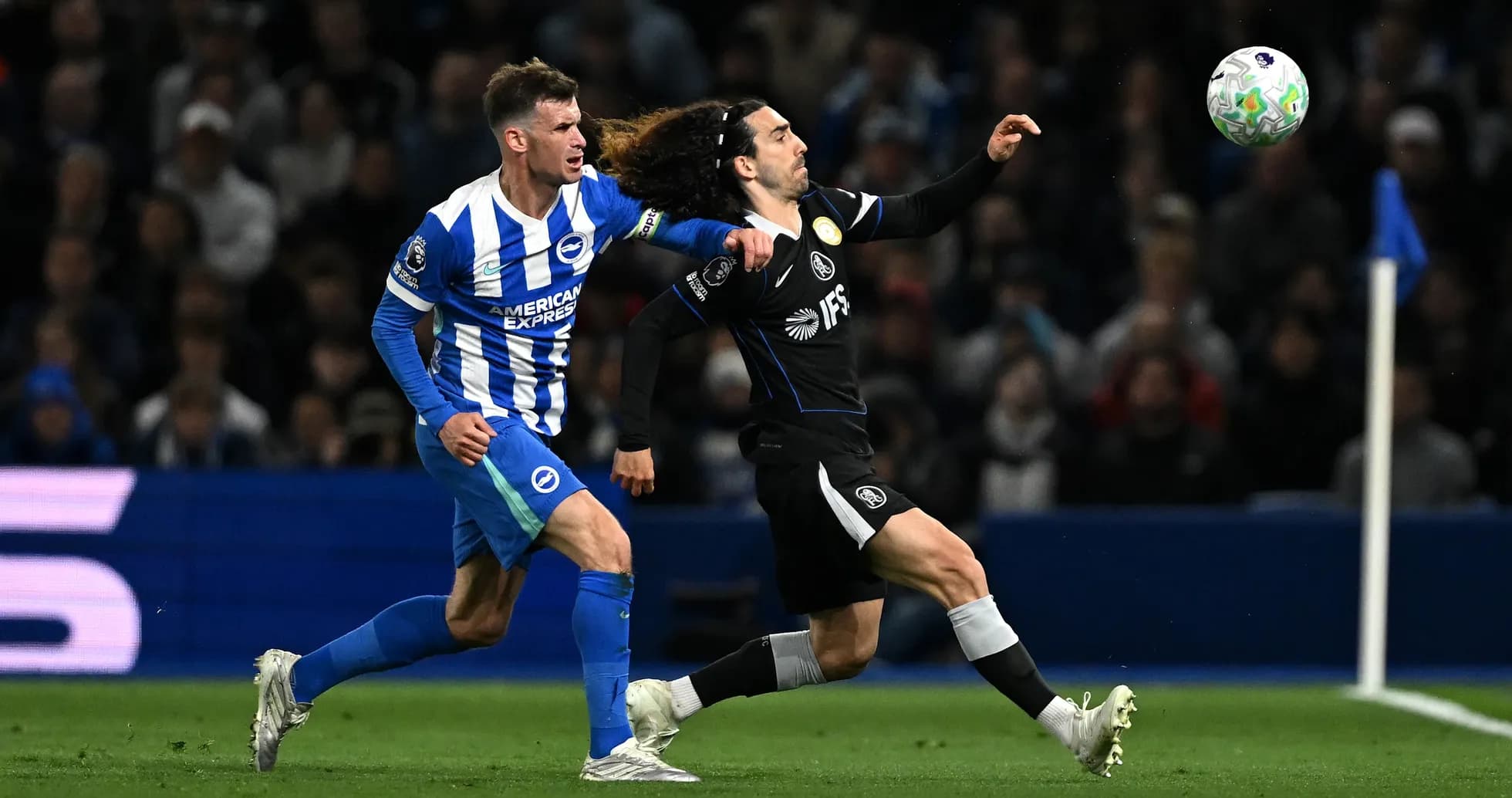
The scoring opened almost immediately. At 3', Ferdi Kadioglu, attacking from left‑back within Brighton’s 4‑2‑3‑1, struck a normal goal to make it 1–0. The move underlined Brighton’s intent to use full-backs aggressively against Chelsea’s wing-backs, pinning Marc Cucurella deep and forcing the back five to collapse towards their own box. That early strike set the tone: Brighton could now dictate possession (53%) and tempo, with Chelsea’s 5‑4‑1 pushed into a reactive, low‑threat posture.
The only first‑half card came in stoppage time. At 45+1', Wesley Fofana was booked for a foul, a key moment that encapsulated Chelsea’s growing desperation to halt Brighton’s circulation between the lines. The halftime score was 1–0 to Brighton, consistent with the early goal and a half in which Chelsea failed to register a shot on target.
Both managers moved immediately after the break. At 46', Joel Veltman (IN) came on for Mats Wieffer (OUT) for Brighton, a like‑for‑like defensive adjustment that preserved the back four’s structure while adding experience on the right side. Simultaneously, for Chelsea, Alejandro Garnacho (IN) came on for Wesley Fofana (OUT), shifting the visitors away from a pure back five towards a more aggressive shape, with Garnacho giving width and direct running.
Brighton doubled their lead at 56'. Jack Hinshelwood scored a normal goal, assisted by Georginio Rutter. The sequence highlighted Brighton’s positional play: Rutter dropped off the front line to link, drawing a centre‑back with him, while Hinshelwood, operating as an advanced midfielder, attacked the vacated channel. This 2–0 goal punished Chelsea’s transitional defending, where the midfield screen of Roméo Lavia, Moisés Caicedo and Enzo Fernández was too easily bypassed.
Two minutes later, at 58', Brighton picked up their only booking: Yankuba Minteh received a yellow card for a foul. It was a by-product of Brighton’s aggressive counter-pressing, with Minteh repeatedly asked to collapse onto Chelsea’s first pass out of defence.
Chelsea’s attempt to change the game state came in the 72'–73' window. At 72', Marc Guiu (IN) replaced Liam Delap (OUT), then at 73', Dário Essugo (IN) came on for Roméo Lavia (OUT). The double move aimed to add penalty-box presence and fresh legs in central midfield, but with Chelsea still failing to register a shot on target, the structural issues in progression – slow circulation, limited third‑man runs – remained unresolved.
Roberto De Zerbi (or Brighton’s coach, unnamed in the data) then closed the game with a series of managed substitutions. At 77', Maxim De Cuyper (IN) came on for Yankuba Minteh (OUT), a shift that effectively turned the left flank into a more secure, possession‑oriented corridor, with De Cuyper able to operate as a conservative wide player or auxiliary full‑back. At 82', Yasin Ayari (IN) replaced Kaoru Mitoma (OUT), adding fresh energy and pressing in the advanced midfield line. One minute later, at 83', Danny Welbeck (IN) came on for Georginio Rutter (OUT), preserving the central reference point but with a more direct, penalty‑box‑oriented profile.
In stoppage time, Brighton completed their rotation. At 90+2', Matt O'Riley (IN) replaced Jack Hinshelwood (OUT), adding fresh control in central areas, while Chelsea introduced Josh Acheampong (IN) for Malo Gusto (OUT), a late defensive change that had little time to influence the pattern.
The final goal arrived at 90'. Danny Welbeck scored a normal goal, assisted by Maxim De Cuyper, sealing the 3–0. The combination was tactically telling: a substitute full‑back (De Cuyper) delivering for a substitute striker (Welbeck), underlining the depth and clarity of Brighton’s structure even after multiple changes.
From a tactical standpoint, Brighton’s 4‑2‑3‑1 was defined by a stable double pivot and high full‑backs. Bart Verbruggen had no saves to make, reflecting how effectively Jan Paul van Hecke and Olivier Boscagli controlled Chelsea’s lone striker and how well the midfield screen of Pascal Groß and Carlos Baleba smothered central progression. With 532 passes at 86% accuracy, Brighton built patiently from the back, using Kadioglu and Veltman to stretch Chelsea’s wide defenders and open interior lanes for Hinshelwood and Mitoma.
Chelsea’s 5‑4‑1, by contrast, produced 475 passes at 84% accuracy but almost no penetration. The back five – Gusto, Fofana, Chalobah, Hato, Cucurella – sat deep, and with only Liam Delap as a central forward, there were few vertical options. The midfield four of Pedro Neto, Lavia, Caicedo and Enzo Fernández struggled to connect with the lone striker, resulting in just 6 total shots, 0 on target and an xG of 0.37. Robert Sánchez made 4 saves but conceded three times; with a goals prevented figure of 0, the data suggests he neither over‑ nor under‑performed relative to shot quality, and that Chelsea’s main problem was the volume and clarity of Brighton’s chances rather than goalkeeping errors.
Disciplinary control was relatively clean: 15 fouls for Brighton and 6 for Chelsea, with one yellow card each – Wesley Fofana (45+1', foul) and Yankuba Minteh (58', foul). Brighton’s Overall Form on the night, measured by xG, shot dominance and chance creation, far outstripped Chelsea’s. Defensively, Brighton’s index was strong: 0 saves required, 0 shots on target conceded, and Chelsea’s expected goals held to 0.37. Chelsea’s Defensive Index, meanwhile, was weak; conceding 15 shots, 9 on target and 3 goals from 2.14 xG indicates that their back five and midfield screen were consistently stretched and unable to protect central areas or second phases.
In summary, the 3–0 scoreline at the Amex accurately reflected both the tactical structure and the statistical reality: Brighton were superior in possession, territory, chance quality and game management, while Chelsea’s shape changes never solved their fundamental issues in progression or box protection.