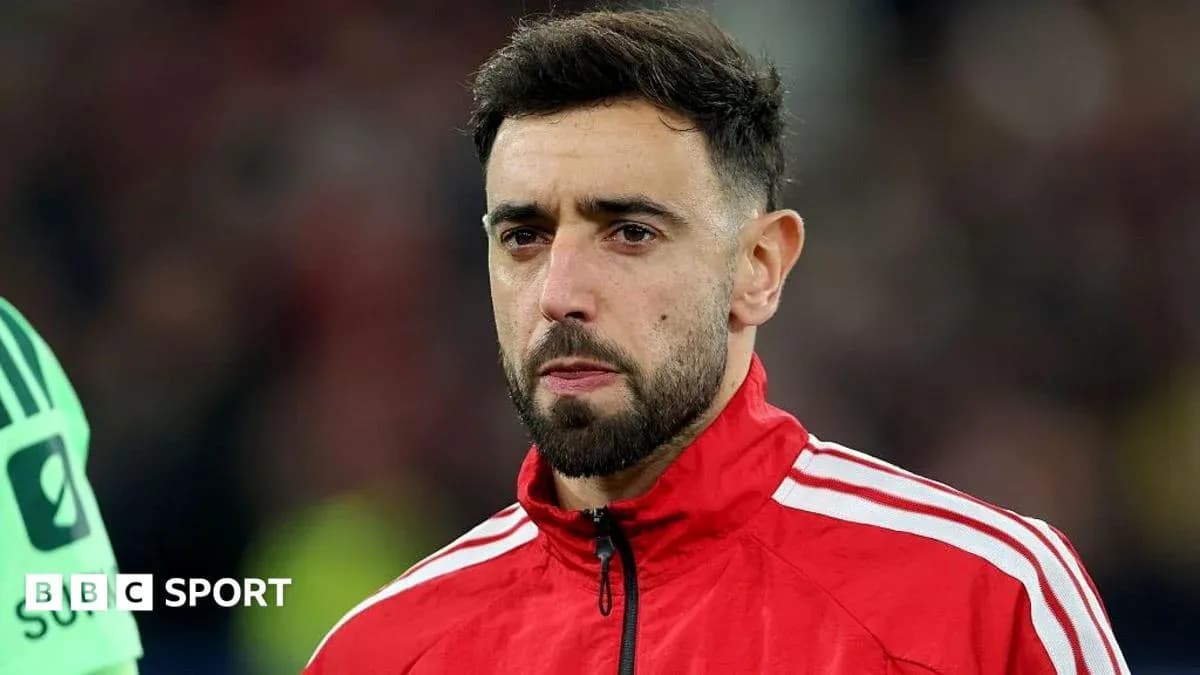
Bruno Fernandes Rejects Second Manchester United Contract Offer
Bruno Fernandes has rejected a second contract offer from Manchester United, sharpening the focus on a captain whose future now sits uncomfortably alongside a club in flux.
The 32-year-old midfielder is out of contract at the end of the season, though United retain the option to trigger a 12‑month extension that would keep him at Old Trafford until 2028. For months, the club have tried to avoid relying on that safety net, opening talks with his representatives and putting two proposals on the table.
Both have been knocked back.
Sources have indicated to BBC Sport that Fernandes has turned down United’s latest offer, and there is no sense of an agreement being close. The timing is hardly ideal. The club have just sacked Michael Carrick after their worst start to a domestic campaign in 40 years, and are preparing to hand the reins to USA coach Mauricio Pochettino, who is expected to take charge for the first time when United go to Anfield to face Liverpool on 22 November.
United hope the Argentine’s arrival can shift the mood – and perhaps the negotiations.
Clock ticking on Fernandes deal
The situation is simple on paper and far more complicated in reality.
If no new long-term deal is struck, United will almost certainly activate the extra year in Fernandes’ contract before 1 January. They can hardly afford to let their captain drift towards free agency. Once his deal enters its final six months, he would be free to sign a pre-contract agreement with foreign clubs.
That deadline is the first real pressure point. The next belongs to Fernandes himself.
He is in the stage of his career where every season matters. The Portugal international wants to compete for the biggest trophies, not just talk about them. He has already watched United stumble again after another campaign that promised a platform and delivered very little. Now he waits to see what Pochettino can build – and how quickly.
Eighteen months ago, the Saudi Pro League came calling, and there was serious interest in prising him away. The prevailing sense then was that Fernandes preferred to remain in Europe. That logic still holds. The question is whether Europe’s elite competitions will consistently run through Old Trafford in the years ahead.
Mutual doubts beneath the headlines
On the surface, this is familiar contract brinkmanship. First offer rejected. Second offer rejected. Negotiations continue. In football, that is often just the dance.
Underneath, both sides have reasons to hesitate.
From Fernandes’ perspective, this could be the last major contract of his peak years. Locking himself into a long, lucrative deal only makes sense if he believes United are genuinely ready to return to the top. The club’s recent upheaval, and the wait for Pochettino to arrive from his current role with the United States, hardly screams stability.
United have their own calculations. Last season, Fernandes was extraordinary, breaking the Premier League assists record and sweeping the major player of the year awards. This season, his form has dipped sharply from those heights. The club cannot ignore that drop-off when they look at the numbers on a long-term deal.
Liverpool’s experience with Mohamed Salah’s last contract hangs over the conversation. They committed huge money to keep their star forward and later found the deal a heavy financial burden. United will not want to repeat that mistake by tying themselves to an extended, high-cost agreement with a player whose output has become less reliable.
Old links, new leverage
There is an intriguing twist to Pochettino’s potential influence.
Back in 2019, when he was at Tottenham, Pochettino came close to signing Fernandes from Sporting. The move collapsed, and six months later United stepped in to bring the midfielder to Old Trafford instead. That near-miss now gives United a sliver of hope: a manager who once tried to build around Fernandes might yet convince him to stay and lead a new project.
For that to matter, Pochettino must quickly show that his United will be very different from the version that cost Carrick his job.
Fernandes has started this season with six goals in 13 matches – respectable, but not the blistering creative form that defined his previous campaign. The captaincy, the contract talks, the team’s struggles: all of it sits on his shoulders. He remains central to United’s identity, but the club are no longer prepared to hand out landmark deals on reputation alone.
The stand-off is not yet a crisis. The option year gives United breathing space, and negotiations rarely move in straight lines. But every rejected offer nudges the story towards a moment of truth.
Is Bruno Fernandes the player United want to build the next era around – and is this version of Manchester United a project he still believes is worth the rest of his prime?