Wales' Strategy to Contain Erling Haaland: A Tactical Breakdown
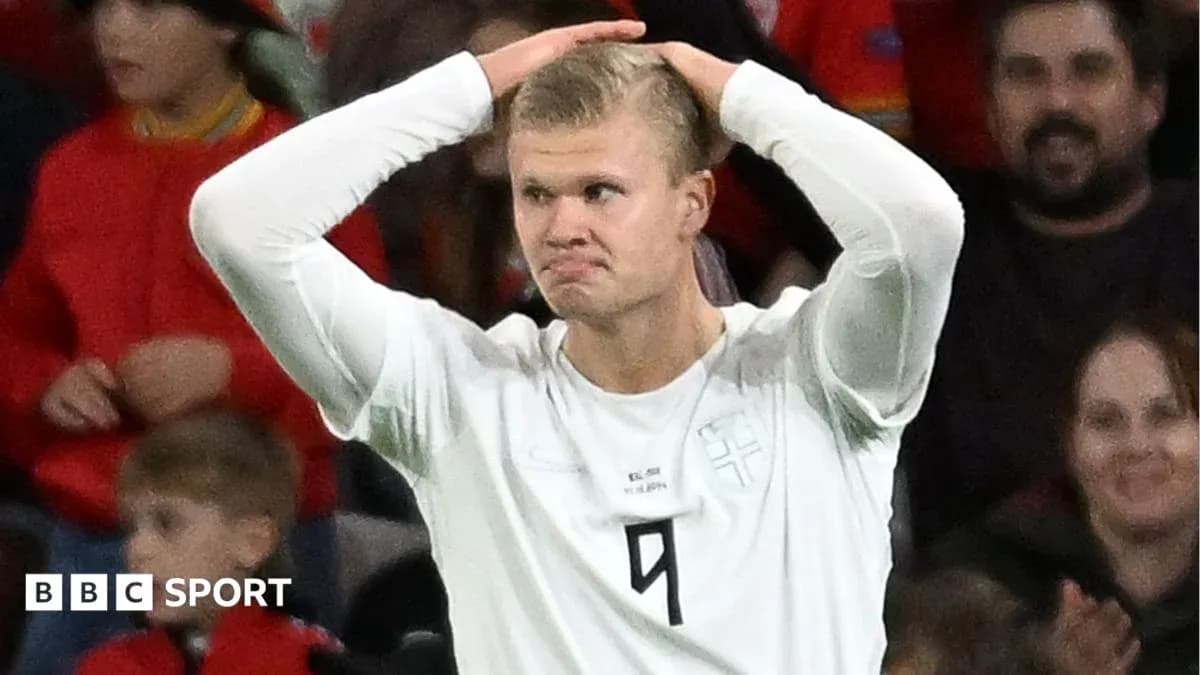
It is the riddle that haunts defenders across Europe: how on earth do you stop Erling Haaland?
On Saturday in Oslo, that question stops being theory for Wales and becomes a 90–minute ordeal. Again.
Haaland’s record for Norway is absurd: 65 goals in 59 games. Add in the avalanche he has produced for Manchester City and his earlier clubs, and you are dealing with a forward who has turned scoring into routine. Most teams don’t so much defend him as endure him.
Wales, though, have done more than that. A month ago in Cardiff, they beat Norway 2-1 and kept Haaland quiet. Not invisible, never that, but contained. For Craig Bellamy, that night was more than three points. It was proof that a plan exists.
“He’s different to what you would normally have to deal with,” says the Wales head coach. “He has the profile of everything you want in a player, and that’s quite rare. It’s a collective responsibility, not just an individual one.”
That last line is the key. Bellamy didn’t go looking for a hero. He built a system.
High Line, High Risk
Most teams, when they see Haaland, take a step back. Then another. They sink into their own penalty area and hope the storm passes.
Sit deep and you close the space behind, but you give him time to move, to wrestle, to spin, to wait for the one cross he needs. You also give his friends time – and Norway’s friends are good ones. Martin Odegaard, the captain and conductor. Oscar Bobb. Andreas Schjelderup. Give them the ball, and Haaland soon follows.
Others have tried to fight fire with muscle. Go tight. Go physical. Lean on the 6ft 5in frame and see if he blinks. Usually, he doesn’t. He just rolls you and runs away.
Bellamy went a different way. He pushed his team up the pitch and told them to live with the risk.
“Drive up and don’t let him dictate,” he explains. “It’s easier said than done because then you could turn around and say to me, ‘Why are you playing a high line against Haaland?’ Trust me you don’t want to, but you can’t have him dictating the game.”
So Wales pressed. Hard. Not just on Haaland, but on the players who feed him. The idea was simple: make the world’s deadliest penalty-box forward work in areas he doesn’t want to, and starve him where he does.
A dangerous game, but one they executed.
“Putting pressure on the ball is always important for us, and I thought we did that really well that night,” Bellamy says.
Starved of Service
The numbers tell the story. Haaland had only 24 touches in Cardiff. That alone is not a shock; he often drifts through games in short bursts of involvement. The real headline is what he did with them.
Two shots. One on target. A routine header straight at Danny Ward.
No late surge, no trademark gallop through the middle, no brutal one–touch finish. Wales didn’t just defend their box; they cut off the oxygen.
Prevention, not cure.
That is no small achievement when the man pulling the strings is Odegaard, the playmaker who led Arsenal to the Premier League title last season. The Norway captain sees passes that others don’t even look for. Deny him, and you deny Haaland.
So the job was shared. It wasn’t only the centre-backs wrestling with the striker. Ethan Ampadu and the midfield unit spent the night managing distances, angles, and risk.
“You have to consider the distance between Ethan and Haaland,” Bellamy explains. “You can’t open up the middle too much because balls are going to come into his feet. You have to get your distances right, be side-on and make sure you’re aware of his runs.”
Haaland doesn’t just wait for the ball. He runs. Repeatedly. Relentlessly. Bellamy’s plan demanded that Wales run just as hard without it – and then make him chase when they had it.
“It’s also important how we use the ball,” he says. “If we use it well, develop our possession and move up the pitch, he has to work. He has to run and get back.”
From Front to Back
Under Bellamy, Wales have shifted their identity. Since he took charge in the summer of 2024, their average share of possession has soared. This Nations League group, with Norway, Portugal and Denmark, has checked that progress a little, but the intent is clear: Wales want the ball.
In Cardiff, that ambition became a defensive weapon.
Dan James, who scored the opening goal in that 2-1 win, saw it from the front line.
“Our distances [between players] were really good,” he says. “Odegaard is a unique player. He’ll get the ball anywhere so it’s hard as a defence. They want you to jump out and I think they showed that with their goal with the ball for Oscar Bobb and he’s finished it well.
“We showed our resilience and it was about limiting their chances and I thought we did that.”
Norway still carved moments. Odegaard still threaded passes. But Wales held their nerve.
“Odegaard played some great balls in behind but, to the very last minute, we defended really well, not just the defenders but the whole unit, from the forwards back,” James adds. “I thought we defended really well on the day, and we’ve got to be great again on Saturday.”
That last line is the reality check. Once is impressive. Twice is a standard.
New Night, New Problems
Oslo will be different. Norway at home, wounded by that defeat, with Haaland desperate to reset the narrative. Wales must repeat the trick without exactly the same tools.
Ben Cabango, excellent in Cardiff and rewarded with Haaland’s shirt, is suspended. Swansea City lose a centre-back to the stands; Wales lose one of the men who fronted up to the most feared striker in the game.
The boost comes with Joe Rodon’s return. The Leeds United defender missed the win in Cardiff but is fit again and expected to slot back into the heart of the defence.
“Ben Cabango and Ben Davies have both done really well against him [Haaland], but the work has to be done in front of them. If it isn’t, you expose the defenders,” Bellamy says.
He knows the truth that many ignore. You don’t beat Haaland one–on–one. You survive him as a team.
“Against this type of player, it doesn’t matter how good an individual defender is,” Bellamy adds. “We’ve seen over the last four or five years how difficult it becomes for one player to cope with what Haaland brings.”
So Wales will go “all out” for victory, as their manager has promised. Not by throwing caution away, but by attacking the problem at its source. Press the pass, not the shot. Make Norway defend. Force Haaland to turn and run towards his own goal.
They’ve done it once. The blueprint exists, the evidence is fresh, and the task is brutally simple.
Can they make the unstoppable look ordinary again, in his own backyard, when it matters even more?