Bukayo Saka Injury Worries Arsenal Ahead of Everton Match
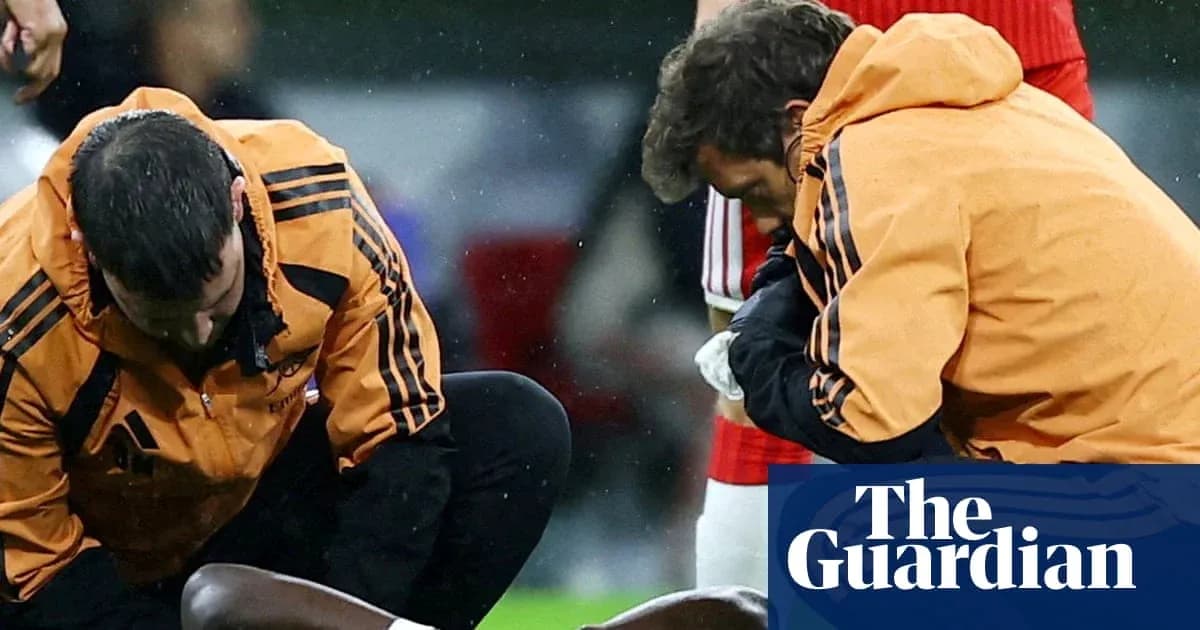
Mikel Arteta watched Bukayo Saka limp off against Bayern Munich and, for the first time in a long while, allowed the worry to show.
The winger, so often Arsenal’s iron man, now feels like a fragile cornerstone. The club’s medical staff will get a clearer picture after an MRI scan on his thigh, but the early signs are unsettling. Arteta admitted Saka had “quite a lot of fluid in the area”, making it hard to judge the full damage. Inside the club, there is concern it could be a grade-two tear – an injury that can cost a player up to six weeks of the season.
What is certain is that Saka will not face Everton on Saturday. For Arsenal, that alone is a jolt. For years, the question with Saka was never whether he would play. It was where, and how decisively.
A body feeling the strain
The numbers tell a different story now. Since September 2023, Saka has suffered 11 separate injuries: hamstring, hip, achilles, another hamstring, then more muscle issues layered on top of the fatigue of carrying a team’s attacking burden. This is no longer a one-off setback. It’s a pattern.
Arteta knows it. Asked if Saka is still robust enough to start every match, the manager didn’t give the usual automatic “yes”.
“It’s certainly been different in the last year or so,” he said, pointing directly at the modern calendar. The games pile up. The intensity rises. The gaps between fixtures shrink. International duty squeezes the margins even further. Players like Saka, central to everything their club and country do, live in a permanent red zone.
Arsenal tried to act. Against Lille in the Champions League last week, Saka did not start. Not a tactical surprise, but a medical precaution. Arteta spoke openly about the brutal schedule: three games in less than six days, all high-stakes, all played at full tilt.
You can see the manager’s dilemma. Every match feels must-win. Every minute without his best wide forward on the pitch feels like a risk. And yet, every minute with him out there seems to be increasing another kind of risk.
“We are preparing the players for those scenarios and we do the best that we possibly can,” Arteta said. The subtext was clear: even the best planning can’t always outrun the demands of the modern game.
From ever-present to overburdened
Saka’s durability used to be his quiet superpower. Between 2021 and 2024 he missed only three Premier League games. Just three, across three seasons. He set a club record with 83 consecutive top-flight appearances, a run that spoke not only to his fitness but to his importance.
He is already closing in on 300 games for Arsenal, the club he joined at the age of seven. In February, the hierarchy underlined that status with a lucrative new contract, one of the biggest in Arsenal’s history. Face of the team. Face of the project. Face of the future.
The risk now is that the past three years catch up with him all at once.
Burnout, naturally, came up. Arteta pushed back on that specific word, but not on the underlying issue.
“I don’t have that feeling at all,” he said, but then immediately shifted to what he called “the right ecosystem” around Saka – code for load management, smarter rotation, and a more protective environment for a player who has been asked to carry a lot, very young, for a very long time.
“Whenever he comes back,” Arteta added, “we really need to understand how we are going to manage his load, what he is capable of to sustain having an impact in the team.”
The message is unmistakable: the days of Saka simply playing every game because he always has may be over.
Door opens for Dowman
Saka’s absence leaves a hole on the right flank, but it also opens a door. On Saturday, that door may swing towards Max Dowman.
At 16, Dowman is still at the very start of his story. Just nine minutes of league football so far this season, but already one indelible mark: he became the youngest goalscorer in Premier League history with his strike against David Moyes’s side in March. One chance, one clean memory that has clearly stayed with his manager.
“There is something inevitable to go back to that memory and the feeling of the moment,” Arteta said. “That’s with us, that’s going to stay in that stadium for a long, long time.”
Arteta’s words on Dowman were not the usual vague praise reserved for academy prospects. They carried conviction. He talked about training levels. About seizing every minute. About a teenager who, in his view, is already capable of impacting games, not just surviving in them.
“For sure he’s going to have minutes,” Arteta said. That felt less like a promise and more like a plan.
So Arsenal move towards Everton without their talisman, hoping the scan brings better news than feared, trying to balance the urgency of a title chase with the long-term health of the player who has come to symbolise it.
The club built this era around Bukayo Saka. The real test now is whether they can protect him long enough to see it fulfilled.