Cavan Sullivan: The Rising Star of USMNT
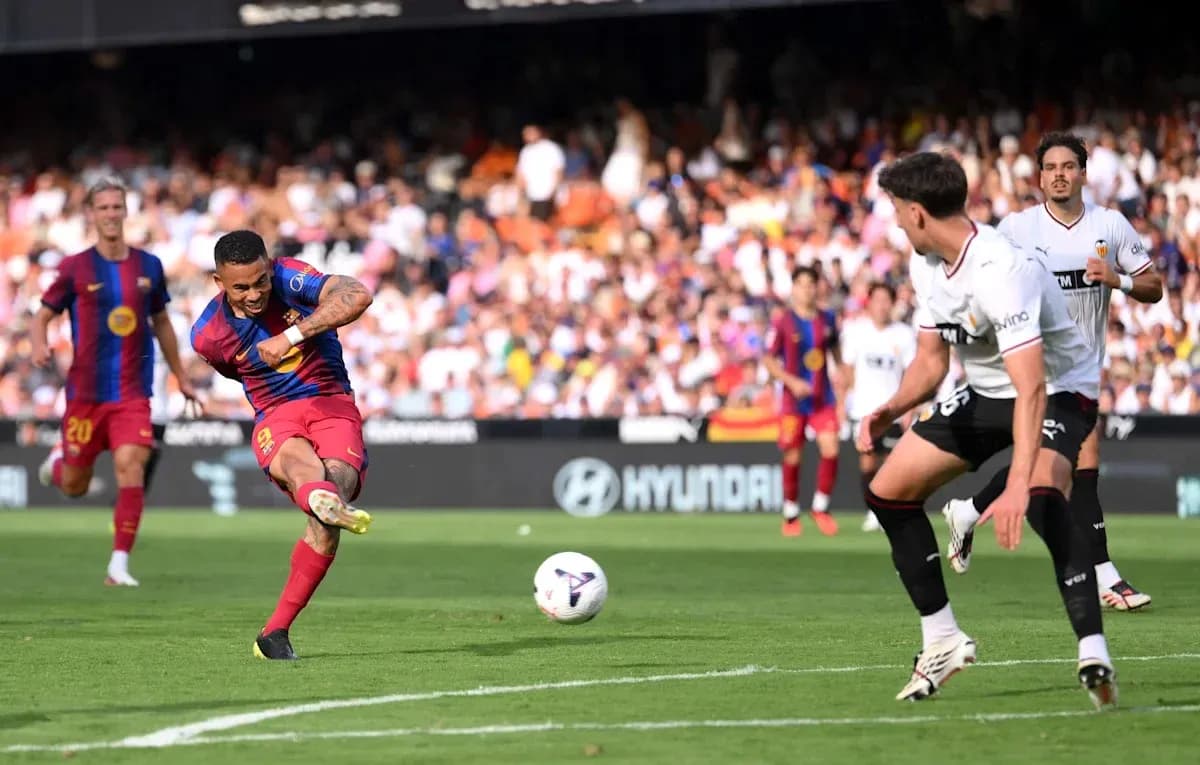
Cavan Sullivan is 16 years old, scoring on grown professionals, and forcing his way into a conversation that used to feel off-limits for American players his age.
Three goals in three games. A teenager bullying veterans. No wonder people are starting to ask the same question: if this is what he’s doing now, how long can the USMNT really wait?
Tim Howard has already made up his mind.
“In the next four years, there are going to be 115 players that play for the national team,” he said on the Unfiltered Podcast. “Who’s better than this kid? Who’s better than this kid that doesn’t deserve an opportunity? I’m not saying he plays every game, but he should be in the conversation to be playing every game.”
Howard then pulled the camera back to the bigger picture.
“For all the naysayers out there, I’m not saying to gift this kid something he hasn’t earned on a silver platter. I’m saying we are not Brazil, Argentina, Holland, Spain, England, Germany. We don’t produce these players.”
Sullivan doesn’t sound intimidated by any of it. If anything, he’s already imagining the stage.
“Thinking about that Belgium game, I think I could come into that game on the right side and make a difference,” he told Alexi Lalas’ State of the Union podcast. “You have to believe in yourself. You have to think you can help your team win. Obviously it’s not my team yet, but I’m always dreaming and hoping for call-ups.”
He isn’t the only one.
Zavier Gozo, now at Crystal Palace, has been living in that in-between space as well — close enough to taste it, far enough away to still be chasing. Back when he was at Real Salt Lake, he made the USMNT’s preliminary World Cup list. That alone would have been a career milestone for most teenagers. For Gozo, it left a mark for a different reason.
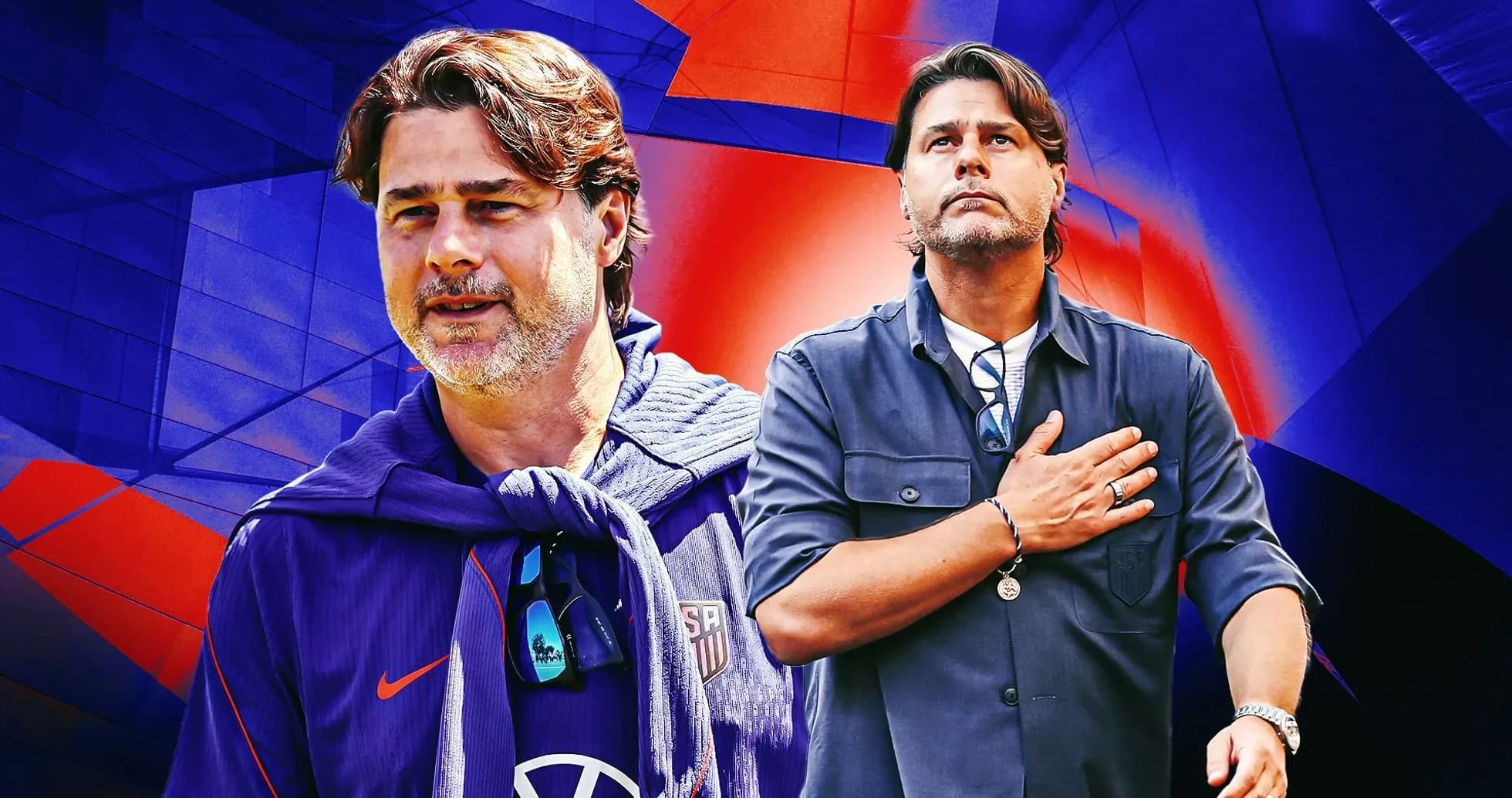
Mauricio Pochettino decided it was too soon to take an uncapped winger to a World Cup. Gozo stayed home.
“I do think I deserved to be there. I’m going to be honest,” he told The Late Run. “But obviously it’s the coach’s choice. Maybe he didn’t think I was ready, or whatever it is, but it just put a fire under me to make the next World Cup and show why I should be there.”
For Pochettino, that word — “ready” — is where everything starts and where every argument ends.
Pochettino’s line: talent is not enough
There’s always a familiar concern with young players: can they handle the workload? Pochettino brushed that aside without hesitation. Physically, he believes, teenagers can cope.
“I know the mindset of the coaches,” he said. “Sometimes the coaches say, ‘Oh, I have a 17-year-old guy that plays in the MLS, but when the national team calls, we say no because they need to rest’. If you’re 17, and you need to rest? Yeah, we have a big problem.”
His real worry sits elsewhere. Between the ears.
Maturity is the first test. Not just in games, but in the hours no one sees. How they train. How they talk. How they respond when the spotlight shifts away from them. The talent is a given at this level; what Pochettino wants to know is what they do with it.
“I think respect is the most important thing, and they need to be respectful,” he said. “And of course, we want players with talent. We want players who feel brave, feel confident, but not feel things they don't show. I think you are only entitled to talk a little bit out of order if you are Messi.
“If you win eight Ballon d'Ors, okay, you can talk with a certain arrogance, but even then, … if you are young and you start to talk that you can play here, you can play there, or you can play. I say, I don't believe that this is the right way to build your career in the best way, no. And that is why we need to be careful.”
So there is no blanket policy. No magic age. No one-size-fits-all pathway. Pochettino wants every decision to be specific: the right player, the right moment, the right need.
Some positions are clogged with depth. Others are wide open and begging for new blood. Goalkeeper is a perfect example — a lot of candidates, one shirt.
“I think we are going to give some [opportunities] to some new players, not only in that position, but in different positions,” he explained. “We’ll have the possibility to add a new player and to give them the possibility. I think for us now it’s about not only thinking about today, but also to think about the future and 2030.”
Olympics, Gold Cup, Copa America: one long audition
Pochettino is not just staring at the 2030 World Cup. There’s a crowded calendar in front of him: the Olympic Games looming, a Gold Cup on the horizon, and potentially a Copa America. Every one of those tournaments demands coordination with Steve Cherundolo, who is leading the U.S. U-23s.
The plan is to bleed some of those younger players into the senior team now, give them caps, expose them to the pace and pressure, then send them back to the Olympic setup better armed for what awaits.
What it will not be is a youth takeover.
The USMNT already lived through a hard reset after missing the 2018 World Cup. Veterans were moved on. The team was rebuilt around a young core. It worked — those kids became the backbone of a new era — but the question lingered: what did they miss by not having more experienced players around them?
That question grew louder around the 2025 Gold Cup, when Christian Pulisic and Yunus Musah stepped away to rest. Former players, some loudly, questioned their commitment. Underneath that criticism sat a deeper worry: had the program cut ties with the old guard too quickly and lost something in the process?
Pochettino has no intention of detonating the squad again.
There will be change. Some veterans will be eased out. It just won’t be a clear-out.
“I'd say it's a continuation of the last two cycles I've been a part of, just because I just know that's how it works,” Chris Richards told GOAL. “It's not like you just completely sack off the team that was at the World Cup and move on from there.”
Richards now shares a club dressing room with Gozo at Crystal Palace. For him, watching a teenager fight for his first cap has brought a different kind of energy into his daily routine. It’s a reminder of how much the badge still means to those on the outside.
Pochettino sees players like Richards as vital. They bridge generations. They carry scars and standards. They show the next wave how to live with pressure rather than be swallowed by it.
“We cannot bring a whole squad of young players, no, because they need to have some guys with experience already competing,” Pochettino said. “Yes, we are going to do a mix. Our idea is we are going to do a mix between experienced players… I think experienced players and young players can fit together and start to work and see how the young kids start to manage the pressure to play in the first team in some really nice games.”
The little things that decide a career
Through all of his recent media appearances, Pochettino kept circling back to the same theme: he is watching everything. Not just the goals and assists. The details.
“It's important not only to see them or watch the games, the performance, but also what they are talking about in the media, how they behave with the opponent, how they behave with their teammates,” he said. “I think it's so important. We want to be a very good team. We want to build something different and be competitive.”
He wants to know when they arrive at training. How long they stay after. How they speak to staff. Whether they listen as hard as they talk. Those daily habits, in his mind, reveal whether a player can live at the level he demands.
His message to every Sullivan, every Gozo, every kid dreaming of that first call-up is blunt: all of it counts, and he is keeping score.
The challenge, of course, is that international football gives him very little time to work. At club level, Pochettino could drip-feed responsibility, watch a player grow day by day, pick the exact moment to push them forward. With the national team, he gets them for short camps scattered across the calendar. The version he sees in September might look completely different by March.
That volatility is part of the job. It’s also why he refuses to label anyone too early. A teenager might not be ready this window, then explode six months later.
The next squad announcement is only weeks away. The decisions inside it will echo far beyond the upcoming fixtures. The 2030 cycle is already taking shape in the background. Young players are banging on the door. Veterans still believe they have more to give.
Somewhere in that tension, Pochettino has to find his balance — and decide when it’s finally time to hand the future to kids who insist they’re ready right now.
“We need to create a group of players that are really being professional and competing in the way that we expect,” he said. “They all need to compete with the talented players and young players that we have ahead.”
The race is on to prove who belongs in that group.