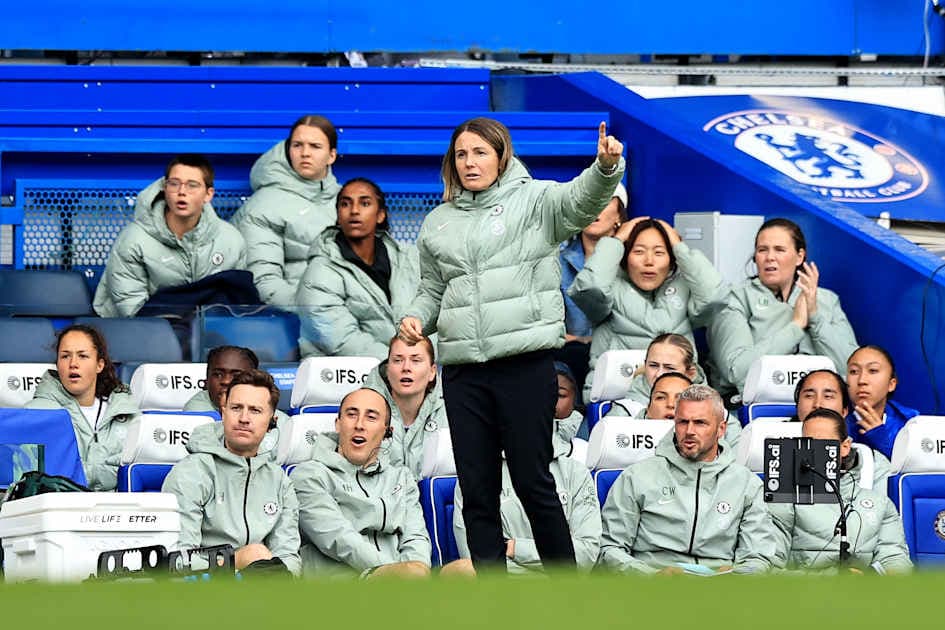
Chelsea’s New Reality Under Bompastor: Navigating Transition and Competition
Sonia Bompastor did not ease her way into English football. She arrived at Chelsea in the summer of 2024 and promptly tore through the domestic calendar, delivering a Treble in her first season in charge. It felt like a seamless handover at a club used to hoarding trophies.
Year two has been different. Not disastrous. Not even poor. Just… human.
Chelsea have retained the Women’s League Cup, secured a third-place finish in the WSL to book their place in next season’s Women’s Champions League, and pushed their way into the Women’s FA Cup semi-finals. For most clubs, that is a banner year. For Chelsea, it triggers an inquest.
Bompastor knows exactly why.
“If you reflect in terms of results, for sure, we have been so used to winning so many games, trophies, and titles,” she said. “But this season we couldn't achieve as much as we did previously.”
That is the crux of Chelsea’s current moment. The medals are still there, the standards remain high, but the margin for error has shrunk. The aura of inevitability around their domestic dominance has thinned as rivals finally catch up.
Inside Cobham, the response has not been denial but analysis.
“We have already started a lot of reflections within the club to make sure we are in a better place for next season,” Bompastor explained. “We knew we were coming into a transitional period since I joined the club.
“The first season was really successful for us. This season, in terms of success, it was more difficult, but both seasons have been transitional seasons for the club.”
This is not transition in the lazy, throwaway sense. It is structural. Chelsea, once the benchmark almost by default, now operate in a landscape where the rest of England – and much of Europe – has finally woken up to the scale of the women’s game.
“The competition is becoming bigger and bigger,” she said. “I think in terms of the gap between Chelsea and the other teams in England, but also in Europe. More teams are now able to invest in the women's game, to invest in their team, to invest in players to be able to compete against Chelsea.”
“Chelsea have been a club who have been showing the pathway. Right now, most of the clubs are catching up and making sure they can compete against us. So, it’s for us as a club to have a vision around, ‘okay, how can we maintain the success in the long term at a club like Chelsea?’ That's the question we need to ask ourselves.”
That question now comes with a new twist. Fresh rules mean that Chelsea’s qualification for the Champions League next season automatically removes them from the League Cup in 2026/27. One trophy chase disappears from the calendar. One safety net of silverware, gone.
Bompastor is clear: fewer competitions do not mean less intensity.
“We have been competing in four competitions, and going into next season, there will be three competitions,” she said. “You build a squad to have the depth to compete in every competition, because when you have this level of quality in the team, you have a lot of international players, and they play many games in the season.”
Her reference point is Lyon, where domestic dominance once allowed for rotation and rhythm without serious risk.
“When I was at Lyon, 80 per cent of the games, we could play at 60 per cent, and it was enough for us to win,” she admitted. “I could play some of the games with players coming from the academy and still win games. That's not the case here.”
That single line captures the difference. In England, there are no soft landings.
“Here, you have to compete in every league game because every match brings you a challenge in different ways,” she said. “Sometimes it's a physical challenge. Sometimes it's a tough game because they are big clubs. Sometimes it's a tactical challenge. You need to make sure you are ready for every game. There is no space for you to drop a little bit because when you do that, you lose or you drop points.”
The Treble winner who once coasted through large chunks of a domestic season now finds herself in a league where a slight dip is punished, where mid-table sides can bully, out-run or out-think you on any given weekend. That is the environment in which Chelsea must now sustain their identity as serial winners.
The work, as Bompastor keeps stressing, has already started.
“Our job is to reflect and to make sure we make the right decisions for the future.”
Chelsea have shown everyone else the pathway. The question now is whether they can stay at the front of the queue in a game that finally looks ready to chase them down.