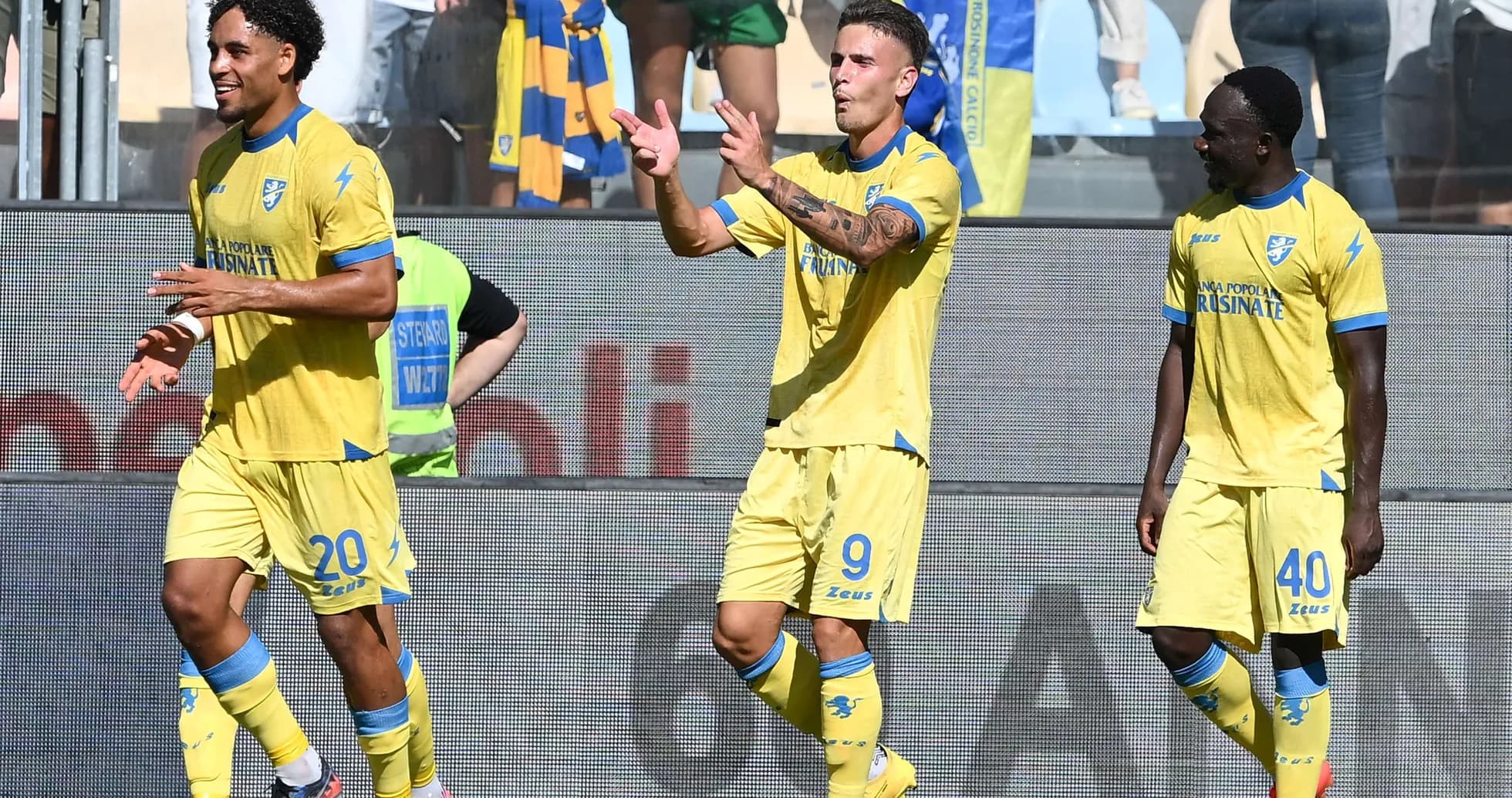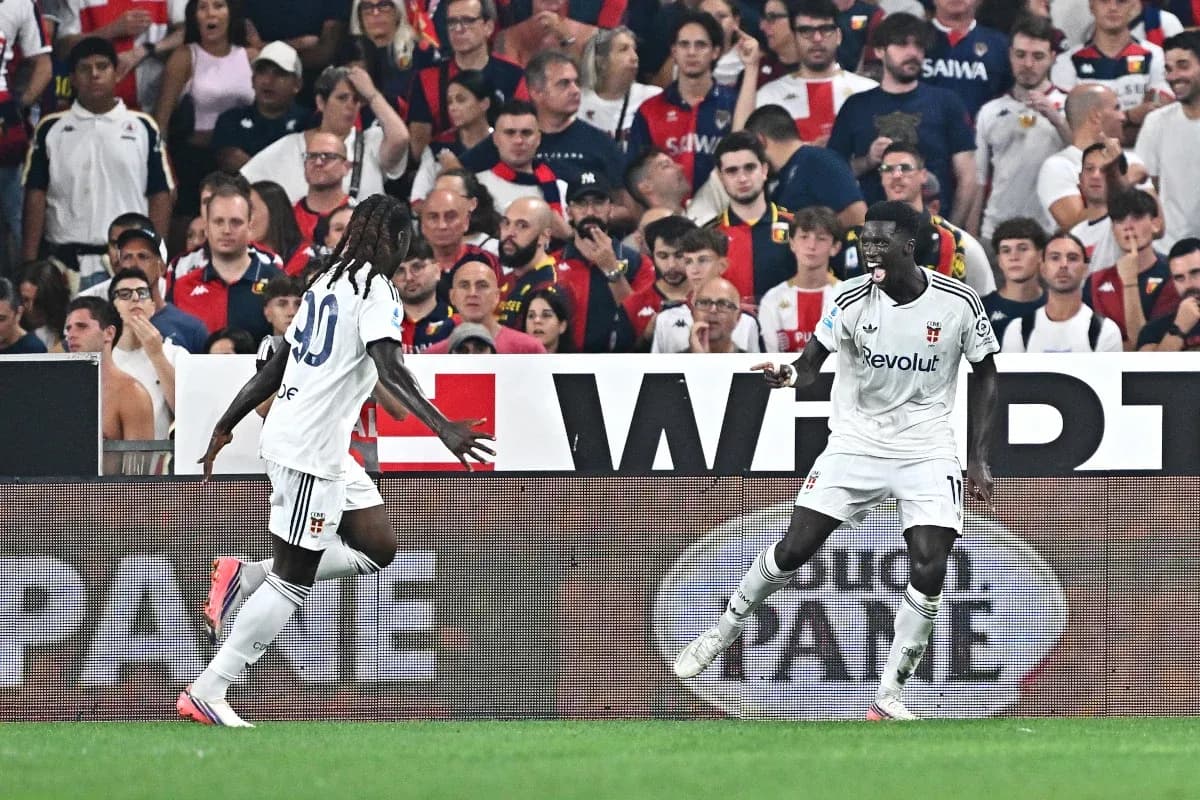
Como's Early Season Success Confirmed with Win Over Parma
Under the late afternoon light on Lake Como, Cesc Fabregas’s side confirmed that their early‑season surge is no illusion. At Stadio Giuseppe Sinigaglia, Como edged a 2–1 win over Parma in regular Serie A action, a result that neatly mirrors the direction of both clubs after four matches.
Following this result, Como sit in 3rd place with 10 points from 4 games, their overall goal difference a healthy +5, built from 9 goals scored and 4 conceded. Parma, by contrast, remain in 17th on 1 point, with an overall goal difference of -4 after 2 goals for and 6 against. It is a snapshot of a league table that already feels like a story of momentum versus anxiety.
Team Formations
Fabregas stayed loyal to the 4‑2‑3‑1 that has underpinned Como’s start, and the team sheet read like a statement of intent. R. Sanchez in goal sat behind a back four of Y. Couto, J. Ramon, M. O. Kempf and Kaiki. Ahead of them, the double pivot of M. Perrone and L. Da Cunha provided the platform for a creative trio of A. Diao, N. Paz and M. Baturina, with M. Kean leading the line.
On paper, this is a side built to dominate the ball and strike in waves. Overall this campaign, Como average 2.3 goals per game, with 2.0 at home and 2.3 on their travels. Their attacking timing is strikingly front‑loaded: 44.44% of their goals arrive between 16–30 minutes, and another 22.22% between 31–45 minutes. This is a team that likes to decide matches early, and the half‑time score of 1–0 fit that pattern perfectly.
Defensively, Como’s numbers are more controlled than spectacular. Overall they concede 1.0 goal per game, exactly 1.0 at home and 1.0 away. The main danger zone is again that 16–30 minute window, where 75.00% of their goals against have arrived, with a smaller late‑game vulnerability at 76–90 minutes (25.00%). That makes the structure of the double pivot crucial: Perrone’s positional discipline and Da Cunha’s energy are less about highlight reels and more about sealing that early soft spot that the data reveals.
Parma arrived with a different kind of story. Carlos Cuesta opted for a 3‑4‑2‑1, with E. Corvi in goal, a back three of Diego Carlos, M. Troilo and E. Delprato, and a four‑man band of S. Britschgi, V. Sierro, M. Keita and E. Valeri across midfield. Ahead of them, E. B. Toure and S. Lontani supported central forward N. Elphege.
On their travels, Parma’s attack has been blunt: they average 0.5 goals away and 0.5 overall, with just 1 goal scored on the road so far. The timing of their rare breakthroughs tells its own tale: 50.00% of their goals come between 46–60 minutes and 50.00% between 76–90 minutes. This is a side that grows into matches, but often too late. The full‑time scoreline of 2–1, with Parma chasing rather than controlling, felt entirely in keeping with that pattern.
Defensively, the contrast with Como is stark. Overall, Parma concede 1.5 goals per game, with 2.0 on their travels and 1.0 at home. The real crisis point is the final quarter‑hour: 50.00% of their goals against arrive between 76–90 minutes, with further leaks spread across 16–30, 31–45 and 61–75 minutes. It is a profile of a team that struggles to sustain concentration and physical intensity, especially away from home.
Match Dynamics
That is where the “Hunter vs Shield” narrative comes into focus. Como’s offensive late‑game surge — 22.22% of their goals between 76–90 minutes — runs directly into Parma’s worst defensive window. When a match like this tightens in the final stretch, Como’s attacking depth and Parma’s fragility were always likely to decide it. The second‑half goal that sealed the 2–1 home win was less a twist than an inevitability written into the season’s early numbers.
Within that structure, individual profiles matter. M. Baturina, already among the league’s top scorers and assist providers with 2 goals and 1 assist, is the conductor in the No. 10 role. Across 3 appearances and 169 minutes, he has produced 5 shots, 3 on target, and completed 90 passes with 87% accuracy, including 3 key passes. He is not just a finisher but a tempo‑setter, finding pockets between the lines and knitting Como’s waves of pressure.
On the left, A. Diao brings a different energy. Also on 2 goals and 1 assist, he has 7 shots (3 on target) and 6 key passes from 84 completed passes at 86% accuracy. His 12 attempted dribbles, with 6 successful, underline his role as the direct runner who stretches defenses and forces mismatches. Against Parma’s wing‑backs, his ability to isolate and drive at the outside centre‑backs was always going to be decisive.
Up front, M. Kean gives Fabregas a reference point, but the bench tells its own tactical story. A. Douvikas, with 2 goals from 7 shots (5 on target) and 33 duels contested, offers a more combative alternative if Como need to turn the match into a physical battle late on. Behind them, the presence of midfield technicians like M. Caqueret and L. Milla among the substitutes allows Como to either lock down a lead or accelerate the tempo.
Parma’s bench, by contrast, is rich in variety but short on certainty. Creative midfielders such as A. Bernabe and G. Fabbian, plus forwards like P. Almqvist, M. Frigan and D. Romero, give Cuesta options to chase games, but the underlying numbers — no wins, 2 goals scored overall, 6 conceded — suggest a side still searching for a coherent attacking identity.
Injuries and Discipline
Injuries add another layer. Como were without J. Addai due to an Achilles tendon injury, while Parma missed H. Nicolussi Caviglia with a groin problem. Neither absence changes the core tactical blueprint, but both remove rotation pieces who might have altered the rhythm from the bench.
From a disciplinary perspective, both teams carry a hint of volatility without tipping into chaos. Como’s yellow cards are concentrated in the second half, split evenly between 46–60 and 76–90 minutes, hinting at a side that defends aggressively once the match opens up. Parma’s bookings spike late, with 40.00% of their yellows in the 76–90 window and another 20.00% between 91–105, a sign of a team often scrambling in the closing stages. Neither side has seen red in the league so far, and neither has taken or missed a penalty; there is no spot‑kick story yet to tell.
Statistical Overview
Statistically, the prognosis after this 2–1 is clear. Como’s overall attacking average of 2.3 goals per game, combined with an overall concession rate of 1.0, paints the picture of a Champions League‑chasing side whose numbers match their league position. Parma’s overall 0.5 goals for and 1.5 against underline the relegation‑battle reality of 17th place.
In narrative terms, this match felt like the crystallisation of those trends. Como, with a settled 4‑2‑3‑1, a creative core led by Baturina and Diao, and a scoring profile that punishes both early and late, look built for the long haul. Parma, with a flexible but unsettled shape and a tendency to fade when it matters most, leave Como with the familiar taste of what‑ifs.
Following this result, the lakefront club can dream of staying in the upper reaches of Serie A. Parma, meanwhile, must turn their statistical warnings into tactical solutions — and fast — if they are to keep that -4 goal difference from becoming the defining number of their season.