Is Cristiano Ronaldo Slowing Portugal’s Progress?
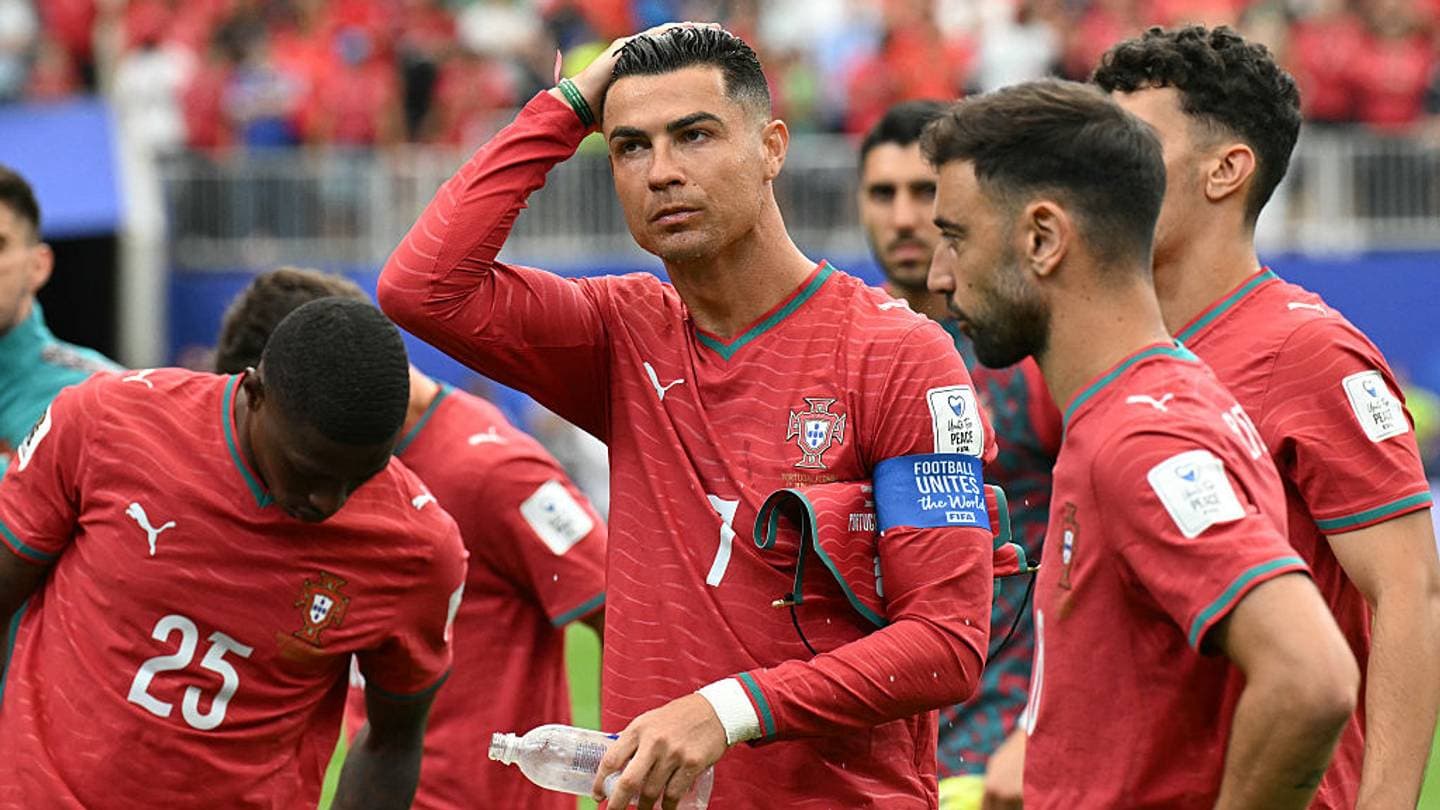
The five-time Ballon d’Or winner appeared largely ineffective during Portugal’s underwhelming 2026 World Cup opener. At 41, Cristiano Ronaldo remains a starter for his national team, yet his influence on the pitch is increasingly questioned.
Back in 2025, Ronaldo admitted he no longer dreams of winning the World Cup, nor sees it as a defining achievement. His career achievements are extraordinary, spanning from his start at Sporting CP in 2002 to becoming one of soccer’s all-time greats. Without Lionel Messi, his records might stand even more alone, similar to the dynamic between Federer, Nadal, and Djokovic in tennis.
He has not gone empty-handed internationally either; Portugal’s 2016 European Championship victory marked their first major tournament win, something previous star-studded generations never reached. Still, Ronaldo’s current performances raise doubts about whether he can still carry Portugal forward.
A Waning Impact on the Field
In the 1–1 draw with DR Congo—a result celebrated by the underdog team—Ronaldo played every minute but touched the ball only 25 times. He failed to take a shot until late in the match, ending with three attempts all off target. His most promising chance came from a poorly executed shot that might have been better taken by teammate Bruno Fernandes.
This decline isn't sudden. Ronaldo has struggled to find the net in major tournaments for some time. His World Cup goal tally stands at eight in 24 matches, far behind Messi's 16 goals in 27 games on the same stage. He has now endured 10 consecutive major tournament matches without scoring, dating back to the 2022 World Cup game against Ghana, where he last found the net.
Despite scoring again in qualifiers and the UEFA Nations League, his tournament form has dwindled. At this stage, if Ronaldo isn’t scoring, his overall contribution diminishes; he no longer has the explosive presence that once defined him.
Playing in Saudi Arabia: A Double-Edged Sword
Since 2023, Ronaldo has competed in the Saudi Pro League, a league that offers less rigorous competition outside its top teams. While this environment has prolonged his career, the level of challenge may not prepare him adequately for the intensity of World Cup football.
His stats remain impressive domestically—50 goals in all competitions during 2023–24 and 28 league goals in 30 games in 2025–26, culminating in a league title. Yet, facing tougher international opposition, like DR Congo who field players from Europe’s major leagues, exposes limitations. Ronaldo’s reduced mobility and predictable positioning make him easier to contain when he remains the focal point of attack.
Portugal’s Options Moving Forward
Removing Ronaldo from the starting lineup is a difficult decision. Former manager Fernando Santos tried it briefly in 2022 without lasting success. Spain’s ruthless benching of Raúl after poor tournaments shows such moves can be necessary, though.
Roberto Martínez, Portugal’s current manager, has defended Ronaldo’s place, but with his departure looming, new leadership might rethink the setup. Portugal’s other natural striker, 24-year-old Gonçalo Ramos, showed promise by outscoring Ronaldo at the last World Cup but has since become more of a backup at Paris Saint-Germain and saw limited action at Euro 2024.
Ramos could flourish in a system that allows positional fluidity and encourages buildup play, freeing wingers and midfielders to attack. Players like Bernardo Silva, João Félix, or Rafael Leão could also perform as false nines, offering different tactical options.
Portugal’s next group match against Uzbekistan is expected to be a win, potentially securing progression before facing Colombia. Yet, if Ronaldo continues to struggle, the team’s attacking threat might remain muted.