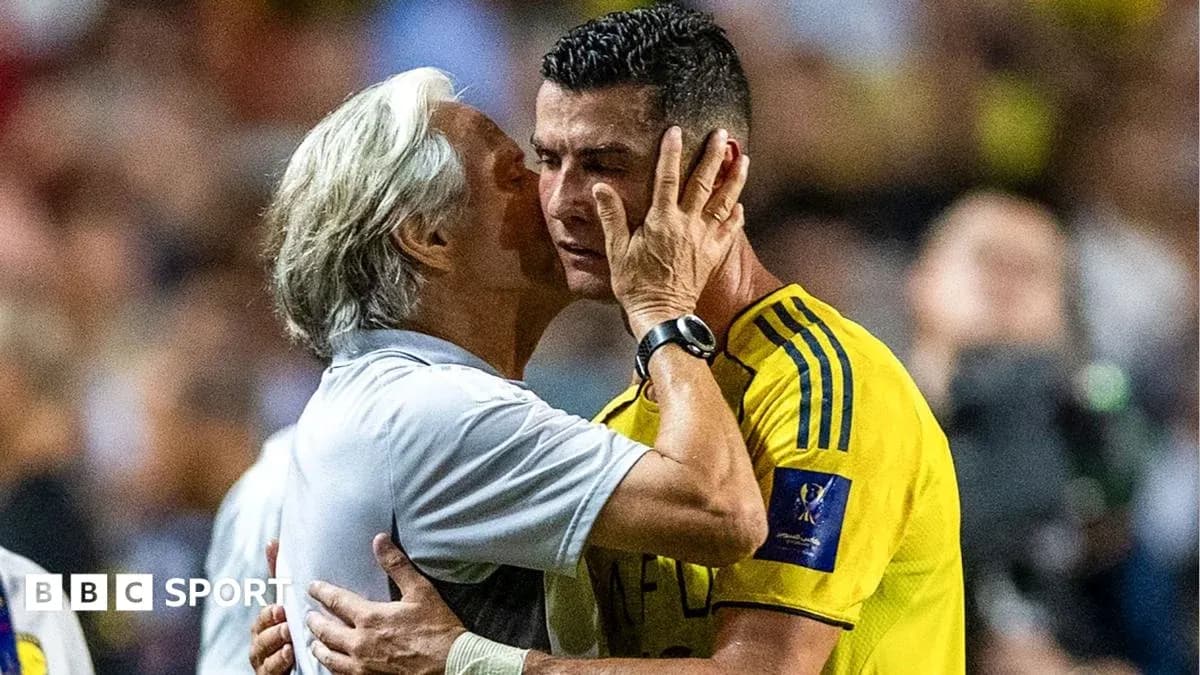
Cristiano Ronaldo Leaves Portugal: Jorge Jesus Reacts
Cristiano Ronaldo chose Instagram for his final act with Portugal. One video, a few measured words, and a 21-year international career was over.
On Friday in Lisbon, Jorge Jesus sat behind a microphone and admitted he discovered the news like everyone else.
“I found out when we all did,” the Portugal coach said, the surprise still evident. “Until then, I knew nothing about it. He was playing, he was scoring goals; he was one of the players on my squad list.”
Ronaldo, 41, dropped his bombshell on Thursday, just a day before Jesus was due to announce his squad for this month’s Nations League fixtures. The timing was pure Ronaldo: on his own terms, in his own voice, without a hint to the man currently in charge of the national team.
A Call That Never Came
Jesus did not try to dress it up. There was no private conversation, no farewell phone call, no advance warning.
The coach had planned to recall the in-form Al-Nassr forward, who had just completed a 30-day suspension from international duty — a ban that, crucially, did not rule him out of any actual Portugal matches. Ronaldo was eligible. Ronaldo was ready. On the pitch, at least, he was still delivering.
Then came the video. And with it, the end.
The backdrop, of course, is the flashpoint from September. Ronaldo left the Portugal camp after being told he would not start a Nations League match against Denmark four days later. For a player who has built a career on being the centre of gravity wherever he plays, that decision cut deep.
He later accused Jesus of having “broken his word”, accepted he deserved punishment for walking out early, and insisted at the time that retirement from international football was not on his mind. That stance has now changed, decisively.
Old Wounds, New Reality
As the questions turned back to that Denmark dispute on Friday, Jesus’ patience thinned. The room could feel it.
“All my decisions were made with the team in mind,” he said, irritation flickering beneath the surface. “As a manager, I have always defended what was best for the team. I am at peace with my decision.”
It was a line drawn in the sand. Ronaldo’s camp may see it one way, Jesus another, but the coach was clear: the team comes first, even when the greatest player in Portugal’s history is involved.
By then, Ronaldo had already played his last minutes for his country without knowing it. He was an unused substitute against Norway on 27 September; his final cap came three days earlier, a 1-0 win over Wales in Lisbon.
No goals that night. None were needed. The numbers he leaves behind are almost absurd: 146 goals in 234 games for Portugal, both men’s world records, stretching back to his debut in 2003. Layered on top is the moment that changed Portuguese football forever — lifting Euro 2016, the country’s first major international trophy.
A Nation Says Thank You
If Jesus kept his distance after the announcement — he confirmed he has not contacted Ronaldo since — the Portuguese Football Federation did not.
PFF president Pedro Proenca spoke with the reverence reserved for a player who altered the country’s footballing identity.
“No tribute will ever be enough to thank him for everything he has done for Portuguese football, for Portugal,” Proenca said.
He framed Ronaldo’s legacy not just in medals and milestones, but in mentality.
“The best way to honour and celebrate him is to honour his boundless ambition, to always play to win, to never be afraid of being the best in the world. Thank you for everything, captain. This is and always will be your home.”
The words hit like a curtain call. Not sentimental, but definitive.
Portugal now steps into a new era, one that Jesus must shape without the man who has defined his country’s shirt for two decades. The goals, the records, the sheer force of personality — all of it now belongs to history.
The question is no longer what Ronaldo can do for Portugal. It is what Portugal will look like without him.