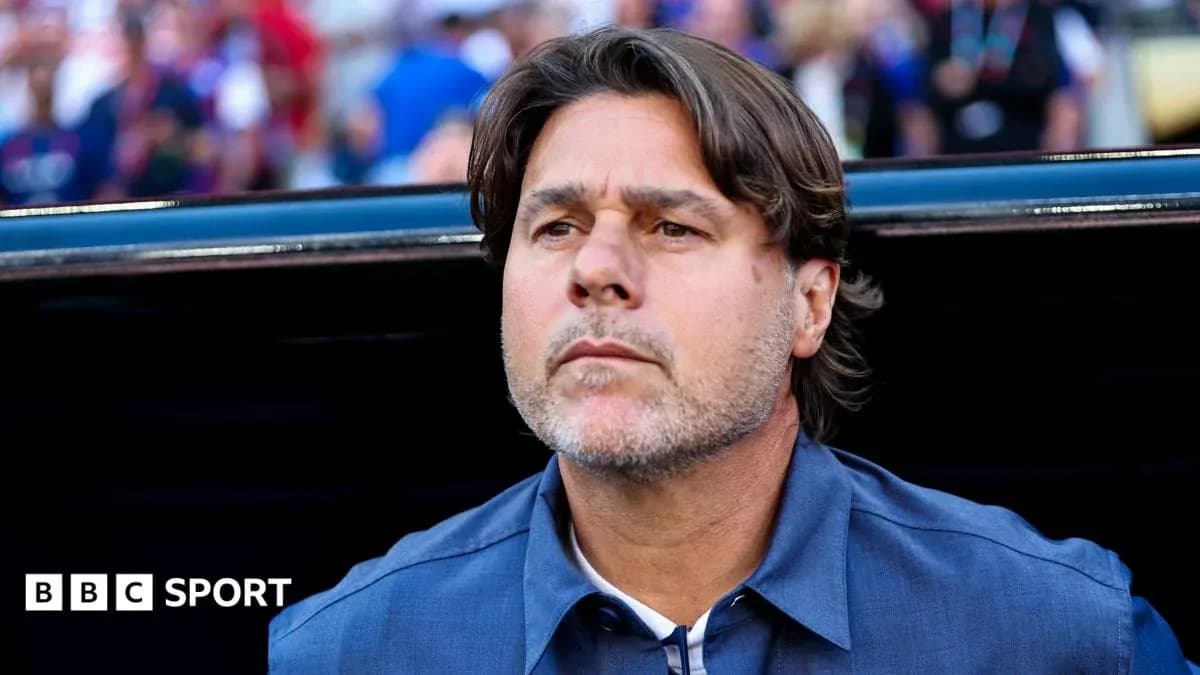
Mauricio Pochettino's New Role as Manchester United Head Coach
Mauricio Pochettino’s whirlwind week has only just begun.
Confirmed as Manchester United’s new head coach, the Argentinian is still wearing USA colours for a few more days, juggling one of international football’s most demanding jobs with the weight of Old Trafford’s expectations already on his shoulders.
On Friday at around 14:15 GMT, he is due to sit in front of the cameras for a pre‑match news conference before USA face Haiti. The questions will say it all. Does he talk about shape and selection for Concacaf Nations League games, or does the conversation inevitably swing towards Liverpool away and a looming Premier League storm?
Right now, Pochettino is straddling two worlds.
United turn to a proven builder
Manchester United’s statement was clear and concise: Mauricio Pochettino has agreed to become men’s head coach from 18 November, with a deal struck with the US Soccer Federation for him and his staff to be released after the current camp.
United are not just hiring a name. They are buying into a philosophy they believe can reset a decade of drift.
Pochettino brings a high‑intensity, front‑foot game, an obsession with team cohesion and a reputation for turning raw potential into hardened Premier League performers. His coaching journey has taken him from Espanyol in 2009 to Southampton, where he delivered a club‑record Premier League points tally in 2014, and then to Tottenham Hotspur, where he turned a talented squad into serial Champions League qualifiers.
Four consecutive seasons in Europe’s elite competition, a first-ever Champions League final for Spurs in 2019: those nights cemented his status as an elite operator. Paris St‑Germain followed, with Ligue 1, the Coupe de France and the Trophee des Champions added to his CV before a spell at Chelsea in 2023.
Most recently he crossed the Atlantic, guiding the US men’s national team to the round of 16 at the Fifa World Cup on home soil and co‑hosted turf. That experience – managing a young, ambitious group under a fierce spotlight – now feeds directly into the challenge at Old Trafford.
And what a challenge it is.
The 12th man in a revolving door
Opta’s numbers tell a brutal story. Pochettino will be the 12th different person to take charge of Manchester United for a Premier League game since the 2013‑14 season. Only Chelsea, with 14, and Crystal Palace, with 13 pending Pierre Sage’s replacement, have churned through more.
This is not the old United, where one man sat in the dugout for a generation. This is a club that has lurched from idea to idea, style to style, manager to manager.
Pochettino now steps into that turbulence with no gentle introduction. Michael Carrick’s departure clears the way, but what follows is a brutal opening run.
His first game? Liverpool at Anfield, a week on Sunday. A baptism of fire in the most literal sense: noise, hostility, and a United side that has too often shrunk on those occasions.
From there, United fly to Portugal to face Sporting in the Champions League, before Pochettino finally walks out at Old Trafford as home manager for the first time in the Premier League, against Brentford on Saturday, 28 November.
No easing in. No soft landings. Just a straight sprint into the heart of the season.
A farewell tour in USA colours
Before that, though, he has a promise to keep.
US Soccer confirmed that Pochettino “will depart his role as head coach of the US men’s national team following the conclusion of the current camp to become head coach of Manchester United,” but stressed he and his staff will remain in charge for the Nations League fixtures against Haiti on 14 and 17 November.
This is his short farewell tour.
Pochettino was appointed USA head coach in September 2024. Across 35 games, his team won 21 and lost 12. The numbers only tell part of the story. He took the side to the final of the 2025 Concacaf Gold Cup and steered them into the World Cup round of 16 last summer as co‑hosts, navigating the unique pressure that comes with playing a global tournament at home.
US Soccer’s chief executive and secretary general JT Batson praised the depth of that impact, saying Pochettino “has left a lasting mark on US Soccer through his leadership, professionalism and commitment to our players and culture.” The federation points not just to results, but to raised standards, a stronger internal culture and clearer pathways from youth national teams to the senior squad.
In their view, those changes are now baked into the system. Pochettino leaves, but the structure he helped reinforce remains.
He, for his part, did not disguise what the role had meant. In the US Soccer statement, he called the chance to represent the USA crest “one of the greatest honours” of his career, thanking players for their commitment, fans for their belief and the federation for backing his staff and giving them room to influence the country’s football culture.
He highlighted the “tremendous talent” running through the US player pool from youth to senior level, and promised that the USA would “always have a special place” in his heart. He and his staff, he said, will be watching and supporting whenever those teams step onto the field.
His last acts on the touchline for USA will be to try to steer them through those two games against Haiti. Only then will he fully turn towards Manchester.
The search for the next USA boss
As one era closes, another search begins.
US Soccer has handed the December men’s camp to current Under‑23 coach Steve Cherundolo, who will lead preparations while the federation works on appointing Pochettino’s successor.
They have also assembled a notable group to help shape that decision. US women’s team boss Emma Hayes and former USA and Sheffield Wednesday defender Oguchi Onyewu will play key roles in the process.
The federation says it is “drawing on input from leaders across US Soccer and the global soccer landscape” and will consider candidates “from a broad range of backgrounds.” That signals an open field – domestic or foreign, club or international pedigree – at a time when the US programme is trying to capitalise on a World Cup cycle that has raised expectations.
The next coach inherits a player pool Pochettino insists is rich with potential, and a structure Batson believes has been strengthened. The bar has been set. The next appointment has to clear it.
Pochettino, meanwhile, stands between two touchlines, two crests, two demanding fanbases. In a matter of days he will swap the USA tracksuit for the Manchester United blazer, Concacaf nights for Anfield and Champions League pressure.
He has raised standards in one set‑up. Now comes the question that will define his legacy: can he do the same at a club that has been chasing its own shadow for more than a decade?