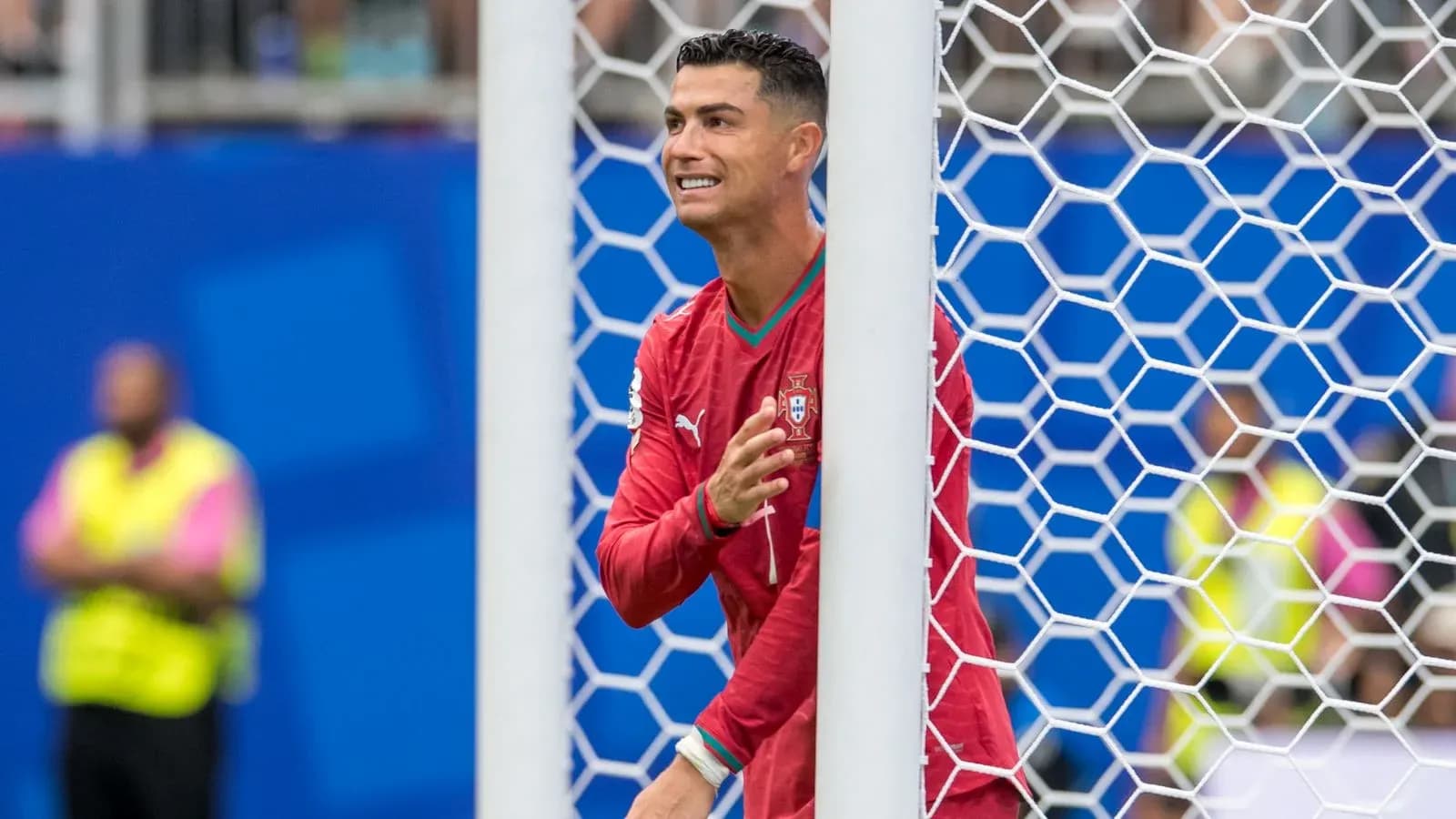
Cristiano Ronaldo and Portugal's Dilemma
The numbers are starting to sound surreal. Cristiano Ronaldo, 41 years old, walking out for a record-extending sixth World Cup, the armband still wrapped around his left arm, the glare still fixed, the legend still looming over everything Portugal do.
But in Houston, against DR Congo, something else loomed larger: the silence of a centre-forward who no longer bends tournaments to his will.
Ronaldo knew what had happened the night before. Everyone did. Kylian Mbappé had scored twice. Erling Haaland had scored twice. Lionel Messi, the old rival who has shadowed every stage of his career, had gone one better and taken home the match ball.
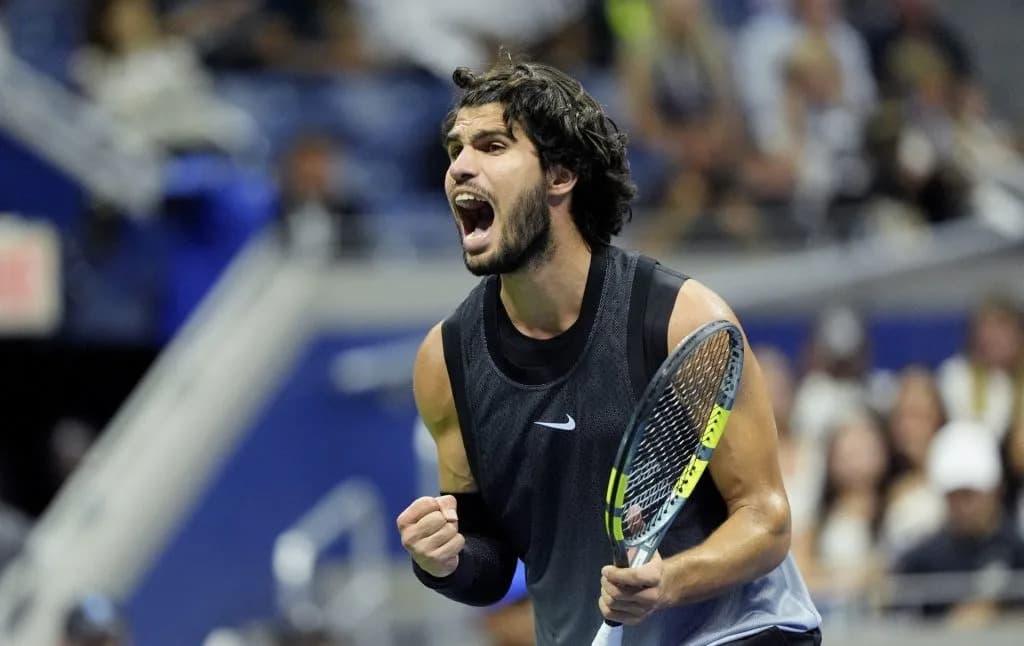
Ronaldo’s response? Twenty-nine touches. Zero goals. Three shots – as many as Messi had goals – and a game spent mostly on the fringes, scowling his way through a flat 90 minutes as Portugal stumbled to a draw that felt worse than the scoreline.
He was, inevitably, still the story. Just not in the way he used to be.
A drought that won’t go away
Ronaldo’s goalless run in major international competitions now stands at 10 games. Ten. For a man who once treated those stages as his personal playground, it’s a jarring statistic.
Set that against Messi, who has scored nine times in his last 10 such matches, and the contrast is brutal. One is still deciding tournaments. The other is drifting through them.
His involvement against DR Congo told its own tale. Of Portugal’s starting XI, only Bernardo Silva – taken off at half-time – had fewer touches than Ronaldo. For a centre-forward supposedly central to everything, he was often nowhere near it.
Yet when the questions came, Roberto Martinez didn’t point the finger at his captain.
"It makes no sense to get the best goalscorer in world football out in a game that you need goals," the Portugal manager insisted. For Martinez, Ronaldo’s mere presence in the box still bends the game. "The way that he attracts defenders is important, the way that we can use the space is important… when you look for goals, you need to have Cristiano."
It was a full-throated defence. It was also a challenge to everyone around him.
Are Portugal failing Ronaldo – or the other way round?
Martinez is not short of creative talent. Bernardo Silva, Bruno Fernandes, Pedro Neto, Vitinha, João Neves, João Cancelo, Nuno Mendes – this is an attacking supply line most nations would build a decade around. These are players who, at club level, routinely carve open elite defences.
To suggest they are the problem, as the manager’s comments implied, is bold. The data makes the debate more complicated.
Across each player’s last 10 competitive international games, only Harry Kane has taken fewer shots than Ronaldo. The England captain has 30; Ronaldo’s tally is higher, yet his expected goals (xG) over that period stands at 5.36. Kane’s sits at 7.15. Mbappé’s is 8.76.
Those numbers hint at something uncomfortable: the chances falling to Ronaldo are not of the same quality as those created for his rivals.
Team-level figures deepen that impression. In the 10 games in question, Portugal generated a combined xG of 12.76 while Ronaldo was on the pitch. England, with Kane, reached 16.39. France, with Mbappé, surged to 21.99. Per 90 minutes, that’s 1.32 for Portugal, 1.34 for England, 1.72 for France.
Look closer still and the picture sharpens. Ronaldo’s xG from chances directly assisted by team-mates across this barren run is just 2.55. Kane’s equivalent is 3.2. Mbappé’s is a staggering 5.78.
So yes, for all the glamour behind him, Ronaldo is feeding off thinner rations than his peers. The service has not been relentless. The volume of high-quality chances is not what you would expect for a striker of his stature.
But that cannot be the end of the discussion.
The finishing touch that isn’t there
Because even within those limits, there have been moments. Chances. Situations that the old Ronaldo would have devoured.
This is where the numbers cut deepest.
‘Post-shot’ xG measures what happens after a player pulls the trigger – how good the shot actually is, and how often it beats the goalkeeper. Kane and Mbappé have both overperformed in this area in their last 10 competitive internationals. Kane by 2.05 goals. Mbappé by 2.25.
Ronaldo’s figure? -2.8.
Almost three goals fewer than would be expected from the positions he has shot from. This isn’t about team-mates failing to find him. This is about what happens when they do.
The sharpest finisher of his generation is no longer hitting the corners, no longer turning half-chances into highlights. The clinical edge that once defined him has dulled, and the numbers don’t bother to hide it.
A star who stands still while the game moves
There is another layer to this, and it is as tactical as it is emotional.
Messi, Kane, Mbappé – they all step into the game in different ways. Kane drops deep, spins passes, dictates tempo. Messi roams, stitches moves together, controls entire matches from the half-spaces. Mbappé explodes into pockets, stretches defences, drags back lines out of shape.
Ronaldo does not do that. He never really has, and at 41, he is not about to start.
His touch map and heatmap against DR Congo showed not just how little he was involved, but how narrow his world has become. Most of his actions came in isolated pockets on the left, often in areas where Neto and Mendes should have been stretching the game, not sharing it.
Portugal effectively played with a forward who neither dropped in to help build attacks nor constantly threatened in behind. A fixed point, but no longer a devastating one.
When your entire structure bends around a player who occupies such a small strip of the pitch, every miscontrol, every mistimed run, every scuffed finish is magnified. The team’s margin for error shrinks with him.
Martinez’s dilemma – and a golden generation on the clock
This is the knot Roberto Martinez cannot untangle.
He cannot tear up his creative core to better serve one man. Cancelo, Bernardo, Bruno, Vitinha, Neves, Neto, Mendes – this is the core of Portugal’s present and future. They need a system that maximises them, not one that constantly compensates for the limitations of a 41-year-old striker.
Yet Martinez refuses to take Ronaldo out of the equation. He believes in the aura, the gravity, the experience in the box. He believes that if a chance falls in the 89th minute of a knockout game, he still wants it falling to Ronaldo.
That belief carries a cost. Every minute given to Ronaldo is a minute denied to a different profile of forward, a different way of attacking, a different version of this team.
So the question now is not whether Ronaldo is the greatest goalscorer Portugal have ever produced. That debate ended years ago. The question is whether clinging to that past is about to waste what might be the most gifted generation they have ever assembled.
At some point, someone in Portuguese football will have to look beyond the legend and make a decision about the player standing in front of them now. Not the one who filled a decade of highlight reels. The one who took 29 touches in Houston and left the scoreboard untouched.
The World Cup will not wait for them to be ready for that conversation.