Cristiano Ronaldo Retires from Portugal Amid Controversy
Cristiano Ronaldo has drawn the curtain on one of international football’s defining careers, announcing his retirement from Portugal duty at 41 in an emotional video message – and doing so under a cloud that nobody in his country ever imagined for him.
No farewell tour. No lap of honour. Just a rupture, a row, and a decision that feels brutally final.
A legend’s last game – and the flashpoint that followed
Ronaldo’s final appearance for Portugal now sits quietly in the record books: a 1-0 Nations League win over Wales in September. No hint then that it would be his last dance in red and green, no grand goodbye for the country’s record-breaking captain.
The storm arrived days later.
In the next fixture, away to Norway, Ronaldo stayed rooted to the bench, an unused substitute as the minutes ticked by. For a player who has built an entire career on being central to every story, the sight alone was jarring. What followed was explosive.
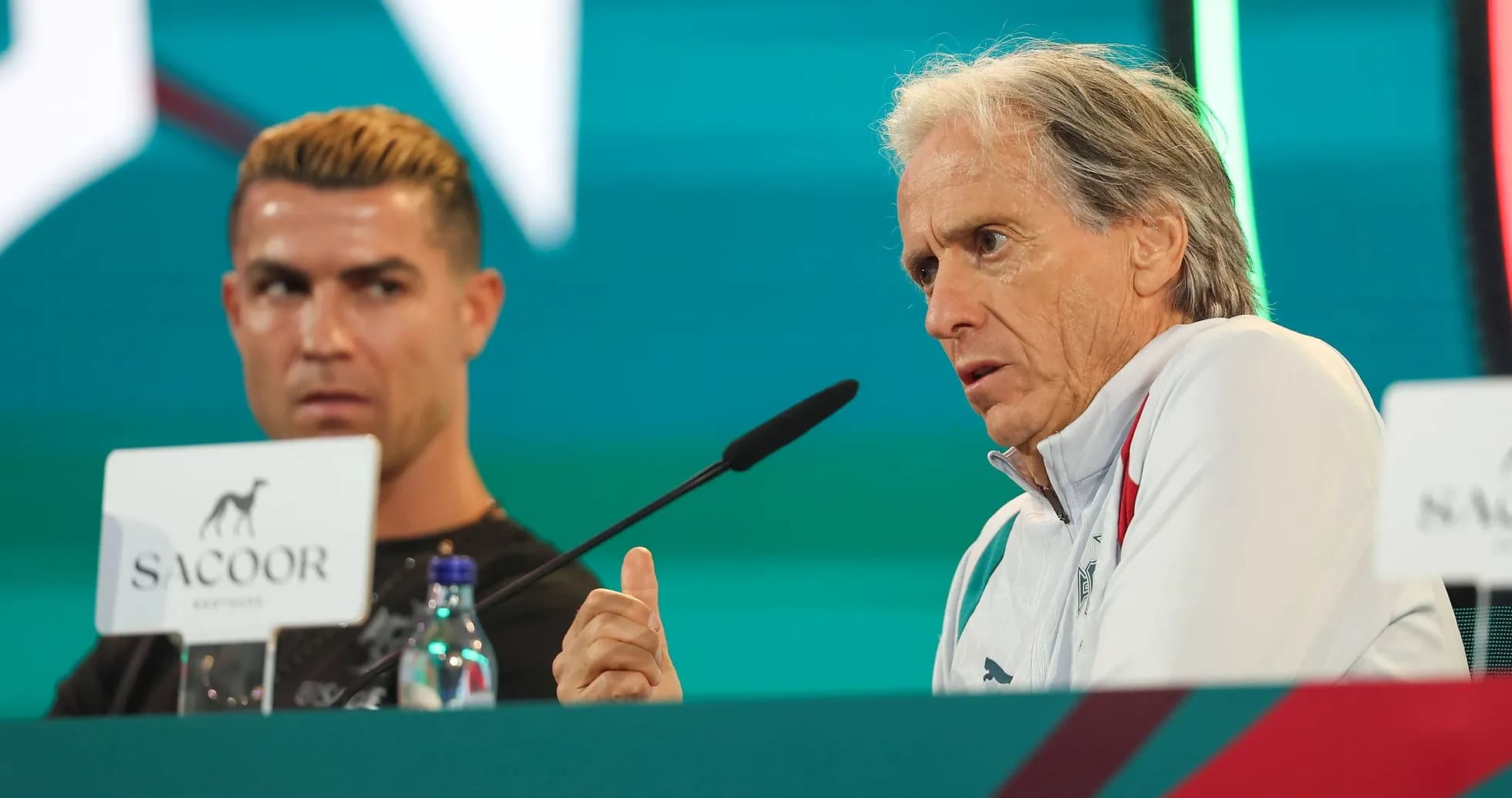
Ronaldo accused head coach Jorge Jesus of going back on a promise to give him at least half an hour on the pitch. He had warmed up. He had waited. The call never came. The anger didn’t stop there. A reported agreement that Jesus would publicly explain the decision also broke down, with the coach insisting team selection was his responsibility alone.
The fallout was immediate and severe. Ronaldo refused to train and walked away from the squad before Portugal’s next Nations League clash with Denmark. Within days, his decision was sealed: no more call-ups, no more tournaments, no more Ronaldo for Portugal.
A historic era ended in a training-ground standoff.
Jesus salutes a global icon – and admits defeat
For all the tension, Jorge Jesus chose his words carefully when the retirement became official. There was no attempt to rewrite history. No attempt to diminish what Ronaldo has meant.
“Cris is a global icon – for Portugal and the national team,” he said, underlining that the forward’s legacy remains untouched by the manner of his exit. Jesus spoke of a player who has shaped generations, who still commands a young fanbase that grew up with his goals, celebrations and relentless drive.
He recalled their season together at Al Nassr, how he had a giant image of Ronaldo installed in the national team auditorium, a daily reminder of the standard and the story. “It is his decision,” the coach added, making clear that he had pushed for a different ending but would not contest the choice.
Jesus admitted he had tried to stop this moment from arriving.
“We had already spoken about this before the first squad announcement. I asked him to stay on with me because I needed him by my side,” he revealed. The message from the coach had been consistent: whether starting or not, he wanted Ronaldo in the camp, in the dressing room, in the fabric of the team.
Now that door has closed. “He will always be in the hearts of the Portuguese people and part of the national team. There’s no changing that,” Jesus insisted. The relationship may have fractured, but the history remains untouchable.
Retirement long in the shadows
This was not a decision born in a single week, only triggered by a single benching. Questions over Ronaldo’s international future had hovered since Portugal’s World Cup exit in the summer.
At that point, Jesus managed to talk him out of walking away. The coach publicly backed the veteran’s right to choose his own exit route, saying only last month that Ronaldo should end his time with the Seleção “the way he wants”.
“I need you,” Jesus had told him then. “Playing or not playing, I need you.”
The words carried weight. They delayed the inevitable. But they could not erase the reality of a 41-year-old forward battling the clock, competition for places, and his own refusal to accept a reduced role.
In the end, it was not age or form that pushed Ronaldo out. It was pride and principle, colliding with a coach’s authority and a promise he believes was broken.
Numbers that may never be touched
Strip away the drama, and the numbers remain staggering.
Ronaldo leaves the international stage with 146 goals in 234 appearances for Portugal – a haul that towers over the country’s scoring charts and sits among the greatest records in the sport’s history. He carried his nation to the European Championship in 2016 and the Nations League title three years later, turning a country that once dreamed of competing into one that expected to win.
For two decades, every Portugal squad list started with one name. Every major tournament preview hinged on what he might do. Every young forward in the country grew up in his shadow, chasing a standard that may never be matched.
Now the dressing room wall still holds his image, but the seat beneath it is empty.
Portugal face a future without their captain
The calendar offers no time for sentiment. Portugal’s Nations League campaign resumes this month, with meetings against Denmark and Wales arriving without the man who has defined their modern era.
Someone else will take the armband. Someone else will step up for the penalties, the free-kicks, the final chances in tight games. The team must learn to breathe without the gravitational pull of Ronaldo at its centre.
For younger attackers, the opportunity is enormous. For the squad as a whole, the adjustment will be brutal. Ronaldo’s presence has long been more than tactical; it has been psychological, a constant belief that a moment of individual brilliance could solve any problem.
Now that safety net has gone.
Club focus – and a quieter horizon
Ronaldo’s attention turns fully to Al Nassr, the last remaining stage for a career that has stretched across continents and eras. Even there, recent events underline the new reality: he missed the club’s AFC Champions League trip to Uzbekistan due to security concerns, watching on from afar instead of driving the team on the pitch.
He will still score goals. He will still command attention. But the roar of a nation behind him, the weight of a flag on his shoulders, that part is over.
Portugal must move on. So must Ronaldo.
The only question now is how a country that has lived in his image for 20 years reshapes itself without him – and who, if anyone, dares to step into the void he leaves behind.