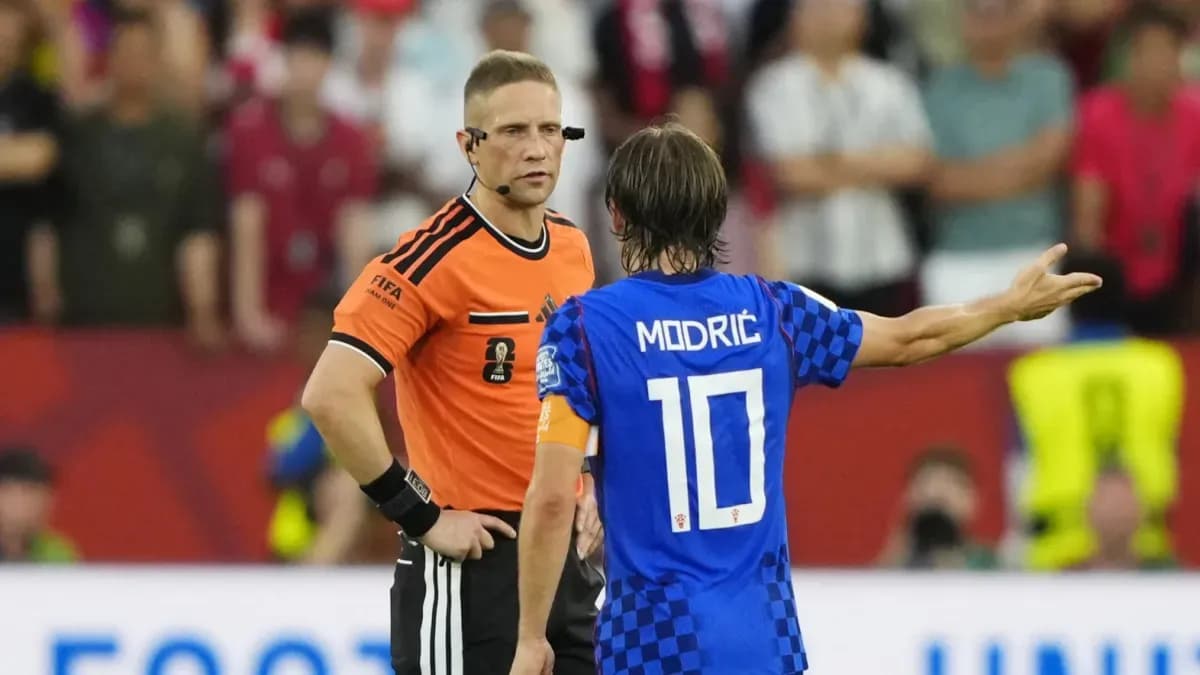
How Croatia’s Disallowed Goal Against Portugal Was Decided Using Chip-in-Ball Tech
Portugal, one of Europe’s football heavyweights, barely pulled through against Croatia, the 2018 finalists, with a late winner by Goncalo Ramos sealing a 2-1 victory. The match’s outcome almost shifted dramatically in stoppage time when Josko Gvardiol seemed to have netted an equalizer for Croatia.
The referee stopped play to consult the video assistant referee (VAR) system and ultimately disallowed the goal, handing Portugal the win. This article unpacks why that crucial goal was ruled out and how technology played a key role.
Why Was Croatia’s Late Goal Overturned?
In the 12th minute of added time, Gvardiol scored what looked like a tying goal for Croatia. However, upon VAR review, the officials judged the goal offside because of a subtle touch on the ball by Croatian substitute Igor Matanovic. This touch put teammate Mario Pasalic in an offside position.
If Matanovic hadn’t touched the ball, Pasalic would have been onside from the original pass. The referee then had to consider whether the ball’s contact with Portuguese defender Renato Veiga nullified the offside call. Veiga appeared to merely duck under the ball rather than deliberately play it, so the offside ruling stood.
Referee Espen Eskas’ Decision
"Veiga was not making a deliberate play on the ball," said referee Espen Eskas. "Therefore, the offside decision remained intact."
The Role of Connected Ball Technology
The official FIFA World Cup match ball, the Adidas Trionda, is fitted with advanced technology called Connected Ball. At first, replays suggested the ball never touched Matanovic’s head, which would have meant Pasalic was onside.
However, this embedded chip records every touch. During VAR review, a graphic displayed an audio waveform-like signal showing touches on the ball. A distortion aligned precisely with the ball passing Matanovic’s head, confirming the slight contact.
This data led to rearranging the timing of the pass, proving Pasalic was offside when the ball was last touched. Hence, the goal was disallowed.
Technology Similarities to Cricket
This method resembles cricket's Ultra Edge technology, nicknamed "snicko," which detects faint ball contacts with a bat to determine edges.
How Connected Ball Technology Works
The sensor inside the Trionda ball collects detailed information at around 500 times per second, tracking acceleration and movement in three dimensions. This data feeds directly to the VAR team, combining with player tracking cameras to pinpoint exactly when the ball was touched.
The technology helps speed up and improve accuracy in offside decisions by identifying the exact kick point. It also assists referees in analyzing incidents such as handballs or penalty situations by providing precise ball-touch data.
Summary
Connected Ball technology proved decisive in this tense moment, helping referees make a tight offside call that impacted the result. Such innovations add clarity to contentious moments in football and bring fans closer to the action’s details.