Crystal Palace's Tactical Masterclass Against Tottenham
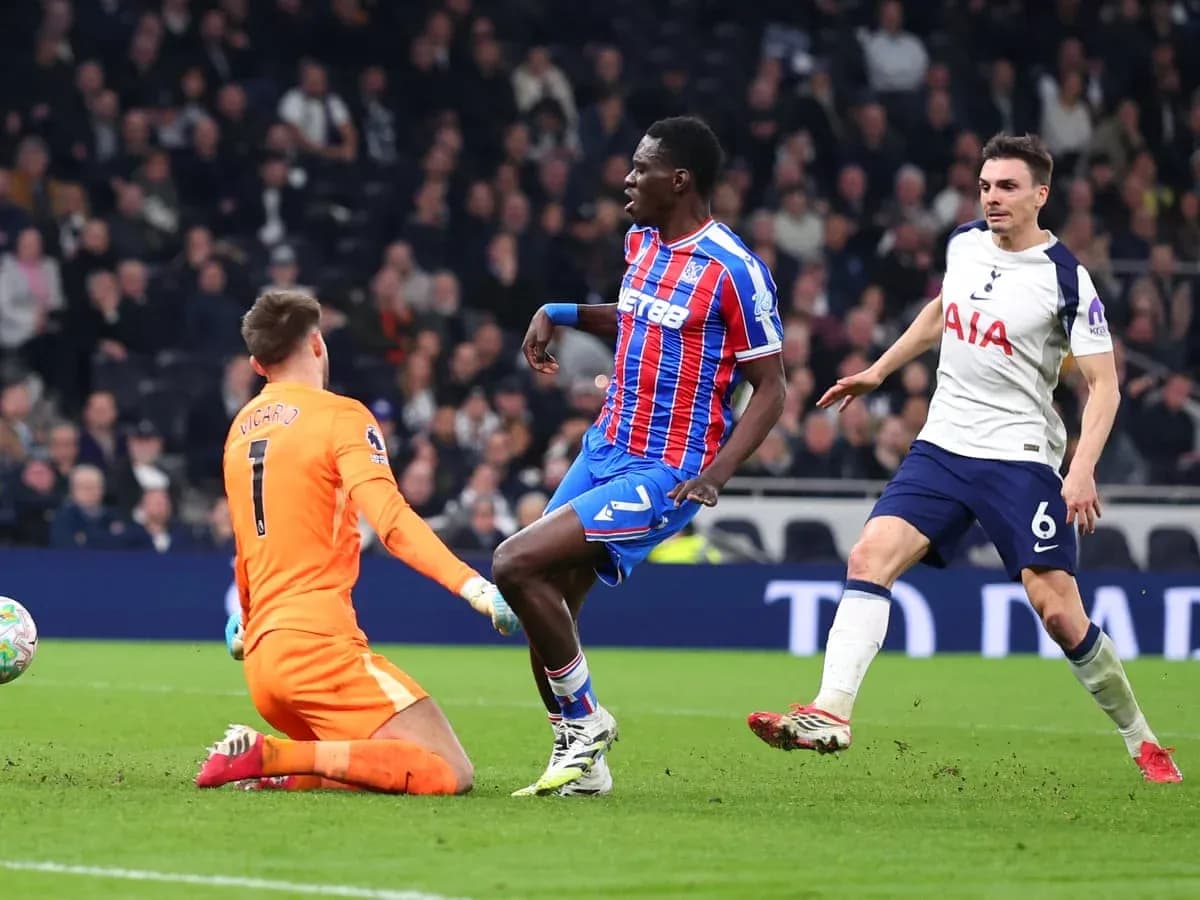
Crystal Palace’s 3-1 win at Tottenham Hotspur Stadium was built on control of space more than volume of shots. With 60 percent possession and a cleaner passing game (463 passes at 87 percent accuracy versus Spurs’ 311 at 78 percent), Palace used the ball to stretch a back three that was quickly reduced to two after Micky van de Ven’s 38th-minute dismissal. From that point, the match became a territorial exercise that Palace managed with composure.
Tottenham’s 3-4-2-1 was initially aggressive: ten of their twelve attempts came from inside the box, suggesting a plan to attack directly through Dominic Solanke with runners Mathys Tel and Randal Kolo Muani. They actually matched Palace for shots on target (four each) and generated a similar volume of attempts, but their overall threat lagged. Spurs’ chances amounted to around one goal’s worth of danger, while Palace created closer to two. That gap reflects Palace’s better shot selection and their ability to engineer higher-quality situations, particularly around the penalty incident and the late first-half surge.
The key structural shift was the red card. At 1-0 up through Solanke on 34 minutes, Tottenham’s game plan was working: compact mid-block, then fast vertical attacks. Van de Ven’s dismissal for a last-man professional foul forced an emergency reshuffle. Ange Postecoglou reacted with a double change on 43 minutes, withdrawing Kolo Muani and Souza for Yves Bissouma and Conor Gallagher. This was a clear move to restore central stability, sacrificing a forward and an advanced midfielder to protect a back line now permanently underloaded.
Palace’s 3-4-2-1 mirrored Spurs on paper but functioned differently after the card. With Adam Wharton orchestrating, they circulated the ball patiently, dragging Spurs’ ten men from side to side. Tottenham had five shots blocked by Crystal Palace, underlining how often Palace defended their box with numbers and forced Spurs to shoot through traffic rather than into clear lanes. At the other end, Palace were more decisive: eight of their nine shots came from inside the area, and Tottenham had only three Palace efforts blocked in return, indicating less congestion and more clean looks for the visitors.
Discipline and defensive intensity were finely balanced. Both sides committed fourteen fouls, but the card profile tells the tactical story. Tottenham collected three yellows: Souza for a foul at seven minutes, Pape Matar Sarr and Bissouma both booked for arguing (25 and 82 minutes), plus the decisive red for van de Ven’s last-man foul. Palace’s cautions, for Jørgen Strand Larsen’s foul on 22 minutes and Nathaniel Clyne’s foul deep in stoppage time, were more routine. The keepers performed at a standard level without needing extraordinary saves: Dean Henderson made three stops, Guglielmo Vicario one, consistent with the visitors’ superior finishing rather than goalkeeping heroics.
Later substitutions from both benches were about game state. Palace’s changes on 67 and 81 minutes (introducing Brennan Johnson, Christantus Uche and Will Hughes) were designed to refresh pressing and secure midfield control. Tottenham’s 74th-minute double switch, bringing on Xavi Simons and Richarlison, was an attacking gamble, but with a man down and chasing a two-goal deficit, they lacked the structure to convert possession into clear chances.
Overall, Palace’s winning formula combined numerical advantage, superior ball retention and smarter shot locations. Spurs’ plan had promise at eleven versus eleven, but once reduced to ten, they were forced into reactive defending and low-percentage attacking, while Palace calmly converted control into goals.