Curaçao's World Cup Journey: Brenet's Redemption
On a tiny Caribbean island that still flies the Dutch flag, a World Cup story has come full circle.
Curaçao, once a colonial outpost and still part of the Kingdom of the Netherlands, has long sent its people to the European heart of that union. Their children and grandchildren grew up in Rotterdam and Eindhoven, Arnhem and Amsterdam, and now form the spine of a national team that only gained FIFA recognition in 2010.
Of the 26 players wearing Curaçao’s colours at this World Cup, just one was actually born on the island. Fittingly, he is the most recognisable name in the squad: Tahith Chong, the rangy midfielder who once carried such weighty expectations at Manchester United and now plies his trade at Sheffield United.
Chong is not alone in carrying German football on his CV. Curaçao’s squad is dotted with players who once tried to make their mark in the Bundesliga and beyond. Gervane Kastaneer had a spell at 1. FC Kaiserslautern, Riechedly Bazoer turned out for VfL Wolfsburg, and Roshon van Eijma featured for Preußen Münster. Up front, Jürgen Locadia and Joshua Brenet both wore the blue of TSG Hoffenheim.
It is Brenet, though, whose journey stands out for its sharp turns and self-inflicted collisions.
From Nagelsmann’s bet to Hoffenheim outcast
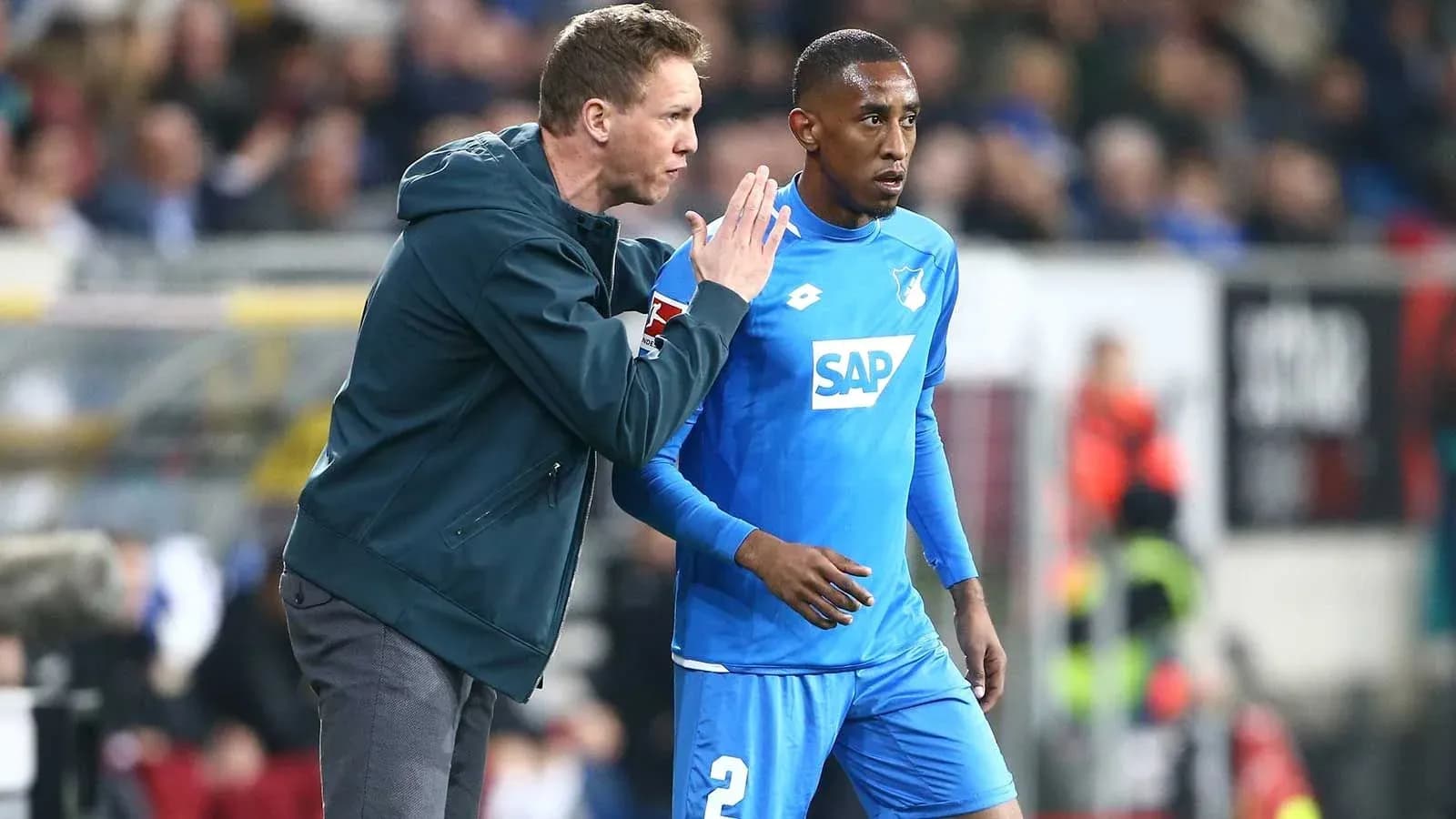
When Hoffenheim paid €3.5 million to prise Brenet from PSV Eindhoven in 2018, they believed they were buying a proven winner. He arrived as a three-time Eredivisie champion, a modern right-back with attacking thrust and two senior caps for the Netherlands. Julian Nagelsmann, then the bright young thing of German coaching and now in charge of Germany, had pushed for the deal.
The start was anything but smooth. Brenet watched the opening Bundesliga matches from the bench, struggling to dislodge established options. Then came the moment that would define his time at TSG.
Ahead of Hoffenheim’s first-ever Champions League match, against Shakhtar Donetsk, Brenet skipped a video session. Nagelsmann’s response was ruthless. The new signing was dropped from the squad on the club’s biggest European night.
Nagelsmann did later bring him back into the fold, but the damage lingered. Brenet’s involvement dwindled to sporadic cameos. When Nagelsmann departed, his successor Alfred Schreuder – now part of the Germany staff at the DFB – froze the defender out completely. Under Sebastian Hoeneß, the decline accelerated. Brenet was sent to the reserves in the Regionalliga Südwest, German football’s fourth tier, a long way from Champions League preparation meetings.
On the training ground, punctuality became an issue. Disciplinary problems piled up. Hoffenheim tried to find a buyer and failed, the once-promising full-back drifting until his contract ran down. In 2022, he resurfaced at Twente Enschede on a free transfer, back in the Netherlands with a chance to reset his career.
Self-sabotage and second chances
On the pitch at Twente, Brenet began to look like a top-level player again. He surged forward, defended aggressively, and reminded people why Nagelsmann had been so keen to sign him in the first place.
Off the pitch, the pattern repeated.
In January 2023, Dutch authorities caught him driving without a licence twice in two weeks. He had already lost that licence in 2020 after a drink-driving offence. The courtroom verdict was scathing. The presiding judge, unimpressed by his record, declared: “He clearly has no regard for authority. It seems to me as though he is continuing to play football after receiving a red card.”
The punishment followed in 2024: a one-month prison sentence. Years earlier, in 2021, Brenet had already received a suspended sentence that included a fine and community service for domestic violence. On appeal, the prison term for driving without a licence was converted into more community service, but Twente had seen enough. The club tore up his contract.
From there, his career became a tour of football’s outer edges. He joined Al-Rayyan in Qatar and managed just six appearances in the 2024/25 season. A move to Livingston FC in Scotland came next in the autumn, a short stay before he shifted again, this time to Kayserispor in Turkey for the second half of the campaign.
Yet here he is, at 32, lining up at a World Cup. Not for the Oranje he once represented in World Cup qualifiers back in 2016, but for the island of his parents.
FIFA granted Brenet a change of allegiance to Curaçao, the country of his heritage. Since his debut in 2024, he has carved out a central role: six goals in 17 appearances, an impressive return for a right-back. In the final warm-up match against Aruba, he started in his usual slot on the flank and scored again, a reminder of the attacking edge that first drew scouts to him.
On Sunday at 7 pm, in the bright glare of a World Cup opener, Brenet will walk out with Curaçao to face Germany – and across the technical area will stand two familiar faces: Nagelsmann and Schreuder, the coaches who once moved him aside.
An island that has long supplied talent to the Netherlands now watches one of its most wayward sons step back onto the biggest stage, this time in its own colours. The question is no longer whether he can get there. It is whether, at last, he can stay.