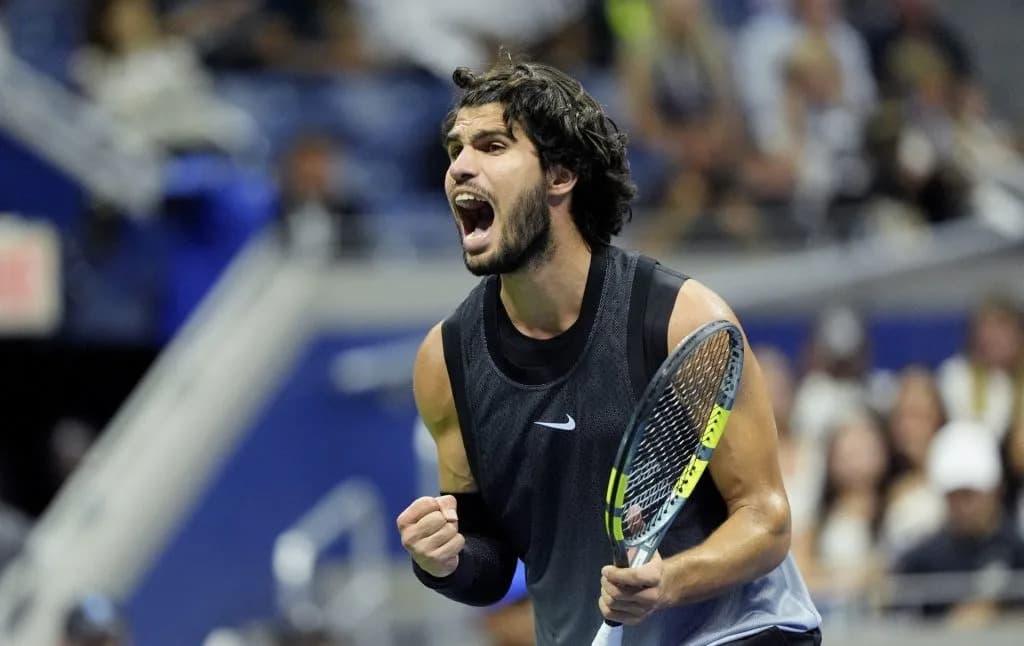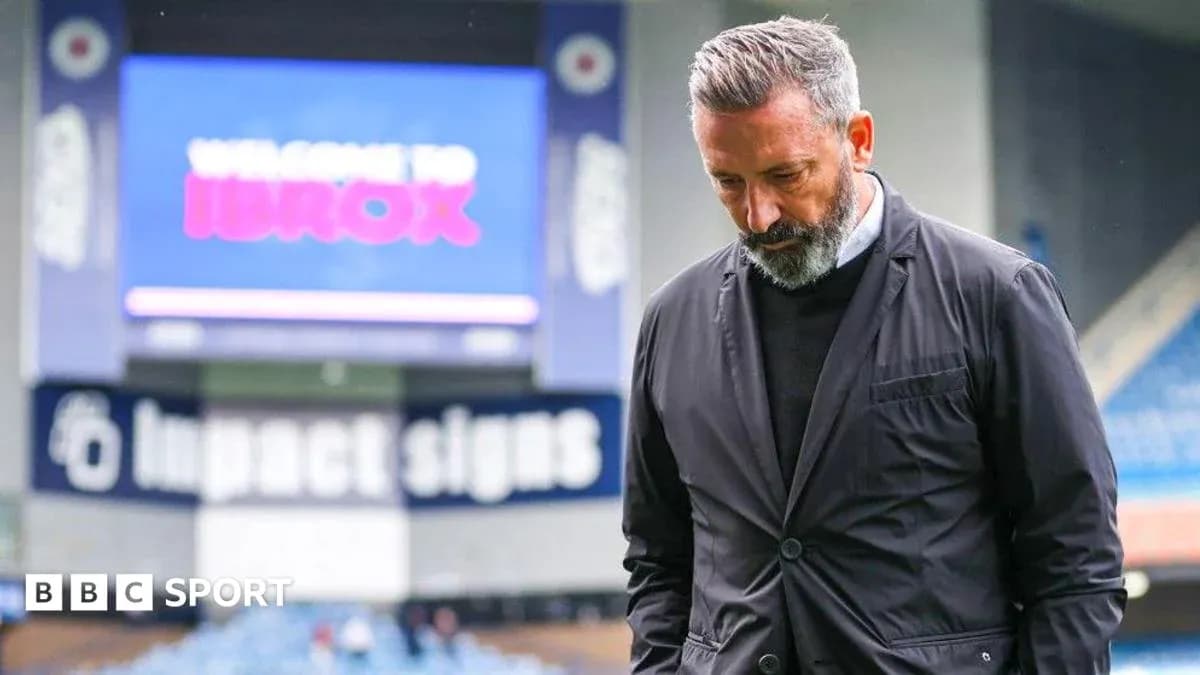
Derek McInnes Leaves Hearts for Rangers: A Journey of Nearly Men
When Derek McInnes walked into Tynecastle last May, he sold Hearts the story of a man finally getting the job he should have had years earlier. He called it “everything I wanted”. It sounded like a declaration of belonging, maybe even of permanence.
Thirteen months later, he’s gone. Not for England, not for some exotic league, but for the one club everybody always suspected would turn his head. Hearts have lost their head coach to Rangers, and the only real surprise is how little surprise there is.
Hearts’ nearly man moves on
The moment Rangers made it clear they wanted him at Ibrox, the outcome felt inevitable. This wasn’t a courtship, it was a formality. When, not if.
You could forgive Hearts supporters for fury, but the mood is more weary shrug than burning effigy. McInnes always was, and always will be, a Rangers man. That was the subtext from the start, even as he led Hearts on a remarkable charge at the title.
He took them to the brink of the greatest day in the club’s modern history, three minutes from winning the Scottish Premiership. Three minutes from turning a dream into a banner that would have hung over Gorgie for generations. Yet, even in that moment, he never quite felt like a man destined to be carved into the Tynecastle stone.
Hearts fans adored the ride. They respected the work. But they never truly believed he was theirs for the long haul, not with Rangers hovering in the background like a recurring plot line.
The job he said he’d always wanted has turned out to be a stepping stone. The one he’s always really wanted is in Govan.
Control, power and Jamestown’s shadow
McInnes adapted impressively in Edinburgh, but he never fully settled into the way Hearts now operate. This is a club where Jamestown Analytics hold serious sway, where data has a seat at the top table and influence over recruitment and selection.
McInnes is old-school in one fundamental way: he wants control. Real control. The kind he enjoyed at Kilmarnock and, more notably, Aberdeen. At Hearts, that was never truly on offer. The model is different, the power spread wider.
At Rangers, he’ll get something much closer to his preferred world. He will run the football department on his terms, with the kind of authority he has craved and the kind of budget he has never known.
No more explaining to data specialists why a certain player isn’t getting minutes. No more seeing targets vetoed because their numbers don’t light up a spreadsheet. No more inheriting players whose primary qualification is an algorithm’s approval.
This will be McInnes’ team, his structure, his vision. His train set, with all the pieces bought from a far more expensive shop.
The lure of Ibrox – and the cost
Accuse him of disloyalty if you like, but the calculation is brutally simple. Rangers’ owners have already spent heavily in their short time in charge and are ready to go again this summer, potentially on a scale that dwarfs anything McInnes has previously handled.
For a manager who almost snatched last season’s title on a modest budget, the chance to attack the league with serious financial backing is a powerful draw. In the hard-nosed world of football, this is an easy decision to understand.
He arrives at Ibrox in a position of strength, not as a desperate firefighter but as the man chosen to reset the club’s direction. The brief could not be clearer: win the Premiership. Nothing else will do.
Danny Rohl had a shot and missed, finishing third. The sympathy was minimal. Philippe Clement climbed to second and still wore out his welcome in double-quick time. Rangers supporters are past the point of patience. Explanations don’t count. Only titles do.
McInnes knows that better than anyone. He is a persuasive talker, but at Ibrox, words have become cheap. Banners and trophies are the only currency that holds.
Big club, big personality, big questions
On paper, he fits. He knows Rangers, knows the league, and knows how to communicate with players, media and supporters. He is tactically astute; the Rangers hierarchy felt that first-hand when his Hearts side caused them serious problems last season.
He is tough, too. Nobody has ever accused him of lacking self-belief. Throughout Hearts’ near-miss campaign, as club records fell like skittles, his messaging never wavered. He projected calm, authority, and ambition, even as the pressure rose.
Rangers demand a big personality in the dugout. McInnes is that, unquestionably.
His record in big domestic games is rich in appearances if not in medals. He took Aberdeen to Hampden so often it began to feel like a second home. League Cup finals in 2013-14, 2016-17, 2018-19. A Scottish Cup final in 2016-17. He kept putting his teams in the frame.
Celtic repeatedly stood in his way. Nobody can fairly hammer him for losing to a club of that strength, but the story isn’t just about running into a green-and-white wall. McInnes also went out of cups to Dundee United, Hibs, St Johnstone, Dundee, Hearts, Motherwell, Hearts again, St Mirren, Motherwell again and United again.
While he has been chasing the next big moment, others outside the Old Firm have seized theirs. Since he last lifted a major trophy with a Premiership club, St Johnstone, Inverness, Hibs, St Johnstone again and Aberdeen have all won the Scottish Cup. Ross County, St Johnstone and St Mirren have taken the League Cup. Managers like Tommy Wright, John Hughes, Alan Stubbs, Callum Davidson – twice – Jimmy Thelin, Jim McIntyre and Stephen Robinson have all found a way to turn opportunity into silver.
McInnes has often been close. Very close. But there remains a touch of the nearly man about him.
The chance he’s waited for
That is what makes this next chapter so compelling. At Rangers, there is nowhere to hide. The resources are greater, the expectations higher, the margin for error almost non-existent.
His duels with Celtic’s manager will define his time at Ibrox. His tussles with whoever follows him at Tynecastle will add spice to a league that already feeds on narrative and grievance.
Hearts, for him, turned out to be the job he wanted at the time, not the one he dreamed of for all time. The move to Rangers strips away the caveats, the what-ifs, the talk of budgets and ceilings.
Now he has the power, the backing and the stage he has chased for years.
The nearly man has finally reached the club where “nearly” is never tolerated.