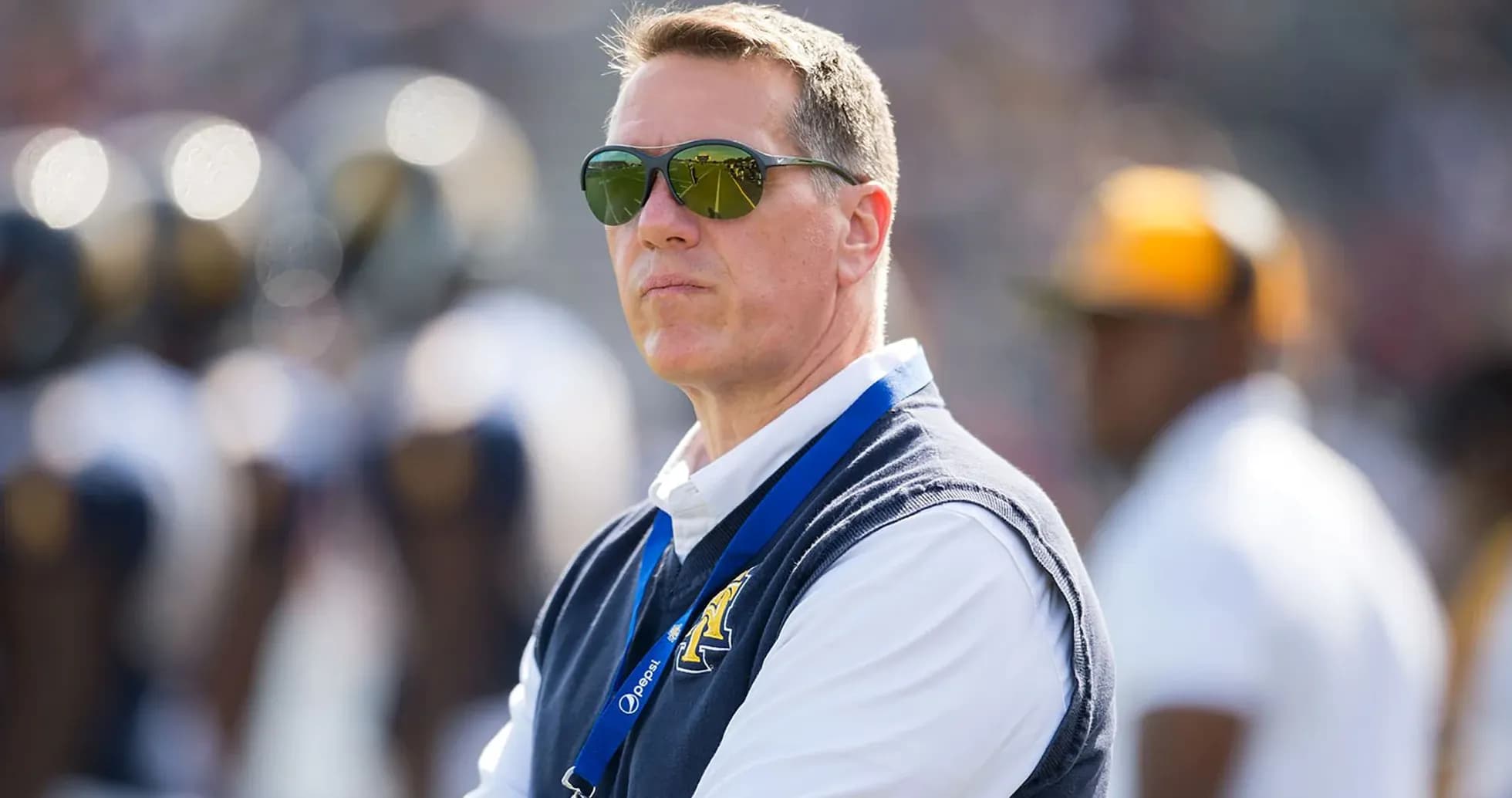
Earl Hilton III to Step Down After 15 Years at North Carolina A&T
EAST GREENSBORO, N.C. — One of the most influential figures in modern HBCU athletics is preparing to hand over the keys.
Earl M. Hilton III, the longtime athletics director who turned North Carolina A&T from what one outlet once called “academic and organizational chaos” into a national standard-bearer, will step down this summer at the end of his contract, the university announced Tuesday.
A national search for his successor starts immediately. Hilton will stay in the chair until the next athletics director is hired and in place, a final act of stewardship from the man who has been the Aggies’ steady hand since 2011.
From Crisis to “Excellence Without Apology”
When Hilton first took the job on an interim basis in late 2010, A&T athletics was staggering. The program was struggling on multiple fronts, from the classroom to the playing fields. By February 2011, when he was named permanent athletics director, the task in front of him was clear: rebuild almost everything.
He did not tiptoe into it.
Working alongside university leadership, Hilton imposed order and set a new standard under a blunt, ambitious banner: “excellence without apology.” That wasn’t just a slogan. It became the operating code.
He hired aggressively, bringing in coaches who could recruit and win, but also manage the academic demands of a large Division I program. He backed them with administrative staff who could handle the growing complexity of college sports. The results followed.
Student-athlete graduation rates climbed by more than 51%. Annual giving to athletics didn’t just rise; it exploded, growing more than 15-fold. On the field and track, Aggie teams and individuals piled up more than 70 championships at the individual, team, conference, national and even Olympic levels.
The transformation did not go unnoticed on campus — or around the country.
“North Carolina A&T is tremendously grateful for the outstanding leadership Earl has provided for our student athletes over the past 15 years,” Chancellor James R. Martin II said. “He created an environment in which more than 300 student athletes each year never lose sight of the fact that they are students first and that success in the classroom comes before competition on the playing field.
“We have especially appreciated his steady hand in a time of unprecedented change throughout the NCAA.”
Four Celebration Bowls and an Olympic Stage
If one sport crystallized the Hilton era, it was football.
Between 2015 and 2019, North Carolina A&T owned the Celebration Bowl. The Aggies captured four titles in five years, repeatedly claiming the mantle of Black college football national champions and turning December into a showcase of blue and gold on national television.
Aggie football became a force, but it wasn’t alone.
Track and field surged into the global spotlight. At the Tokyo Olympics in 2021, A&T athletes brought home three medals, two of them gold — a staggering haul for any program, let alone one representing a historically Black college or university.
The momentum rolled straight into 2022. The men’s track and field team finished second at the NCAA Indoor Championships, behind only Texas. No Division I HBCU had ever finished that high indoors. A&T had moved from contender to trailblazer.
Navigating a New Era in College Sports
Hilton’s tenure coincided with one of the most volatile periods in the history of college athletics.
The NCAA transfer portal reshaped rosters. Name, Image and Likeness rules rewrote the economics of being a student-athlete. Direct payments to players emerged as a new frontier. All of it hit at once, and all of it landed on the desks of athletics directors.
Hilton managed it while also steering A&T through two conference realignments that redefined the Aggies’ competitive and institutional profile.
In 2020, A&T left the Mid-Eastern Athletic Conference for the Big South Conference. Two years later, the university moved again, this time into the Coastal Athletic Association. Those decisions were about more than schedules and bus rides. They were crafted to align A&T with other doctoral research universities with similar ambitions and to put its athletes on a wider stage.
The moves brought new opponents, new recruiting pitches and new exposure. They also demanded a leader who could sell a vision internally while absorbing the external scrutiny that always comes with leaving a traditional home. Hilton took that on and kept the department moving forward.
His peers took note. In 2019, he was named an Under Armour Athletics Director of the Year for NCAA Football Championship Subdivision institutions, national recognition of a body of work that had turned A&T into a model for what an HBCU athletics department could be in the 21st century.
A Legacy Built on People
Before he became the face of Aggie athletics, Hilton spent eight years in student affairs. That background never really left him.
He often framed success in terms of people, not just trophies — the more than 300 student-athletes who come through the department each year, the coaches who push them, the staff who support them, and the boosters and fans who fill the stands and sustain the program.
“It has been my singular privilege to have worked with so many wonderful and talented student athletes and the dedicated coaches and staff who support them. I have been blessed to be part of a remarkable community of boosters and fans who have sustained us with unflinching resolve,” Hilton said.
“I am honored to have witnessed historic academic and athletic achievement and look forward to our continued success under the leadership of Chancellor Martin and the next athletics administration.”
The search committee now has the task of finding someone to follow that act — a leader who can inherit a program no longer in chaos, but in contention, and carry North Carolina A&T into the next wave of change bearing down on college sports.