Elliot Anderson: From School Fields to World Cup Stardom
Elliot Anderson used to run the show on school fields so completely that his teachers joked about sticking a bet on him playing for England one day. They never did. Thomas Tuchel might wish they had.
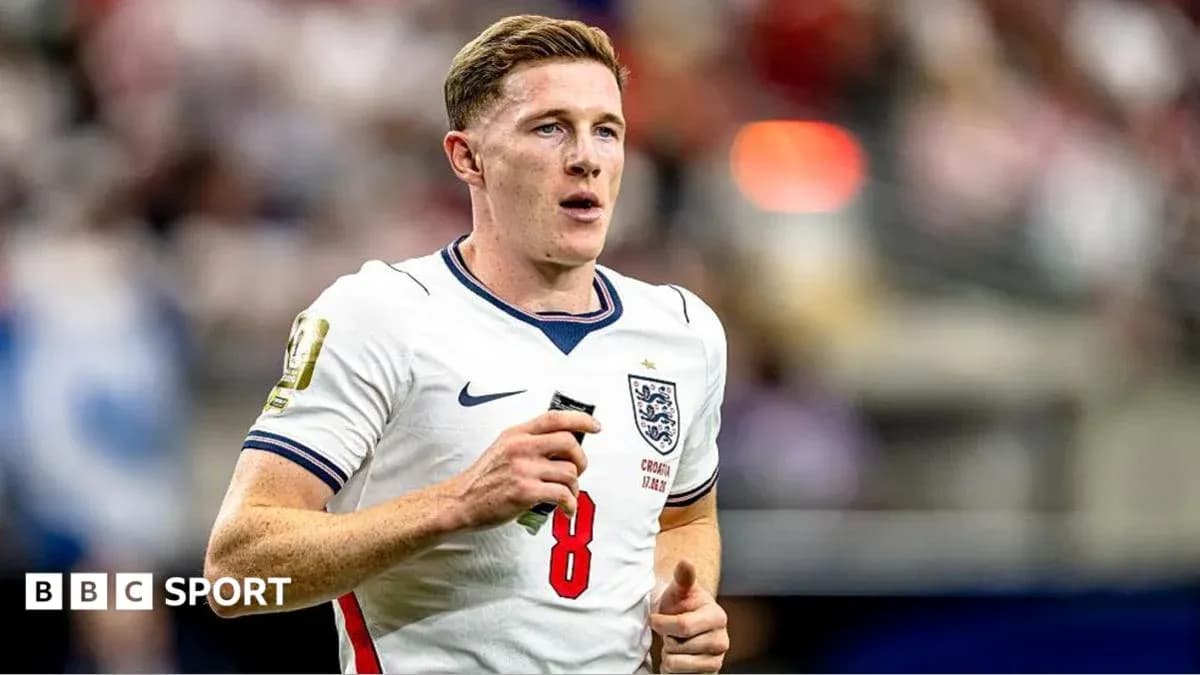
From the grass of Tyneside to the glare of a World Cup, the Nottingham Forest midfielder now stands on the brink of becoming the most expensive British footballer in history. On Tuesday in Boston, when England face Ghana, another chapter in a remarkable rise will play out.
The one that got away
In Newcastle, they talk about Anderson with a mix of pride and regret. He is the quiet, self-effacing local lad who made it – just not in black and white stripes.
Eddie Howe called his £30m sale to Nottingham Forest in July 2024 “the most reluctant” of his career, a transfer Newcastle were effectively forced into as they scrambled to stay on the right side of profit and sustainability rules. The fear of a points deduction outweighed the fear of losing a homegrown jewel.
The sense of what might have been has only deepened. At 23, Anderson has muscled his way into the centre of England’s World Cup plans, Tuchel branding him “the full package”. Manchester City have already tested Forest’s resolve with an offer worth around £120m. Forest said no. Talks continue.
If City come back, they may have to go beyond the £125m fee that took Alexander Isak from Newcastle to Liverpool last summer. That is the level Anderson has reached – and quickly.
Scotland’s near miss
The frustration is not confined to Tyneside. Scotland thought they had him.
With a Scottish grandmother, Anderson came through their youth ranks, playing at under-21 and junior level. He was called into the senior squad for a Euro 2024 qualifier in Cyprus and a friendly with England in September 2023, only to withdraw injured. The wait for a debut ended with a different anthem: he later pledged for England instead.
When that England call finally came, and he debuted against Andorra in September 2025, his mother Helen called it “nothing short of incredible” and “so emotional”. For the family who had built their lives around his dream, it was the moment the whispers from school fields became reality.
Valley Gardens to Wallsend – and beyond
Long before World Cups and nine-figure bids, there was Valley Gardens Middle School and the legendary Wallsend Boys’ Club.
Anderson grew up kicking a ball around with his elder brothers, Louie and Wil – the latter later gaining his own kind of fame as a contestant on Love Island. At school, English and PE teacher Jonathan Roys, also his head of year, already knew the family. He had taught the brothers and played against Anderson’s dad.
“His brothers were decent,” Roys recalled, “but being the youngest of three he was used to getting bossed about a little bit, and he took no quarter off anybody. He’d get stuck right in.”
The talent was obvious early. In 2014, Anderson captained Valley Gardens to victory in the English leg of the Danone Nations Cup, scoring a hat-trick in a 3-0 win in a prestigious worldwide youth tournament. It was a clear marker: this was not just another good school player.
At home, his parents, Iain and Helen, made sure football never came at the expense of education. Lessons were built around his schedule at Newcastle United’s academy, the club he adored and seemed destined to represent for years.
“Elliot was quiet, self-effacing,” said Roys. “He came from a great family. They made sure we organised his lessons around time at Newcastle’s academy. As head of year you can sometimes deal with kids who cause problems but he was never any trouble. He just got on with it. Reports were usually glowing, both from school and the academy.”
He excelled at everything. Athletics. Cross country. Indoor events. Cricket. Yet football always sat at the centre.
“You could see he had something special as a footballer,” Roys added. “He had something different when he played other sports as well. He was standard size, not massive for his age, but he more than held his own. He was the stand-out player despite not being the biggest.”
The staff even half-seriously debated backing their judgement with cash. “We were saying ‘shall we put a bet on him to play for England?’ We didn’t in the end, and of course he got into the Scotland set-up first.”
At school he usually played in midfield, simply because he was the best player. Once, in a game against Wallsend Boys’ Club, they even stuck him in goal. It barely mattered where he lined up. He made it work.
Years later, Roys bumped into him in a local shop. Anderson’s greeting was simple: “All right sir.” It stuck with the teacher. “He’s a real inspiration to the new generation and everyone is proud of him.”
Bristol Rovers and a defining afternoon
Anderson’s senior Newcastle story never quite matched the fairytale. He played 55 times in all competitions, making his debut in an FA Cup defeat at Arsenal in January 2021. The real turning point came a year later, on loan at Bristol Rovers.
In the west country, he found the sort of proving ground that can make or break a young midfielder. Glenn Whelan, the former Republic of Ireland international, was player-coach at Rovers and remembers the arrival vividly.
“He just came into the building and showed his potential straight away,” Whelan told BBC Sport. “Nothing seemed to faze him. You could see straight away this boy was different.”
Whelan tested him in training, throwing him into uncomfortable scenarios to see how he would react. Some youngsters shrink. Anderson pushed back.
“Elliot was right on the front foot,” Whelan said. “He took the bull by the horns.”
One date stands out: 5 February 2022. Rovers were away at Sutton United, a hardened, physical side flying high.
“Some of the coaching team were a little wary of throwing him in against them,” Whelan recalled. Rovers trailed at half-time. Whelan made his case. “I basically said ‘we need to get this lad on because he’s a game-changer.’”
On he came. He won a penalty. Rovers drew. From that point, he was almost undroppable.
He played off the left, but never hugged the touchline and waited. If the ball did not come, he went looking for it. He took it under pressure, demanded it in tight spaces, shrugged off markers, and made things happen.
“He just had a confidence about him to show everyone how good he was,” said Whelan. “It was not arrogance. He’d obviously had a great upbringing from his family and he had that Geordie in him.”
Training became a daily exhibition. Anderson stayed behind, did extras, asked questions. “We could tell straight away he was going to be a top player,” Whelan said.
The season ended in chaos and glory. On the final day, Rovers needed to better Northampton’s result or win by five goals more to clinch promotion to League One. They won 7-0. Anderson scored the final goal with five minutes left, the strike that pushed them into the top three for the first time all season.
He left the pitch that day on the shoulders of jubilant supporters, carried off in a scene that still ranks among the greatest in the club’s history.
Numbers that command a fee
Fast forward, and the boy who once lit up a League Two promotion race now dictates Premier League midfields and World Cup ties.
The romance of his journey is matched by cold, compelling data. Last season Anderson had more touches than any other player in the Premier League (3,300). He won possession more than anyone else (306 times). He won the most duels (297) and drew the most fouls (80).
Those numbers shape negotiations as much as his England status. They explain why Forest feel emboldened to reject a £120m bid, and why City’s recruitment team keep coming back to the same conclusion: this is a midfielder worth reshaping a squad for.
The expectation is that he will start next season at Manchester City, working under incoming coach Enzo Maresca. A possession-obsessed manager handed a midfielder who lives on the ball. It feels a natural fit.
Whelan, for one, sees no ceiling.
“The sky’s the limit,” he said. “I don’t think it will faze him at all. He just loves playing football. I think if he wasn’t playing for Nottingham Forest or England at the World Cup, he’d be playing grassroots with his mates.
“He’s going to be around for a very long time. We see what he’s doing at the World Cup but I think in time the top teams in the Champions League and all over the world will be sitting up to watch this boy play.”
From a teacher’s half-serious betting slip that never was to a World Cup and a potential record-breaking transfer, Elliot Anderson has already outrun the old predictions. The real question now is not whether he plays for England, but how far he can drag them – and his next club – on the biggest stage of all.