Emma Hayes Challenges USWNT in Hostile Brazil
The whistles never stopped.
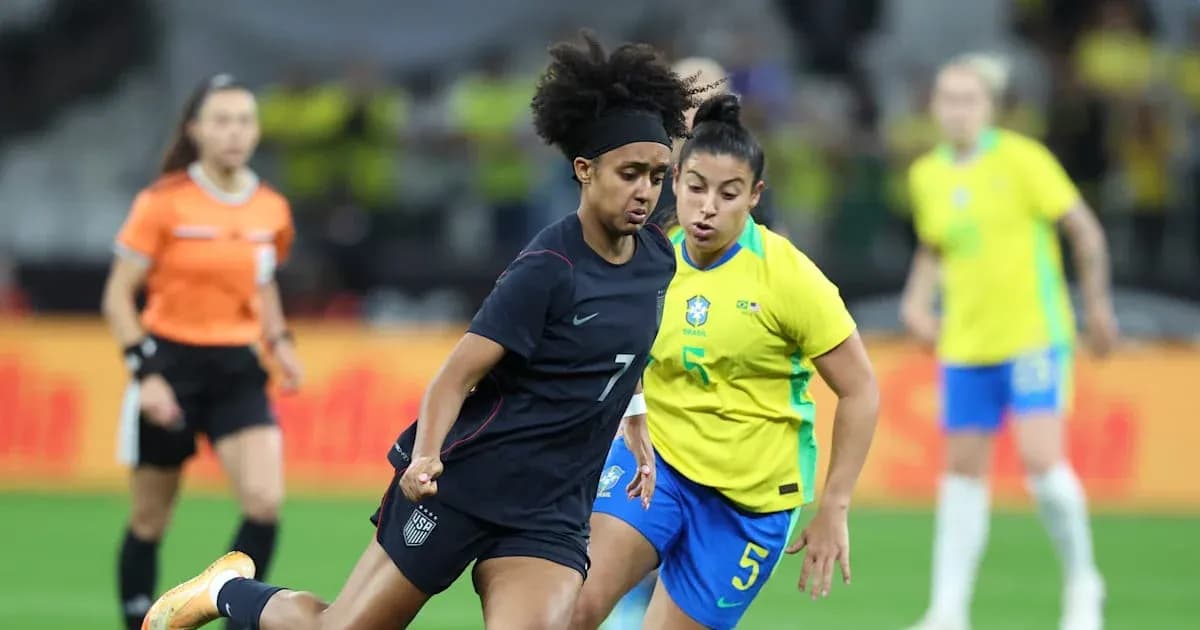
From the first touch to the final clearance, the U.S. women’s national team were dropped into a cauldron in Brazil and told to figure it out. No comforts of home, no friendly crowd to lean on. Just noise, hostility, and a South American side that relishes chaos.
For Emma Hayes, that was exactly the point.
Hayes takes the USWNT out of their comfort zone
The USWNT are usually the hosts, the ones flying teams in, filling American stadiums, and scripting the occasion. This June window flipped the script. Two games in Brazil, a year out from a possible return for the 2027 Women’s World Cup, if qualification is secured.
The first of those games, on Saturday, bit hard.
Brazil, who have already beaten the U.S. in recent meetings, did it again. The home fans turned the match into a test of nerve as much as quality, a wall of whistles and jeers that never relented.
“It was an amazing atmosphere and it’s one that, as much as I can prepare my team for this, you don’t really know until you experience it,” Hayes said afterwards. “I am sure for many of my players, this is the first time they’ve ever experienced an intensity [like that] from the crowd.”
From minute one, the message from the stands was clear: nothing would be easy here.
Brazil brought their trademark physicality and what Hayes has long called “chaos ball” – fast transitions, heavy challenges, momentum swings that can rattle even seasoned teams. For a U.S. side still in the early stages of a rebuild under their new head coach, it was unfamiliar territory.
Hayes embraced it.
“I am so happy for the experience, because if we want things to be easy, we stay at home and play in LA or somewhere else,” she said. “We don’t want easy.”
Early lead, quick punishment
For a brief moment, it looked like the U.S. might quiet the crowd. Sophia Wilson struck early, her first goal since returning to the national team, and the visitors had a 1-0 lead to protect.
The silence didn’t last.
Brazil hit back with a quick-fire double, flipping the scoreline to 2-1 inside the opening 15 minutes. The stadium roared back to life, and the U.S. suddenly found themselves chasing a game in a hostile environment with very little rhythm to cling to.
Brazil then dug in. They defended with discipline, snapped into tackles, and turned every loose ball into a contest. Hayes’s side had half-chances and flashes of promise, but clear-cut opportunities in front of goal were rare.
Inside the U.S. camp, there was no attempt to pin the loss on the referee, the crowd, or the conditions. The players know where the focus has to be.
“It’s up to us”: Heaps demands mental steel
Captain Lindsey Heaps cut straight to the heart of it.
“It’s difficult when it’s a game like that, when you’re being thrown to the ground multiple times and calls aren’t going your way,” she said. “But it’s up to us – it’s that mental capacity to stay in a game like that.”
The U.S. did not unravel. They stayed in the fight, kept their shape, and tried to build their way back into the match. For Heaps, that composure under fire is a sign of progress, even if the result stung.
“I’m really proud of our team because we stayed level-headed and we still created opportunities, but it’s about having that experience to get that goal back and walk away with a result from this kind of game,” she added. “It’s hard but I think that emotional control has gotten so much better throughout this past year.”
That emotional control will be vital in November, when qualification games arrive, and potentially again next year if the U.S. return to South America with far more on the line.
Wilson’s return and the value of a setback
Wilson’s goal was a personal milestone, her first since rejoining the national setup, but she treated it as part of a bigger lesson.
“We needed to do a better job of controlling the game and keeping that lead, but it was a really good test for us, and we felt what it is like to play here in their home country,” she said.
The second half, in particular, showed a different side of this U.S. team. The tempo calmed. The decision-making improved. The visitors looked more assured, even as the crowd tried to drag Brazil over the line.
“I think we can take what we need to from this game and the nice part is we get to go again in a few days,” Wilson added.
That “again” comes fast.
Fortaleza awaits – and so does the noise
On Tuesday, the U.S. and Brazil meet for the 45th time. History leans heavily in the Americans’ favor, but the present does not: the USWNT are trying to avoid a third straight defeat to the Brazilians.
This time, the backdrop changes to Fortaleza, another venue ready to unsettle, another crowd eager to test the visitors’ nerve.
For Hayes, this is the rebuild in real time. Young players thrown into hostile environments. Veterans forced to adapt to a new style and new demands. A team learning to live without the safety net of home.
They could have stayed in Los Angeles, packed a stadium with friendly faces, and eased their way into the next phase. They chose Brazil instead.
The question now is simple: will these bruising nights in South America harden the U.S. into contenders again by the time the World Cup returns to this continent in 2027?