England's Heavyweight Bout Against Argentina: Kane's Missed Opportunity
For an hour in New Jersey, England went toe-to-toe with the world champions. Not superior, not outclassed. Just there, trading blows with Argentina, holding their ground in a way that felt unfamiliar and, briefly, convincing.
When Anthony Gordon swept in the opener on 55 minutes, it didn’t feel like a heist. It felt like the first clean punch in a heavyweight bout. Argentina, you assumed, would swing back. England, for once, looked ready to answer.
They never did.
As Lionel Scaloni’s side surged forward, England shrank. The blue shirts poured on to them with growing belief, sensing exactly what their coach later described: Argentina “smelled blood in the water”. England, by contrast, looked like the ones tossing the chum, inviting the frenzy.
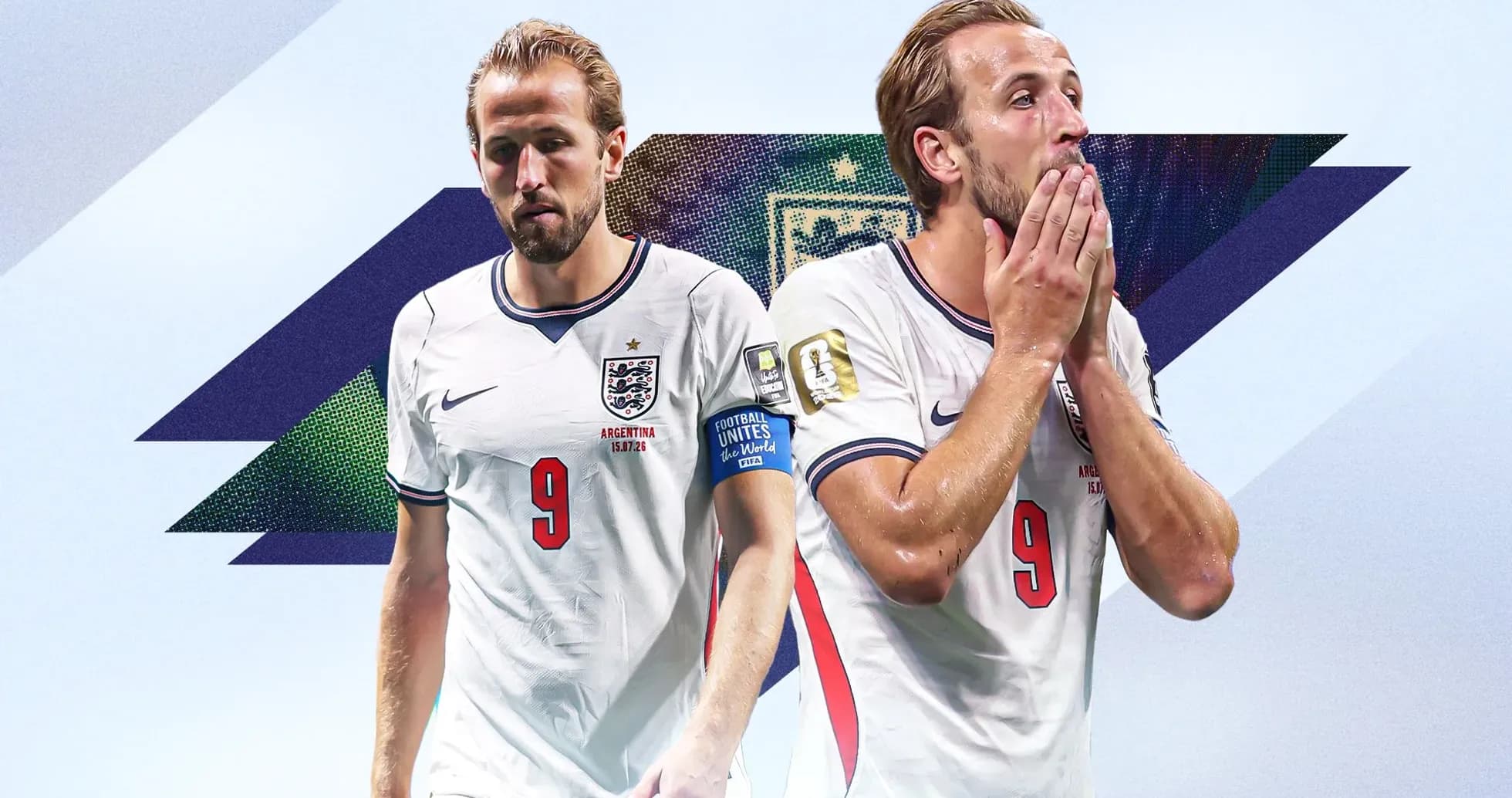
And through it all, Harry Kane stood in the middle of the storm, strangely peripheral. His numbers are brutal: 26 touches, nine completed passes, one blocked shot, no touches in Argentina’s penalty area. On paper, it reads like the ghost of a centre-forward.
The reality was messier.
This was a scrappy, jagged semi-final, and Kane met the chaos head-on. In the first half, he fought. He crashed into challenges, contested more duels than Lisandro Martínez and Alexis Mac Allister, and repeatedly hurled himself into 50-50s with a recklessness that bordered on self-sacrifice. In a game that refused to settle, he was willing to get his hands dirty.
That mattered when the match was tight and ugly, when there was little football to be played. Once England scored, the game changed. Kane did not.
After Gordon’s goal, Tuchel faced a tactical dilemma that was as awkward as it was decisive. Only days earlier at the Azteca, England had executed a heroic backs-to-the-wall stand to edge Mexico, a defensive epic that owed plenty to Kane’s industry. He went 89 minutes there, scrapping, kicking, fighting, helping his team cling on.
He did the same thing here. The problem was England no longer needed a trench-warrior. They needed an escape route.
Kane knew something was wrong. He said as much.
“For one reason or another, we struggled to be on the ball, we struggle to put pressure on the ball and it allowed them to create more momentum and created more attacks for them in our final third,” he admitted afterwards.
The irony is stark: Kane was part of the solution in his own mind, but part of the problem in reality.
England needed an out ball, a striker to pin one of Argentina’s big centre-backs, to give a panicked team a simple pass and a way up the pitch. Kane is close to the complete forward. His touch, his finishing, his brain – all elite. What he does not have, and has never had, is pace.
So he did what he always does when the game runs away from England. He dropped deeper. He tried to plug gaps, to stem the tide. Instead, he watched wave after wave of Argentine attacks crash just in front of him, powerless to affect any of it.
This was no longer his game. Tuchel should have taken him off. He didn’t. Kane stayed on, stuck between the lines, watching England’s season unravel.
In the broader context, the ending feels brutally harsh. And yet, not entirely undeserved.
Kane’s club campaign with Bayern Munich was astonishing. He shredded records in Germany, hitting 58 goals in all competitions, the most ever by a Bundesliga player in a single season. No one in Europe’s top five leagues matched his domestic tally of 36. He became the quickest Bayern player ever to reach 100 goal contributions. Bayern cruised to the title by 16 points, even easing off late on.
The numbers dragged him into Ballon d’Or territory. These were heights even Robert Lewandowski never quite reached. Statistically, Kane parked himself in the same stratosphere as Messi and Ronaldo. On output alone, the argument for him to become the first English winner since Michael Owen was entirely legitimate.
But Bayern’s failures in the biggest games undermined the case. They went stride for stride with eventual European champions PSG, but couldn’t overturn the deficit in the second leg, falling 6-5 in a semi-final that slipped away from them.
The World Cup, then, loomed as his reset button. Kane himself acknowledged it. A dominant tournament, a deep run with England, and the narrative would tilt back in his favour.
“I’d be one of the favorites, definitely,” he said before a ball was kicked. “Given the trophies I’ve won this season and the number of goals I’ve scored, I’d be in the running. Especially as, should England win the World Cup, one could imagine the trophy going to an English player.”
For five games, he played like a man chasing exactly that. He struck twice against Croatia, once against Panama, twice against Congo, and added an assist in that draining night at the Azteca. He and Jude Bellingham dragged England forward. The rest of the side simply kept the machine ticking.
The Golden Boot was within reach. It usually matters in these debates, and going into the semi-final Kane trailed Messi and Kylian Mbappé by only two goals. Logic said England would need him to score if they were to reach the final. Logic also said this was set up for him.
He never landed the blow.
Failing to score against Argentina has almost certainly cost him the Golden Boot. Even if he were to rattle in a hat-trick against France in a third-place play-off he has no business starting, it would be a stretch to imagine Messi not scoring against Spain in the final. The race is effectively run.
Kane will fly back to Germany empty-handed in international terms: no World Cup, no Golden Boot, no defining moment. His shot at the individual crown has gone.
The bleakest part? This might be the last real chance.
His move to Bayern felt like a rebirth, a belated escape from a Tottenham spell that, for all his brilliance, lasted a year or two too long. At Spurs he was consistently one of the Premier League’s finest, but always surrounded by flaws: uneven squads, cautious investment, a sense of permanent almost.
In Munich, the doubts evaporated. His first two seasons there were a statement of legitimacy. Kane could dominate at the very top. Perhaps, even in his thirties, he was still climbing. He has spoken about studying other sports, about learning from athletes who stretch their careers by obsessing over conditioning. His Bayern years suggest he can keep beating back the clock – at club level.
International football is a different beast. No long campaigns to iron out the wrinkles. No midwinter breaks, no carefully managed minutes. Just a short, brutal sprint at the end of a draining season. England extended their World Cup camp, but it was still under two months. After everything that came before, this tournament was a dash.
When it mattered most, Kane couldn’t keep up.
If this is the last time he arrives at a major tournament at, or near, his peak, his England legacy becomes a complicated story to tell.
On the numbers, it is extraordinary. He is, by any reasonable measure, England’s greatest ever striker. Barring catastrophe, he will storm past 100 international goals. Peter Shilton’s record of 125 caps is within reach; Kane is already on 121. He has scored more World Cup penalties than any player in history and claimed the Golden Boot in 2018.
Yet the empty space on his CV is impossible to ignore. Major tournaments have repeatedly betrayed him, or he has betrayed them. He was ineffective at Euro 2024. He missed a critical penalty in Qatar in 2022. He has led weaker England squads to semi-finals and finals, but never quite dragged them over the line in the way players of his calibre tend to do.
Look at the names who sit alongside him in the goalscoring pantheon – Messi, Ronaldo, Pelé, Maradona, Henry. Every one of them can point to a major international trophy. Kane cannot.
And England have a problem of their own. Behind him, the cupboard is disturbingly bare. Tuchel brought a 30-year-old Ollie Watkins and a 30-year-old Ivan Toney to this World Cup. There is no obvious young heir, no prodigy waiting to seize the No 9 shirt. For all the talk of transition, Kane will be difficult to dislodge.
So the most likely scenario is that England roll on with him leading the line into Euro 2028. They will probably be competitive. They may even be contenders. But by then, Kane will be 34, edging down the far side of the hill. England, for now, have nobody else.
Kane, unsurprisingly, does not see an end yet.
“The national team is my pride and joy,” he said. “It’s what I love to do most more than anything. Obviously four years is a long way away, I’m 33 this summer but it never ended with Leo [Messi] there, he’s still performing at the highest level. I never want to put a limit on these things.”
He shouldn’t. Nor can England afford to. But time is not a neutral referee. Kane has stood at this crossroads before, with a tournament there to be seized, and watched the opportunity slip through his fingers.
This one, against Argentina, with a Ballon d’Or in play and history within reach, feels like the biggest miss of all.