England's Tactical Challenge Against DR Congo in World Cup Knockout Stage
England’s route to the latter stages of this World Cup will not be decided by romance out wide or tricks in the final third. It will be decided in the engine room – and by how bold they dare to be with Declan Rice and Elliot Anderson.
The argument has rumbled on: can you really start both in the same side? Two players who, by instinct and by club duty, like to sit in front of the back four, recycle the ball and build the play rather than finish it. Two number sixes, when the public mood is crying out for two number tens.
Strip away the labels and you’re left with something simpler. These are two of the best central midfielders in the Premier League. Rice brings that relentless engine, the ability to cover ground, break up play and keep England secure. Anderson sees passes early, has the range to switch play and thread those clever balls between the lines. One of them has to be encouraged – almost forced – to step beyond the traffic and join the finish.
Right now, both naturally drop in, take the ball off the centre-backs and set the tempo. That double screen gives England’s full-backs the licence to fly on and overload in wide areas. On paper, it’s logical. It gives structure. It gives security.
But there comes a point in a knockout game when logic has to give way to risk.
If, by the hour mark, England are still shuffling the ball in front of a low block, still waiting for something to open up by itself, the manager has to move first. Positive substitutions. A ten who lives between the lines. A runner beyond the striker. Someone who changes the picture for a defence that’s grown comfortable.
Every change carries danger. Get it right and the manager is hailed as a genius who “saw the game”. Get it wrong and the balance evaporates, control disappears and a match you were managing suddenly tilts away because too many white shirts have charged ahead of the ball. That’s the tightrope in tournament football.
And against DR Congo, that tightrope is thinner than it was against Panama.
This is a side with far more threat on the counter. They have earned their place here. They carry pace, power and, crucially, players who know the Premier League rhythm and are not going to be overawed by England’s reputation or the noise around them.
So yes, England must respect the counter. But they cannot play with the handbrake on.
The passes into tight areas have to be played, even if they don’t always stick. Shots from distance have to be taken, even if a few sail over. You keep trying, keep probing, keep knocking. Eventually, low blocks crack not just from one killer pass but from the cumulative pressure of a team that refuses to be safe.
This will almost certainly be another game where England see plenty of the ball, where Congo sit deep and ask them to solve the puzzle. That’s where the approach has to shift from some of those earlier matches against Ghana and Panama. Less caution. More conviction. More willingness to pull the trigger from 20, 25 yards and force defenders and goalkeepers into mistakes.
All of this plays out under a very simple truth: lose, and you’re out.
The England shirt always feels heavier in a World Cup knockout. Heavier still when the draw says you “should” win. The scars of nights like Iceland in 2016 do not fade quickly. Players know what it looks like when a favourite freezes, when expectation tightens legs and clouds decisions. Full concentration is not a cliché here; it is the minimum requirement.
DR Congo arrive with their own story and with familiar faces. Axel Tuanzebe has grown into a key figure at the back. Those who watched AFCON saw a defender who reads danger, covers ground and drags his line higher with his recovery pace. He might not look electric over five yards, but once he opens up, he eats the ground and shrugs off challenges. That speed lets Congo defend on the front foot more often than many expect.
He has had his injury setbacks, but his professionalism has carried him through. The gym work, the preparation, the way he organises and talks along the back line – it all shows. You do not come through Manchester United’s academy and reach their first team if you are anything less than an elite competitor. His journey there was not an easy climb, and that resilience now underpins this Congo defence.
Alongside him, or just in front, stands the main attacking reference: Yoane Wissa. At club level with Newcastle he has not yet exploded in the way he would have wished, but this World Cup has lit something in him. Congo lean on him. He harries defenders, never lets them settle, constantly asks questions with his movement. England’s back line will not get the gentle evening some might be expecting.
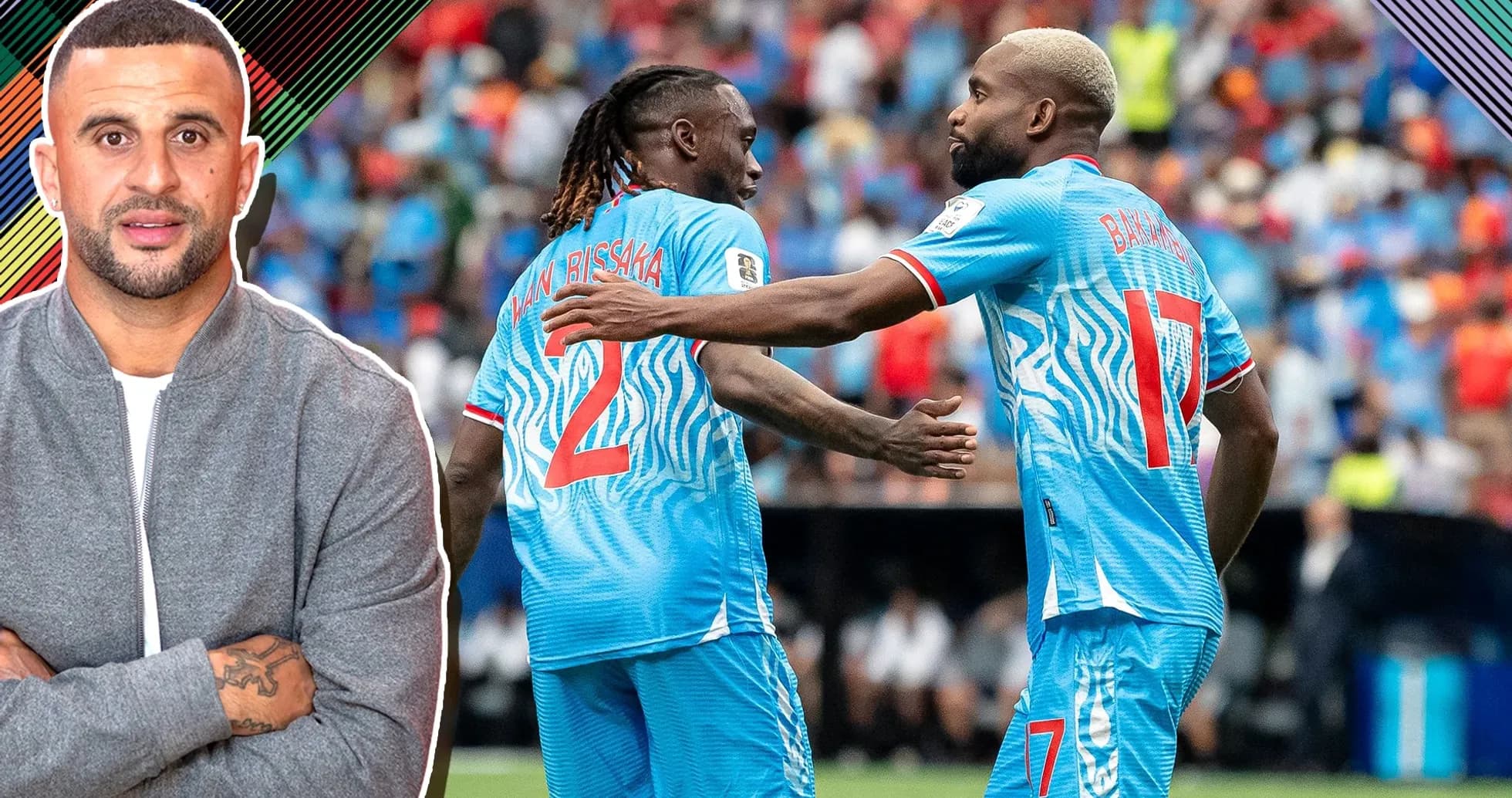
Out wide, Aaron Wan-Bissaka brings another Premier League edge. On that right flank, he remains one of the most awkward one-on-one defenders to face. Wingers think they’ve skipped past him, then those telescopic legs whip around the corner, nick the ball and leave them on the turf wondering what just happened. There’s a reason opponents used to call him “Go-Go Gadget” at City: his timing in the tackle is that good, that consistent.
He takes real pride in those duels, just as any old-school defender would. If Marcus Rashford features, the battle on that side will carry the extra spice of familiarity from their Manchester United days. They know each other’s tricks, each other’s tells. That kind of personal duel can tilt the mood of a match.
Congo, then, are no novelty act. They are organised, they are athletic, and they have individuals capable of deciding moments.
England still have the deeper squad, the greater range of weapons, the experience of these stages. They have runners from deep, set-piece threat, and midfielders like Rice and Anderson who can control games if they step into the right spaces at the right time.
But nothing about this tie is straightforward. Not the tactics. Not the psychology. Not the margin for error.