England’s World Cup Exit: Tactical Confusion and Questions for Tuchel
England’s World Cup exit to Argentina is still raw. Inside the dressing room, some of the players are convinced it did not have to end this way.
They are looking squarely at the touchline.
Confusion on the touchline
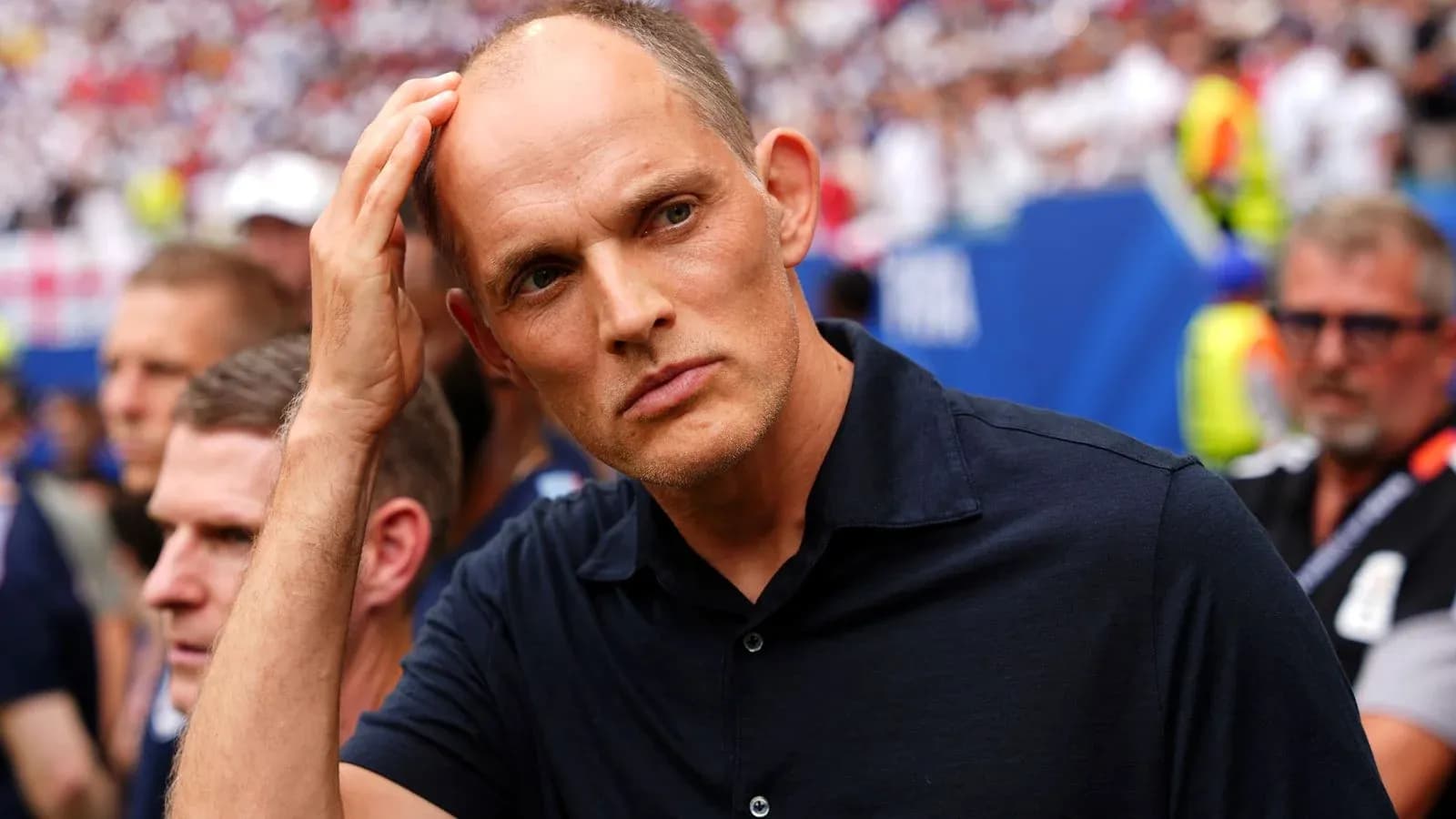
Several England players – including more than one senior figure – were left bemused by Thomas Tuchel’s defensive substitutions in the semi-final defeat, with some believing the changes damaged, rather than improved, their chances of reaching the final.
England had the game where they wanted it. Anthony Gordon’s low finish on 55 minutes, created by Morgan Rogers’ work on the right and finished by the Newcastle forward arriving from the left, was exactly the sort of move this team had been built around: pace out wide, direct running, exposing full-backs Argentina had highlighted as a weakness.
Then the tide turned. Argentina pushed higher, Lionel Messi began to dictate, and England dropped deeper.
Seventeen minutes after Gordon’s opener, with pressure building, Tuchel made the call that would define his night. He removed his goalscorer, sent on Ezri Konsa and flipped to a back five with more than half an hour still to survive.
Inside the camp, some players could not believe what they were seeing.
Six defenders, no release
The pattern became painfully clear. England sank towards their own box, Argentina’s waves grew heavier, and the men in white could not get out.
Ten minutes after Konsa’s introduction, Tuchel doubled down. Declan Rice, who had battled illness and fitness issues all tournament, was replaced by Nico O’Reilly. On paper, fresh legs in midfield. In reality, England now had six defenders on the pitch, four of them natural centre-backs, with Harry Kane dropping deeper and deeper to help stem the blue-and-white surge.
Those who questioned the approach felt England had stripped themselves of any “out-ball”. No one to hold it up. No one to run the channels. No one to carry the ball down the flanks and relieve the pressure that was suffocating their own back line.
This, from a team whose entire attacking identity at this World Cup had revolved around quick, aggressive wingers. Yet after Gordon’s goal, Noni Madueke, Bukayo Saka and Eberechi Eze stayed seated. Marcus Rashford did arrive, but not until the 96th minute – with England already 2-1 down, undone by late strikes from Enzo Fernandez and Lautaro Martinez in a ruthless Argentine turnaround.
Between Gordon’s 55th-minute breakthrough and Martinez’s stoppage-time winner, England had just 12 per cent possession. Twelve. In a World Cup semi-final.
Tuchel stands firm
Tuchel, speaking afterwards, did not accept the idea that his tactical plan was at fault. Without having fully reviewed the game, he pointed instead to what he sees as a deeper, systemic issue in English football: an inability, under intense pressure, to keep the ball in the way Spanish, Argentinian or Brazilian players often do.
His explanation for the back five was clear. Argentina had introduced Nico Gonzalez on the left and pushed Messi wide right in a bold 4-2-4. Tuchel wanted extra bodies to cut out the crosses, close space in the box and choke off the supply line before it reached Martinez and Messi.
From the dugout, it was a structural solution to a structural problem. From the pitch, some saw something very different.
Several players felt the substitutions were simply too negative, inviting Argentina on and making it harder and harder for England to breathe, let alone build. With every extra defender, with every yard Kane retreated, the team lost another route to escape.
Inside the squad, there is also quiet curiosity about Tuchel’s “DNA” comments – his suggestion that English footballers are fundamentally different from their Spanish, Argentinian and Brazilian counterparts in their ability to protect the ball in tight, high-stakes situations. It is not yet clear how that has landed in a group that has spent a month trying to prove it belongs at the very top of the game.
Unity, but big questions
What there is not, at this stage, is open revolt. There is no suggestion of a rift in the camp, no hint of animosity towards Tuchel. On the contrary, the German remains widely regarded by his players as a strong, authoritative and popular leader, someone they believe can take them into the next cycle.
That view is shared higher up. The FA hierarchy continue to back him fully despite the semi-final collapse, and Tuchel himself has been emphatic: he is “100 per cent” committed to staying in charge for Euro 2028, when England will enjoy home advantage as co-hosts alongside Scotland, Wales and the Republic of Ireland.
The fallout from this World Cup will not be about personalities. It will be about philosophy. About whether England, with a generation of attacking talent on the flanks, can afford to retreat into their own penalty area when the pressure rises.
The semi-final in Argentina will not be remembered only for Messi’s influence or Martinez’s late winner. It may be remembered as the night England’s players started asking, quietly but firmly, whether their instincts and their manager’s blueprint are truly pulling in the same direction.