England's World Cup Journey: Manager Tuchel's Search for Stability
England’s World Cup campaign has plenty going for it. A topped group. A spine you can trust. Match-winners already delivering.
What it does not have is a settled team.
A Manager Still Searching
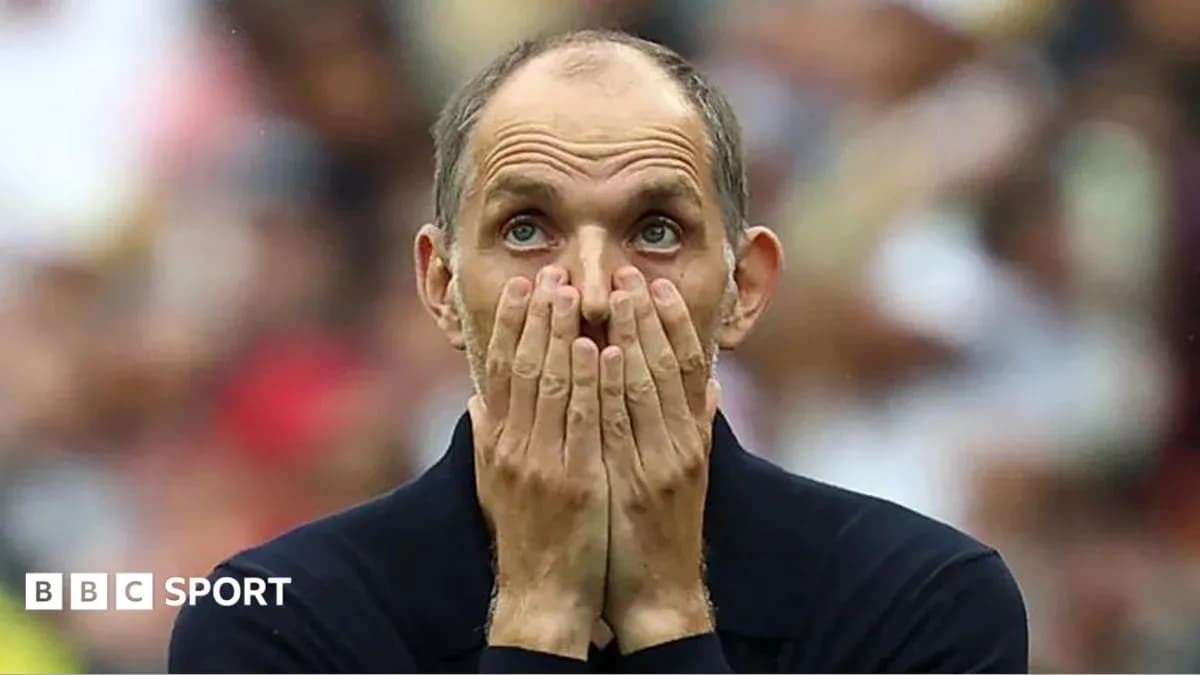
Three games in, Thomas Tuchel still looks like a coach rifling through options rather than refining a formula. England have reached the last 32 having chopped and changed so often that the question of their best XI remains unanswered.
Tournament football rarely allows perfection. Injuries and suspensions always force adjustments. But Tuchel has more than just fine-tuning on his hands before England meet DR Congo in Atlanta on Wednesday.
The clearest sign? The full-back and winger carousel.
Across 270 minutes, England have used nine different combinations down the flanks, involving eight players. That is not rotation from a position of strength; it is a manager still trying to crack the code of which pairings work on either side.
Reece James and Jarell Quansah being sidelined at right-back has hurt. Bukayo Saka operating below full fitness has not helped either. Yet the outcome is the same: England have not posed a consistent threat out wide, and the constant reshuffling of the back four has chipped away at defensive stability.
They have looked uncomfortable whenever opponents have had a go. That is the real alarm bell.
The Spine You Can Trust
The story is not all anxiety and improvisation. Several players have already stamped their authority on this tournament.
Elliot Anderson was outstanding against Panama, dictating and driving. Jude Bellingham, again, played like the main character, deservedly taking man of the match. Harry Kane scored, as he so often does, the familiar punctuation mark on England’s better spells.
Add Jordan Pickford and Declan Rice to that group and you have the backbone of this side. A core you can lean on when everything else feels in flux.
England may not be seeing top-level performances across every line of the pitch, but they know their big-hitters can conjure a moment to change a game. That matters in tournament football.
Ideally, Tuchel would not be waiting for genius to bail out a malfunctioning system. Bellingham’s winner against Panama, turning in Saka’s corner, was exactly the kind of “something from nothing” that coaches secretly love but never want to rely on.
England were not building pressure before that goal. They were not carving Panama open. But they did know the value of set-pieces, and when the delivery was only half-decent, Bellingham turned it into a match-winning ball.
It was not a perfect corner. It did not need to be. Bellingham’s leap, strength and balance turned a routine cross into a decisive moment. Once he scored, there felt like only one outcome.
Lessons for DR Congo
DR Congo are unlikely to surprise England. Expect something similar to Ghana and Panama: a low block, numbers behind the ball, and sharp counters when space appears.
The puzzle is the same. Can England break them down without needing another flash of individual brilliance?
Some of that might be as basic as the type of crosses they choose.
Against Panama, Marcus Rashford and Saka both spent long periods cutting inside and swinging in inswingers – Rashford on the left with his right foot, Saka on the right with his left. Those balls are meat and drink for defenders facing play.
England look far more dangerous when the wide men go on the outside and whip crosses in from the byline. The kind Bellingham produced for Kane’s goal. When the cross comes from that angle, the striker can time his run and attack the ball, rather than wait under a loopy delivery.
These are small details, but in knockout football, small details decide who flies home and who stays on.
The Real Problem: The Back Door
For all the debate about combinations in attack, the biggest concern is at the other end.
England have been opened up in every game. Croatia exposed them badly in the first half, scoring twice. Ghana and Panama both found chances, both unsettled a back line that never looked entirely sure of itself.
They got away with it in those games. They will not get away with it for long.
The deeper you go in a World Cup, the better the forwards you face. Keep offering them the same gaps and they will punish you, and the margin for recovery shrinks with every round.
Previous England tournament sides have had their flaws, but the defence usually felt settled. Familiar partnerships. Predictable movements. A unit.
This version is anything but. Another reshuffle is likely against DR Congo. Djed Spence could return at right-back, or Ezri Konsa might slide across from centre-back. John Stones may partner Marc Guehi again, fitness permitting.
Some of these changes are Tuchel’s choice. Others are forced upon him by the injury records of players he was always gambling on. That is the risk he took with this squad.
Time to Lock It In
Whoever starts in that back four on Wednesday, England need something they have not yet had: continuity. A platform that can carry them not just past DR Congo, but into the sharper end of this tournament.
The expectation inside the camp will be simple: do the job in Atlanta and set up a meeting with Mexico or Ecuador. The question is what state the team will be in when they get there.
If England want to stay at this World Cup long enough to trouble the real heavyweights, the experimentation has to stop somewhere. Tuchel has his spine. Now he has to decide which back four he trusts to stand behind it.