Manchester United's Revival Under Carrick: Hope and Challenges Ahead
Sir Alex Ferguson walked away 13 years ago with a 13th league title and a belief he had left Manchester United ready for the future. A dynasty built, a structure in place, a club wired for continued dominance.
It never happened.
David Moyes, Louis van Gaal, Jose Mourinho, Erik ten Hag, Ruben Amorim – big reputations, big ideas, brief flashes of hope – but no return to the sustained supremacy that once defined Old Trafford. All the while, across the city, Manchester City grew louder, richer, more relentless. United’s “noisy neighbours” became serial winners.
Now, though, there is a different noise building on the red side of town.
Carrick changes the mood
The 2025-26 season shifted the mood almost overnight. Michael Carrick, once the metronome in Ferguson’s midfield and a winner of five league titles as a player, stepped in as interim manager and immediately altered the direction of travel.
United started to look like a team again. Not a great one yet, not a complete one, but one with shape, with purpose, with something that had been missing for too long – resilience.
The club moved quickly. Carrick’s caretaker stint turned into a two-year contract. The message was clear: this wasn’t just a short-term fix. This was a project.
Hope, that most fragile of Old Trafford commodities in the post-Ferguson era, has started to grow again. Talk of a proper recruitment drive this summer, of smart additions rather than scattergun spending, has supporters daring to ask whether United might finally be ready to aim at the very top of the Premier League again in 2026-27.
Title talk always finds its way to former players, and Gary Pallister has seen enough eras to judge the scale of the task.
“Not quite ready” – Pallister’s verdict
Speaking to GOAL in association with Spreadex Sports, the former United defender did not dress it up.
“I think a couple of signings can make a huge difference. Do I think they're in line for a title challenge? My honest opinion at the moment would be no, I don't think so. I think we've still got a bit of building to do.”
That is the tension around United right now. Optimism, but not delusion.
Pallister, though, has been impressed by what Carrick has already managed to change.
“I think everybody's been very impressed with what Michael's done. I don't think the team was brilliant. I think we had two or three games, the Man City game sticks out at home, where we played really well. A couple of games at the end of the season where we played really well and won comfortably.”
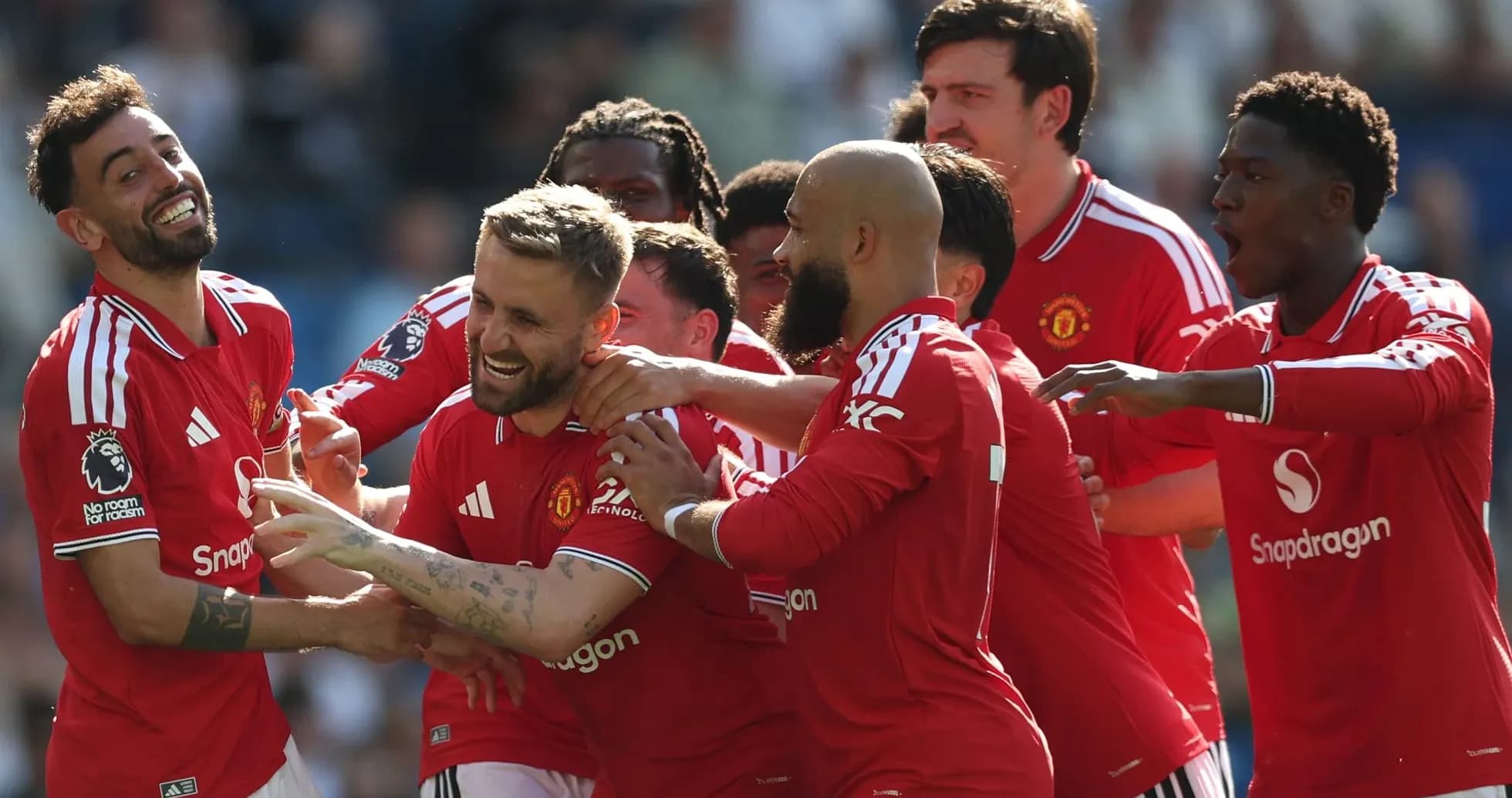
Those performances were the glimpses. The City game at Old Trafford, especially, felt like a throwback: United aggressive, organised, refusing to be bullied. It wasn’t perfection, but it was a statement.
For Pallister, the real shift has been emotional and cultural.
“What I think he's brought to the team is a resilience and that kind of fight for the badge and fight for the club and bring a little bit more of that, as Ole [Gunnar Solskjaer] did when he came in.”
That word – fight – has often been used in the past decade as a nostalgic reference to what United used to be. Under Carrick, it is beginning to look like a current trait rather than a memory.
Now comes the real test.
“But now we've got to give Michael a chance to bring his own players in. He's assessed everything. Give him the chance to bring some quality players in and see where that takes us. He's brought a feel-good factor back to United. The fans can feel that. I'm sure the players are feeling that. Now we're going to see whether he can take the next step.”
The mood music is right. The structure, at last, seems coherent. But United’s next phase will be defined by what happens in the transfer market – and by one particularly delicate decision.
Rashford at the crossroads
Few players divide opinion around Old Trafford like Marcus Rashford does right now.
The academy graduate, once the poster boy for a new United, spent last season on loan at Barcelona. His future sits in a strange limbo: heavily linked with a permanent move to Camp Nou, yet with no agreement in place. The door to Old Trafford is not fully closed. Nor is it obviously open.
As Rashford focuses on World Cup duty with England, United wrestle with a question that cuts to the heart of what Carrick wants his team to be.
Pallister has made his stance clear before.
“I've gone on record as saying I wouldn't bring him back,” he admitted.
The dynamic has shifted slightly, though, because of one crucial factor: Carrick knows Rashford. He has worked with him, seen him up close, understands his temperament.
“The difference now is that Michael Carrick's worked with him. Michael Carrick knows his personality. Michael Carrick knows whether he can get something out of him if he does come back.”
That personal knowledge changes the equation. This is not a purely financial call, or a purely sentimental one. It is about whether Carrick believes he can unlock the version of Rashford that once terrified defences.
“Would Marcus want to come back? Has he been quoted in the past saying he's happy to stay away? He's a quality player. He's a United lad. If you could bring back the Marcus of two or three years ago, then it would be a no-brainer. The way it ended, I'm not so sure whether there is a way back for him.”
That is the dilemma in a single breath. The player Rashford was, the player he has been more recently, and the fracture in between.
Pallister knows that managers see players differently. One coach’s frustration can be another’s opportunity.
“Managers with different players can have their own feel on it. If Michael feels as though he can turn Marcus round in terms of his personality and his body language on the pitch and get him playing as he was playing for Manchester United in his early years, then he surely would be a bonus for Manchester United. I think there would have to be a lot of talking between the two before that happened.”
Those conversations, if they happen, will say plenty about both men – and about the kind of dressing room Carrick wants to build.
United stand at a familiar junction: hope in the stands, questions in the boardroom, a manager with credit in the bank but hard decisions ahead. The Ferguson era feels a long way off now, but the demand at Old Trafford never really changed.
Carrick has restored belief. The next few months will show whether he can turn that belief into a team capable of chasing down the very summit again – and whether there is still a place in that story for Marcus Rashford.