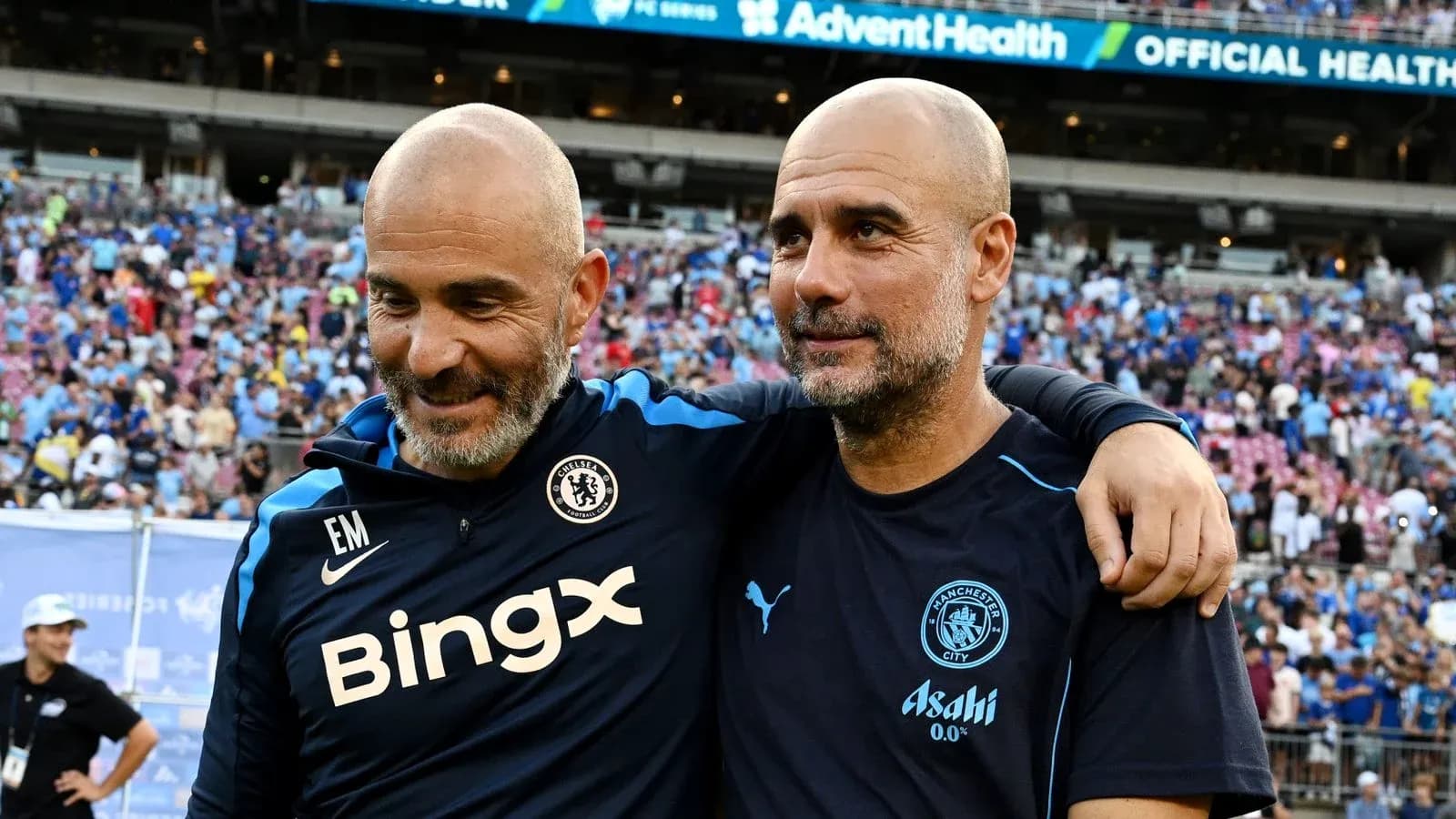
Enzo Maresca Takes Charge at Manchester City: A New Era Begins
Enzo Maresca walks back into Manchester City at a time of change, but not chaos. The treble banners still hang, the standards remain untouched, and yet the man who set them – Pep Guardiola – is gone. The club has rolled the dice on a familiar face, but this is no nostalgia appointment. This is a test of whether City can keep winning when the architect has left the building.
Maresca knows the corridors, the training pitches, the expectations. He coached in the academy in 2020-21, then sat beside Guardiola in 2022-23 as City swept the Premier League, Champions League and FA Cup. He has lived inside the machine. Now he has to drive it.
A soft landing – on paper
The fixture list has been kind. Bournemouth, Crystal Palace and Coventry City in his first three league games is as close to a safety net as the Premier League offers. It gives him room to lay down patterns, to iron out the early kinks, to let the players feel the new voice without the table immediately tilting against him.
It also buys time for the exhausted core to breathe. Rodri, the metronome of Spain’s World Cup triumph, has played football at a relentless clip for club and country. He is the one City can least afford to break. Those opening fixtures are forgiving enough that Maresca can phase him back, protect him from overload, and still expect City to dominate.
But a gentle start can be a trap. Drop points in that run and the questions will be sharp. City’s September includes Manchester United and Liverpool in two of three games. Those are not just fixtures; they are temperature checks on a new era. Maresca cannot limp into them.
He has called this a “dream situation” – a squad rich in quality and depth, meticulously assembled under Guardiola, with a structure around him that most coaches can only envy. He is right. It is also unforgiving. The demands are unchanged: win, and win with a certain swagger. Guardiola earned the right to bend the club around his methods. Maresca, even with a strong relationship with chairman Khaldoon Al Mubarak, does not arrive with the same insulation.
Same principles, different picture
This will not be a tactical revolution. Maresca comes from the same school of thought: dominate the ball, suffocate without it, control games through structure and pressing. The DNA remains recognisable.
The details, though, will shift.
Under Guardiola, City became a shape-shifting organism. Full-backs stepped into midfield. Centre-backs wandered into the half-spaces. Wingers drifted inside to crowd the middle, creating overloads around Rodri, who acted as the pivot for almost everything. Roles blurred, zones were shared, and opponents were pulled into a maze.
Maresca leans towards a more defined 4-2-3-1. He wants wingers high and wide, stretching the pitch, pinning full-backs, forcing teams to defend the full width. The No 10 becomes crucial – the connector, the player who knits the lines and finds the spaces that structure creates.
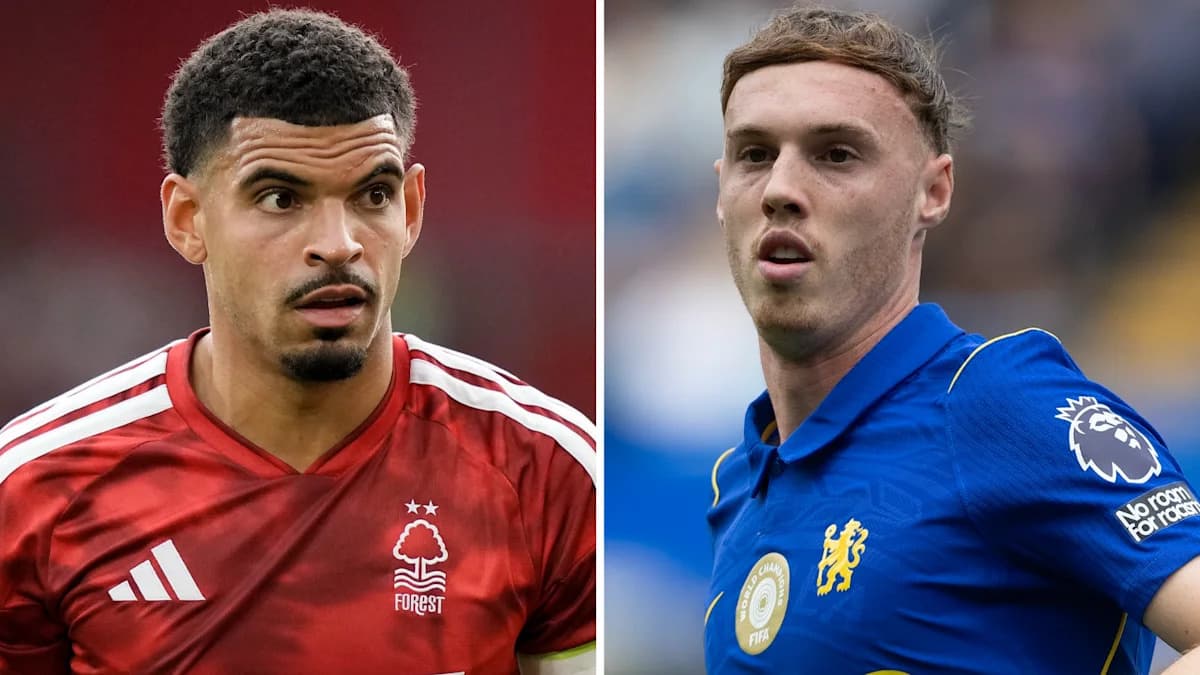
At Chelsea, that was Cole Palmer, who thrived under Maresca’s guidance. At City, the options are elite. Phil Foden, now stepping fully into his prime, is the obvious candidate. Rayan Cherki offers a different profile if Maresca wants something more unpredictable between the lines.
The shift from fluid positional rotations to more traditional roles will ask questions of a group schooled in Guardiola’s controlled chaos. How quickly they adjust will dictate how smooth this transition feels. The ideas are familiar. The execution will not be automatic.
A younger City, with a new spine of leaders
Behind the scenes, the squad has already been evolving. Under sporting director Hugo Viana, City have deliberately lowered the average age over the last two or three windows, from 29 to just over 25. The aim is clear: keep winning now, but build a group that can carry the club through the next cycle.
The cost has been experience at the very top level. Bernardo Silva and John Stones have gone this summer, following Kevin De Bruyne out of the dressing room. That is a lot of know-how, a lot of personality, and a lot of big-game calm walking out the door.
The leadership void is not total, though. Rodri and Ruben Dias remain central figures. Erling Haaland took on more responsibility last season, not just as a goalscorer but as a presence. Marc Guehi and Josko Gvardiol bring stability and maturity at the back, while Mateo Kovacic adds another seasoned head in midfield. The spine is still formidable.
Recruitment has been aggressive and targeted. Elliot Anderson has arrived from Nottingham Forest for a huge fee, a bet on his robustness and his capacity to future-proof the midfield. Jeremy Monga has been taken from Leicester, another nod to tomorrow as much as today.
City still want a right-back and another winger. They are tracking Lille’s Ayyoub Bouaddi, one of Morocco’s standout performers at the World Cup, with Arsenal also watching closely. The market around them is moving; City are determined not to get left behind.
Outgoings will shape the final picture. Savinho, Omar Marmoush, Nico Gonzalez, Jack Grealish, Tijjani Reijnders and Rico Lewis are all in the bracket of players who could leave if the right offers land. With the World Cup now over, the expectation inside the club is that transfer business will accelerate quickly.
A new Premier League landscape
For the first time since the Abu Dhabi takeover, City’s long-term plan is not built around one man. A decade of planning went into landing Guardiola and constructing a club in his image. That mission has been completed. The question now is simple and stark: what next?
The culture remains ruthless. City are conditioned to chase trophies, season after season. A year without silverware is not a disaster in isolation, but it is not something anyone will tolerate for long. The Etihad crowd expects control, invention and goals. Entertainment is part of the contract. Winning is non-negotiable.
Maresca’s Chelsea side never quite found that balance. There were flashes of his ideas, but not the sustained blend of control and incision that City demand. This job will not allow for a long bedding-in period under the banner of “transition”.
He does, though, walk into a league that is itself in flux. Andoni Iraola at Liverpool, Xabi Alonso at Chelsea, Michael Carrick at Manchester United – all are high-profile appointments carrying their own unknowns. The old order is being rearranged. City see that as an opening, a chance to impose themselves while others are still working out who they are.
This season will be ruthless. It will also be wide open for anyone bold enough to seize it.
The shadow of 115 charges
Looming over all of this is the unresolved matter that no tactics board can solve: the 115 Premier League charges against the club. They have not gone away. They frame every discussion about City’s dominance. They will follow Maresca into every press conference.
Guardiola handled that scrutiny with a combative assurance, often turning questions back on the media, shielding his players, and controlling the narrative. He knew the press pack, knew when to confront and when to deflect.
Maresca’s experience of that kind of heat has been limited. At Chelsea, criticism focused mainly on results and performances. This is different. His ability to manage the off-field noise – to protect his squad, to avoid being dragged into legal and political debates, to keep the focus on football – will be a defining part of his first year, especially if a verdict lands within the next 12 months.
The football will matter most. But the context will never be far behind.
Maresca steps into a “dream situation” with his eyes open: a superclub still built to win now, a league in transition, a squad in the middle of generational change, and a storm of charges hanging overhead. The question is not whether he understands the scale of the task.
It is whether he can turn familiarity with the Guardiola blueprint into a new era of his own – without ever being allowed to forget who came before him.