Everton vs Liverpool: Crucial Derby Impacts European Hopes
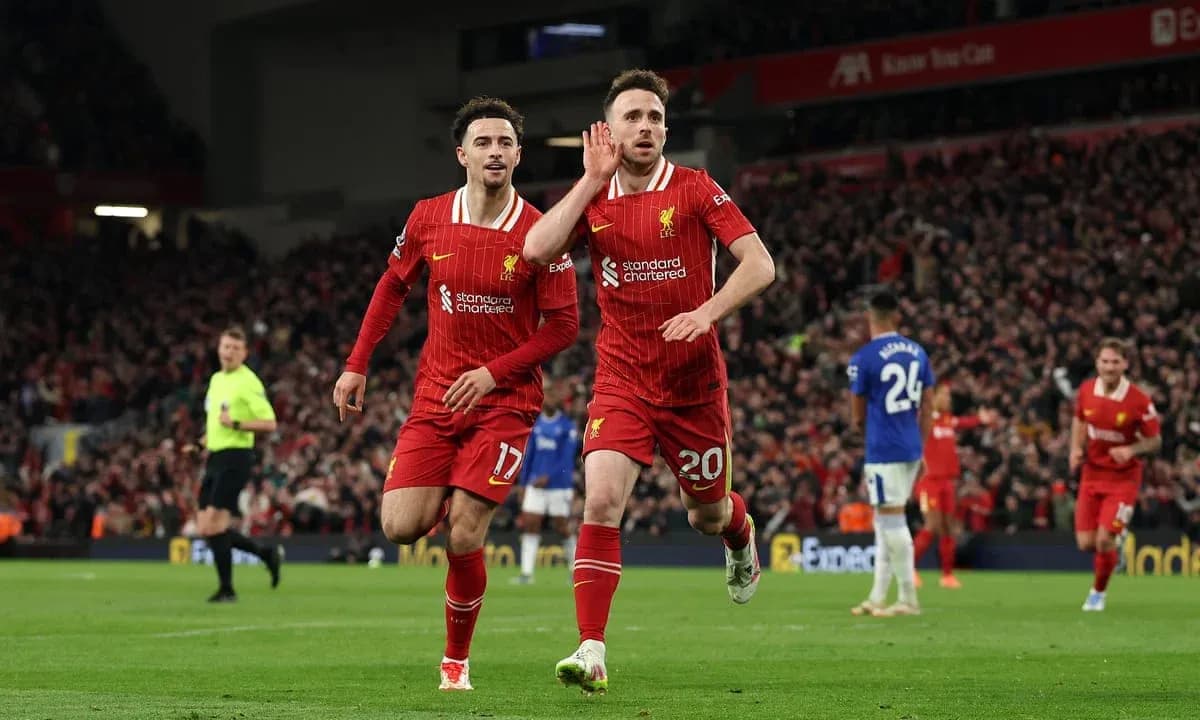
Hill Dickinson Stadium hosts a derby that carries far more than local bragging rights: with Everton 8th on 47 points and Liverpool 5th on 52 after 32 matches, this late‑April clash will heavily shape European qualification hopes in the league phase.
For Liverpool, currently in a Champions League qualifying position in the league phase, the margin for error is thin. Their description line explicitly links 5th place to “Promotion – Champions League (League phase)”, so dropping points to the team directly below the top‑seven pack would open the door to rivals and potentially drag them into a congested race for those spots. With 15 wins, 7 draws and 10 defeats, they have already lost almost a third of their league phase matches; another setback would reinforce a narrative of inconsistency that has defined their campaign.
Everton, by contrast, are on 13 wins, 8 draws and 11 losses, with a positive goal difference of +2 and a form line of “DWLWW” in the league phase. They sit five points behind Liverpool, and this fixture represents a rare six‑point swing opportunity. A home win would cut the gap to two points with six games to play, transforming an outside European push into a realistic late surge. A defeat, however, would push the gap to eight points and effectively reframe their final weeks around consolidating a top‑half finish rather than chasing Europe.
Head‑to‑Head Trends
Head‑to‑head trends underline both the psychological and tactical layers. Looking at the last five competitive meetings (all in the Premier League, no friendlies):
- Liverpool 2–1 Everton (Anfield, 2025 league season)
- Liverpool 1–0 Everton (Anfield, 2024 league season)
- Everton 2–2 Liverpool (Goodison Park, 2024 league season)
- Everton 2–0 Liverpool (Goodison Park, 2023 league season)
- Liverpool 2–0 Everton (Anfield, 2023 league season)
That sequence gives Liverpool three wins, Everton one, and one draw. The pattern is clear: Liverpool tend to edge tight home games by one or two goals, while Goodison Park has been far more balanced, with Everton taking one win and one draw in the last two derbies there. From a season‑impact perspective, this matters: Everton know they can beat this Liverpool side at home, as they did 2–0 in 2023, and they have not been blown away in any of the last five meetings.
The half‑time dynamics in those fixtures also point to fine margins. Liverpool led 2–0 at the break in the 2025 2–1 win, controlled a 0–0 interval in the 1–0 victory in 2024, while Everton led 1–0 at half‑time in their 2–0 home win in 2023 and shared 1–1 at the break in the 2–2 draw. The sides were level at 0–0 at half‑time in the 2023 Anfield match that Liverpool eventually won 2–0. This suggests the opening 45 minutes here could strongly tilt the outcome and, by extension, the seasonal narrative: an early Everton lead would energise their European push; an early Liverpool advantage would likely reinforce their top‑four credentials.
Across all phases of the competition, the underlying numbers support the idea of a finely balanced but stylistically contrasting contest. Everton average 1.2 goals scored and 1.2 conceded per match, with 39 for and 37 against over 32 fixtures. They have kept 11 clean sheets across all phases and failed to score 9 times, pointing to a team that often keeps games tight and relies on narrow margins. Their biggest home win is 3–0, but they have also suffered a 1–4 home defeat, underlining volatility when the game state turns against them.
Liverpool, across all phases, are more expansive: 52 goals scored and 42 conceded in 32 games, 1.6 scored and 1.3 conceded on average. Their home attack (1.8 goals per game) has been stronger than their away output (1.4), and their away defence is noticeably looser at 1.6 goals conceded per game. That away fragility is a key seasonal theme: 7 away defeats in 16 league phase matches is too many for a side targeting the Champions League, and dropping more points on the road at Everton would crystallise away form as the main reason if they ultimately fall short.
From a formation standpoint across all phases, Everton’s heavy reliance on 4‑2‑3‑1 (21 matches) suggests tactical stability and clear roles, which can be crucial in high‑pressure derbies. Liverpool have also leaned on 4‑2‑3‑1 (29 times) but experimented more, hinting at ongoing tweaks to solve their defensive balance, especially away.
The verdict in seasonal terms is stark. For Liverpool, anything less than a win risks turning a Champions League chase into a scramble just to hold a top‑six place in the league phase, given their vulnerable away record and the narrow five‑point cushion over Everton. For Everton, victory would keep a European berth firmly alive and position this derby as a potential turning point in their broader project: proof they can compete with top‑five sides over a full campaign. A draw would largely preserve the status quo, mildly favouring Liverpool’s top‑four ambitions while leaving Everton needing an exceptional finish to climb into Europe.