Wrexham's Premier League Dream Faces Reality Check
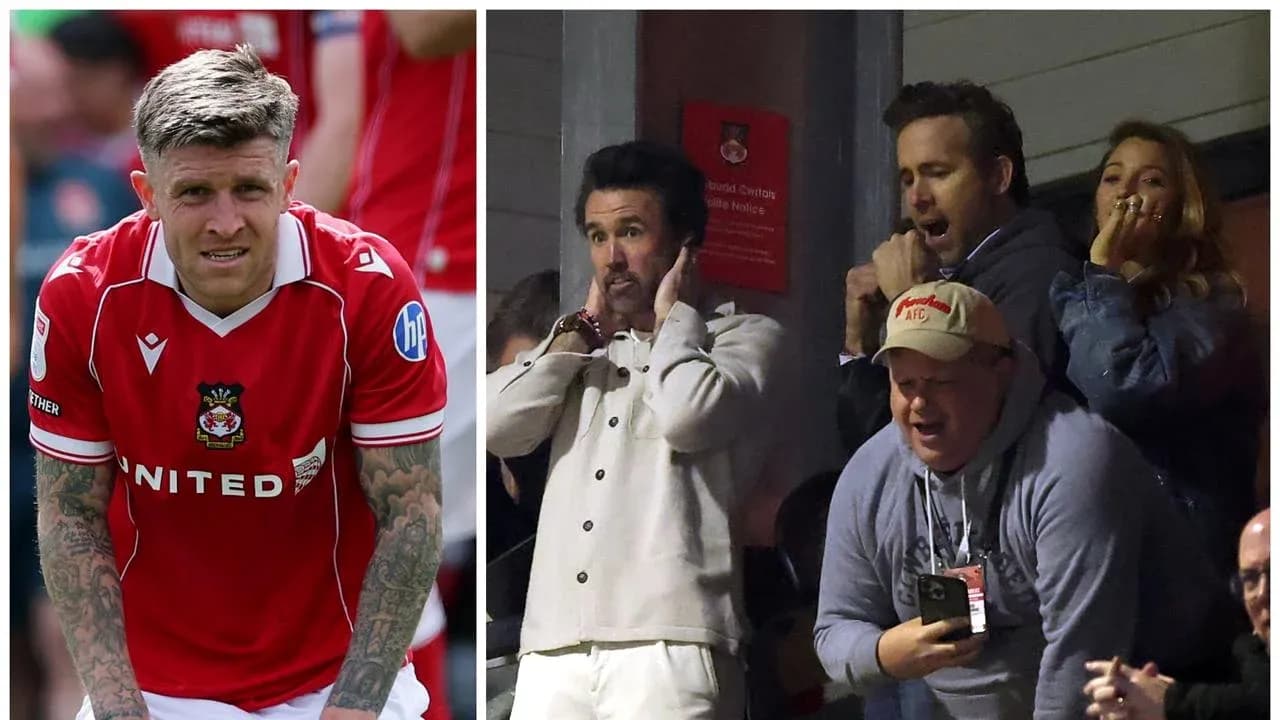
The cameras stayed on long after the final whistle at the Racecourse Ground. They caught the tears, the thousand-yard stares, the owners rooted to their seats as if moving might make it real.
Wrexham’s Hollywood rise met its first brutal plot twist.
A 2-2 draw at home to playoff-bound Middlesbrough wasn’t enough. While Ryan Reynolds and Rob McElhenney watched their side strain for a winner, Hull City slipped past them into sixth with a 2-1 victory over Norwich City. One goal in Yorkshire slammed the door on a Premier League dream that had started to feel less like fantasy and more like destiny.
For a fleeting moment, it looked like an Australian might keep the script on track. Mohamed Toure struck first for Norwich, a goal that nudged Wrexham towards the playoffs. Then the tide turned. Hull fought back, Middlesbrough – anchored by Australian midfielder Riley McGree – refused to buckle, and the Red Dragons ran out of road.
Three straight promotions had dragged Wrexham from non-league obscurity to the brink of the Premier League’s waiting room. Forty-three years since they last stood this high in the pyramid, they had become a serious Championship force almost overnight. The rise has been dizzying, intoxicating, improbable.
It did not soften the blow.
At full-time, the Racecourse Ground was a picture of raw emotion. Players slumped. Supporters wept. The owners, who had turned a struggling club into a global story, suddenly looked like every other heartbroken fan in the ground.
Reynolds gave voice to it later, posting: “I am completely gutted by today’s result but incredibly proud of our season. We’ve come a long way in five years and this was the best result in our 150+ year history. More to do. But for now, we have so much to be proud of, Reds.”
He’s right on both counts. This is the best Wrexham have been in a century and a half. And this is where the real work begins.
The easy part is over
For five years, the story has rolled along with remarkable momentum. Buy the club. Inject money. Bring in players from higher divisions. Get promoted. Repeat. It has looked smart, ambitious and – crucially – successful.
Former Watford striker Troy Deeney, who knows the brutal swing between Premier League promotion and Championship relegation, believes the next chapter will define Reynolds and McElhenney far more than the last five years have.
“I actually think this is going to be the real making to see how they are as owners,” Deeney said on Paramount+. “Because everything has been, not smooth, but simple. Throw a load of money at it, buy players from the league above, go up, get promoted.”
The simple part has gone. The Championship does not bend easily, even to money and momentum. It is a division that chews up projects, reputations and balance sheets with equal enthusiasm.
Off the pitch, though, Wrexham look like a club built for the long haul. A new grandstand at the Racecourse Ground will be ready next season, swelling matchday income. The documentary “Welcome to Wrexham” – the engine of their global reach – has been extended for another three seasons. Their valuation has exploded: Reynolds and McElhenney recently sold shares at a staggering US$475m, having bought the club for just US$2m in 2021.
That success comes with a price. A club valued like a Premier League outfit is expected to behave like one.
From day one, the owners have been clear: the Premier League is the target. People laughed at the idea. They don’t laugh now. They look at the table, the infrastructure, the global fanbase, and they start to ask not “if” but “when”.
The Times’ chief football correspondent Martin Samuel goes even further. For him, Wrexham’s eventual arrival in the top flight feels inevitable – even if this season exposed their limitations.
“All they needed to do was beat Middlesbrough at home. I know Middlesbrough are a good team, but if they beat Middlesbrough, they’re up,” Samuel told Sky Sports. “If you can’t beat Middlesbrough at home for your life, you’re probably not ready for the Premier League.
“So, maybe another year in the Championship is what Wrexham need. They’re gonna be contenders next year again. I’m absolutely certain of that.
“Whoever comes down from the Premier League have got Wrexham to deal with… this club who are now super ambitious, that has got the weight of a country behind it… inevitably, Wrexham will end up in the Premier League.”
Inevitable or not, the margin for error shrinks from here.
Decisions that shape a decade
This summer will be the most important of the Reynolds–McElhenney era. The Championship has voted to expand its playoffs from four teams to six next season, opening the door to clubs finishing as low as eighth. It sounds like a gift. It isn’t. Only three clubs still go up.
To take advantage, Wrexham must ask uncomfortable questions.
Phil Parkinson has been central to the club’s climb from the fifth tier. He has delivered promotions, stability, belief. Deeney, though, wonders if the final step requires a different kind of manager, a different kind of football.
“They’ve got into so many shootouts this year because they’ve been coming from behind,” Deeney said. “They’ve spent £50 million. They spent £10 million on Doyle, centre back. I wouldn’t say there’s a £10 million player there that’s organising that backline saying, ‘right, we‘re defensively solid’.
“They get into shootouts, but now, the question to start asking: is this manager, who I think is fantastic, is he the guy to get us promoted? How much more did we need to spend on players now? Is this the right style to get us promoted? All of these questions start to raise their head now.”
Nigel Reo-Coker, the former West Ham and Aston Villa midfielder, echoed that sense of looming re-evaluation.
“There’ll be a re-evaluation of everything,” he told BBC Radio Wales Sport. “They have ambition of getting to the Premier League. That is the main goal, whatsoever. Then you start to look around. You start to think who can get us in there. There will be questions of the manager. He’ll know he’s under pressure. He was supposed to get them to the Premier League.
“If you look at it… you look at Scott Parker now. No longer at Burnley. Scott Parker’s a manager that has a history of getting clubs promoted. So, that could be a manager to fit the mould to say ‘right, he’s done it before’.”
Nothing is decided yet. But the conversation has clearly shifted from “what a story” to “what’s the plan?”.
A squad built for drama, not control
On the pitch, Wrexham’s season often felt like a weekly box-office thriller. Late winners. Wild comebacks. High-scoring epics. It made for compelling television, less so for promotion campaigns.
Callum Doyle, signed from Manchester City on a four-year deal after loans at Norwich, Leicester, Coventry and Sunderland, even made the Championship team of the season. Yet the defence around him never quite convinced. The numbers tell their own tale: too many deficits to chase, too many games turned into shootouts.
And they may not even keep Doyle. City inserted a buy-back clause when they sold the 22-year-old. With John Stones leaving and Nathan Ake linked with a move, Doyle’s composure and physicality could tempt his former club to bring him back as squad depth.
“He’s a really quality player. I think he’s got everything,” said his centre-back partner, Scotland international Dom Hyam. “He’s technically so calm. He’s a beast as well, and he’s young. I think that’ll unfortunately attract some big clubs… he’s got a big future.”
Up front, Josh Windass carried a huge share of the burden. Signed on a free from Sheffield Wednesday, he finished as Wrexham’s leading scorer with 17 goals in all competitions. His late-season surge – seven goals in the final eight league games – almost dragged them into the playoffs on his own. He deserved his player of the season award. He also deserved more help.
Club legend Brian Flynn, a former Wrexham player and manager, believes the squad is close, but not complete.
“I think they need at least three or four players. Is that a major overhaul? I don’t think so,” he told BBC Radio Wales Sport. “He does like employing strikers, that’s for certain, Phil does do that.
“In all other areas of the pitch, I think they’re well served. They’ve got players like [Dom] Hyam, he’s been excellent all season. He’s been a really good signing. Players like Ollie Rathbone have come up with important goals, Josh Windass is a Championship player, so they will definitely come back stronger and better next season, without a shadow of a doubt.”
Stronger, yes. But harder? Nastier? More ruthless in the moments that decide seasons? That’s where Wrexham fell short.
They raised their game against the elite. They beat champions Coventry at home. They outplayed Ipswich Town. They took Nottingham Forest and Chelsea to the brink in the FA Cup, forcing the latter into extra time.
Then they spilled points against relegated sides. Sheffield Wednesday, who won just two of 46 league matches all year, left the Racecourse with a result. Leicester City, spiralling towards their own disaster, pinched a 90th-minute equaliser.
Those are the scars that linger over the summer.
The Leicester warning
If Wrexham want a glimpse of what happens when ambition outruns control, they do not need to look far. Leicester City were Premier League champions a decade ago, 5000-1 miracles who stunned the world. Next season they will play in League One after a second straight relegation, dragged down by financial mismanagement and a series of poor decisions.
Sports finance expert Dr Rob Wilson believes Wrexham are already walking a dangerous line.
“If a club misses out on the play-offs, that’s a £15 million hit on revenue because of the associated ticket and commercial revenue that’s on offer by making it through those additional games,” he told goal.com.
“If they miss out on the play-offs and don’t get promoted to the Premier League, then we are talking about missing out on an opportunity worth £120 million and that is pretty significant. That’s particularly true for Wrexham given the amount of money they are spending and the spending that they have undertaken over the last couple of years. They’ve also got plans for a new training ground and an expansion to their stadium so it gets really, really tricky.”
The numbers are stark. The last published accounts showed turnover at around £33m in League One, with wages over £20m and losses of roughly £15m – up from £2.7m the previous year.
“So Wrexham are already spending much more than it earns as a club,” Wilson added, “and spending like that requires them to be much higher up the pyramid. Average revenues in the Championship for Wrexham, given all of their extra activity that they do, are probably going to be closer to £50 million but they have obviously brought in additional players as well.”
The Hollywood model demands success. The economics demand it even more.
Trapped in the toughest league
There will be no league trips to Old Trafford, Anfield, the Emirates or the Etihad next season. Unless another improbable FA Cup run materialises, Wrexham’s travelling support will stay rooted in the Championship, perhaps with a glamour outing to Tottenham if the draw is kind.
On one level, this remains a story of triumph. Reynolds and McElhenney have given Wrexham its pride back, its relevance, its future. They have turned a neglected club into a cultural phenomenon and a serious football operation.
Yet the Championship is merciless. It traps clubs in cycles of “almost”, dangling the Premier League just out of reach. One bad month, one poor window, one managerial misstep, and the ladder up can vanish.
Wrexham have three more seasons of cameras guaranteed, three more years of the world peering into their dressing room, their boardroom, their hearts. The narrative pressure will only grow. So will the expectation.
The fairytale has reached its first real cliffhanger. Now we find out whether this is a one-off heartbreak, or the start of a saga where “nearly” becomes the most painful word in football.