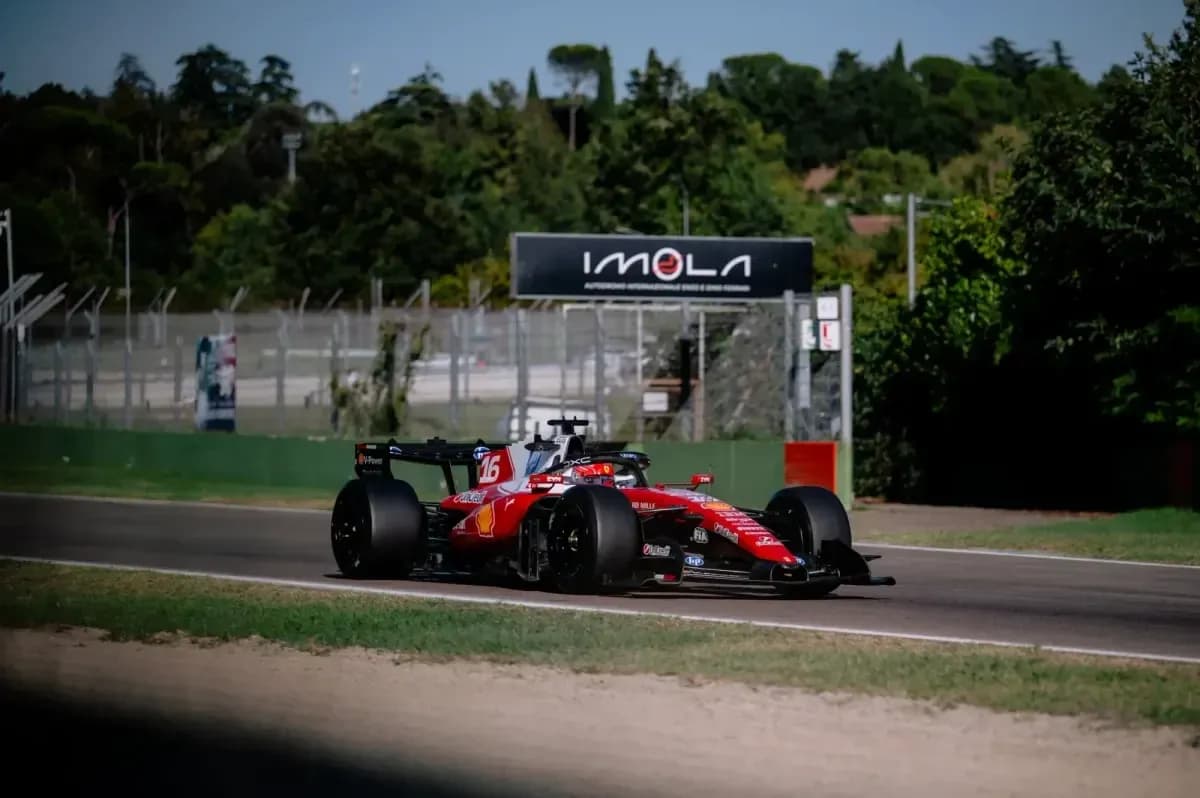
Imola Excluded as F1 Confirms Qatar and Abu Dhabi Finale Amid Tensions
Formula 1 has quietly closed the escape hatch.
Imola, long kept warm in the background as a contingency venue, has been formally released from its role as fall-back host for the 2026 season finale. The championship will now press ahead as originally drawn: Qatar on November 29, Abu Dhabi on December 6.
It is a firm decision made in anything but firm times.
A calendar built around uncertainty
The US/Israel–Iran conflict has turned the 2026 calendar into a rolling risk assessment. The first major blow came in April, when safety concerns forced F1 to scrub the early races in Bahrain and Saudi Arabia. Those grands prix could not be salvaged at their home venues.
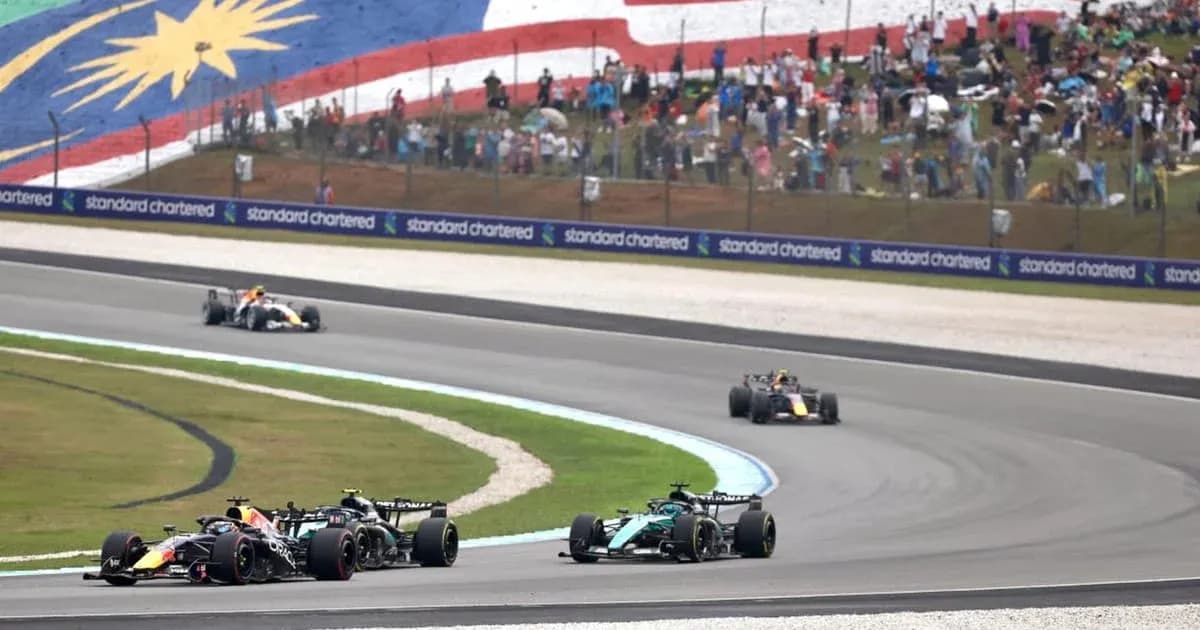
So the sport improvised. The Bahrain Grand Prix resurfaced in September, not in Sakhir but in Malaysia, under an unprecedented deal between the kingdom and the Sepang circuit. It kept the race count healthy, but it underlined a brutal reality: the Middle East, once the bedrock of F1’s early-season swing, had become fragile ground.
The real anxiety, though, has always sat at the back end of the year. Qatar and Abu Dhabi – the glittering, floodlit full stop to the season – remained on the schedule, but under a cloud of “what if?”.
That doubt is what opened the door for Imola.
Plan B at Imola
Behind the scenes, F1 built a parallel ending.
The idea was simple, the execution anything but: if the Middle East flared to the point where Qatar and Abu Dhabi became untenable, the championship would decamp to Imola for a one-off finale on December 6.
To make that remotely viable, F1 had to act as if the race was happening long before it knew whether it would. Circuits do not spring to life in a week. Infrastructure, staffing, security, ticketing – all of it needs a long runway.
So the sport took out an insurance policy on its own calendar. It agreed to underwrite the early costs of preparing Imola, with estimates in the $10–15 million range, purely to keep the option alive and preserve the original end date of the season.
If F1 waited for total clarity in the Middle East, it risked losing everything: no Qatar, no Abu Dhabi, and no time left to ready Imola either.
The only way through was to spend money in the dark.
The call: Imola stood down
The tipping point arrived this week.
F1 had reached the stage where minor preparatory work at Imola was no longer enough. To go further meant committing to major infrastructure spending. Either the sport pushed the button and effectively locked in Imola, or it walked away and backed the Middle East.
On Tuesday, the decision dropped. Imola was informed it would not host the 2026 finale. The sport is satisfied, based on its current intelligence and risk assessments, that it can proceed with Qatar and Abu Dhabi as planned.
Crucially, that does not mean those races are now untouchable. It simply means F1 has moved one step closer to its original plan: the events remain on until the situation dictates they are off.
There is no promise of racing at any price.
Hourly checks, no guarantees
With Imola off standby, F1 gains a short but significant window. It now has roughly two weeks, up to the Las Vegas Grand Prix, before freight and personnel must be committed towards the Middle East leg.
Inside that window, the monitoring continues at full tilt.
Teams and drivers have been told the same thing repeatedly: if any of the threat assessments received by F1 and the FIA – updated hourly – suggest an unnecessary risk in staging the races, the plug will be pulled.
Stefano Domenicali has already shown he will act when the line is crossed. He shut down the Emilia Romagna Grand Prix in 2023 on the Wednesday before the race because of severe flooding. A year earlier, he tore up the Russian Grand Prix contract entirely after the invasion of Ukraine.
Those decisions sit in the background now as a benchmark for what F1 is prepared to do.
The current stance is clear: as things stand, the governing bodies are satisfied the finales in Qatar and Abu Dhabi can go ahead. The evaluation does not stop there.
Inside F1’s security machine
What F1 has built over the past months is a multi-layered surveillance and consultation network.
Staff at both F1 and the FIA are involved, alongside Domenicali and FIA president Mohammed Ben Sulayem. They are in constant contact with local authorities – police, military, security services – to sharpen threat assessments. FIA member clubs feed in as well.
Governments are part of the loop. F1 has taken input from the UK Foreign Office, the US State Department, European foreign ministries and intelligence services across the Middle East. Travel advisories, in particular, carry real weight. Any formal “do not travel” order for Qatar or Abu Dhabi would not just be a warning; it would cut across insurance and logistics and almost certainly stop an event.
So far, that line has not been crossed. Governments have flagged the risk of escalation and travel disruption in the region, but Qatar and Abu Dhabi have not been tagged with outright bans.
Another layer sits in geopolitics. F1 has been tracking the potential fallout from the Israeli election and the US Midterms, watching for any sign that the conflict might inevitably intensify. For now, that worst-case trajectory has not materialised.
The sport also took a close look at a live test: last weekend’s Qatar MotoGP round. It passed without incident. Liberty Media CEO Derek Chang travelled to the event to see conditions first-hand, adding another piece to the decision-making puzzle.
F1 already has personnel on the ground in Doha and Abu Dhabi, tasked with feeding back real-time impressions from outside the boardroom.
Across all of this, the paddock has not been left in the dark. Teams and drivers have been in lengthy discussions with F1, raising concerns and asking for clarity. The sport knows not everyone will feel fully at ease about travelling to the region. Its stance is that it has done everything within its power to address the major points of anxiety.
Whether that will be enough for every individual is another matter.
2027: a fragile opening act
Even if Qatar and Abu Dhabi run smoothly this year, the Middle East’s place on future calendars is not set in stone.
The 2027 campaign is due to open in Bahrain and Saudi Arabia, and the current level of scrutiny on the region will not dip. Contingency planning is already being sketched out in case those races cannot go ahead.
Right now, Bahrain looks stable enough to proceed. Saudi Arabia is another story.
Escalating fighting with Yemen’s Iran-backed Houthi movement has pushed Saudi Arabia into the “advise against travel” category for many governments. Under those conditions, hosting an F1 race is effectively impossible.
Unless there is a dramatic improvement by early next year, the Saudi Arabian Grand Prix scheduled for March will not happen.
That leaves the start of the 2027 season hanging in the balance. F1, though, has fallback scenarios ready.
If Saudi Arabia drops off the calendar but Bahrain remains viable, the most likely shape is clear: pre-season testing at Sakhir in February, followed by the opening round there on March 14, then the Australian Grand Prix on April 4.
If Bahrain also becomes unworkable, the sport already has a template – and a willing partner.
Malaysia back in the frame
The success of Bahrain’s relocated 2026 race in Malaysia has reopened Sepang’s door.
Should both Bahrain and Saudi Arabia fall away, F1 is prepared to consider a repeat: Malaysia stepping in to host the early-season race, and potentially pre-season testing as well.
Logistically, it fits. Freight can move from Malaysia on to Australia, then continue to China and Japan in one efficient swing. That route also sidesteps the disruptive knock-on effects that would come from dragging the Chinese and Japanese Grands Prix forward to open the year, an option previously floated.
The key advantage for F1 is time. It does not need to make a definitive call on the 2027 opener until the start of next year, especially with any change threatening to ripple through the rest of the calendar.
For now, the pattern holds: wait as long as possible, gather as much hard information as you can, then move.
Imola’s brief role as safety net is over. The season is set to chase its title story under the lights of Lusail and Yas Marina. The real question now is whether the political landscape will allow F1 to keep starting and finishing its seasons in the same region it increasingly relies on – or whether Malaysia’s unexpected return is just the first sign of a calendar forced to reinvent itself once again.