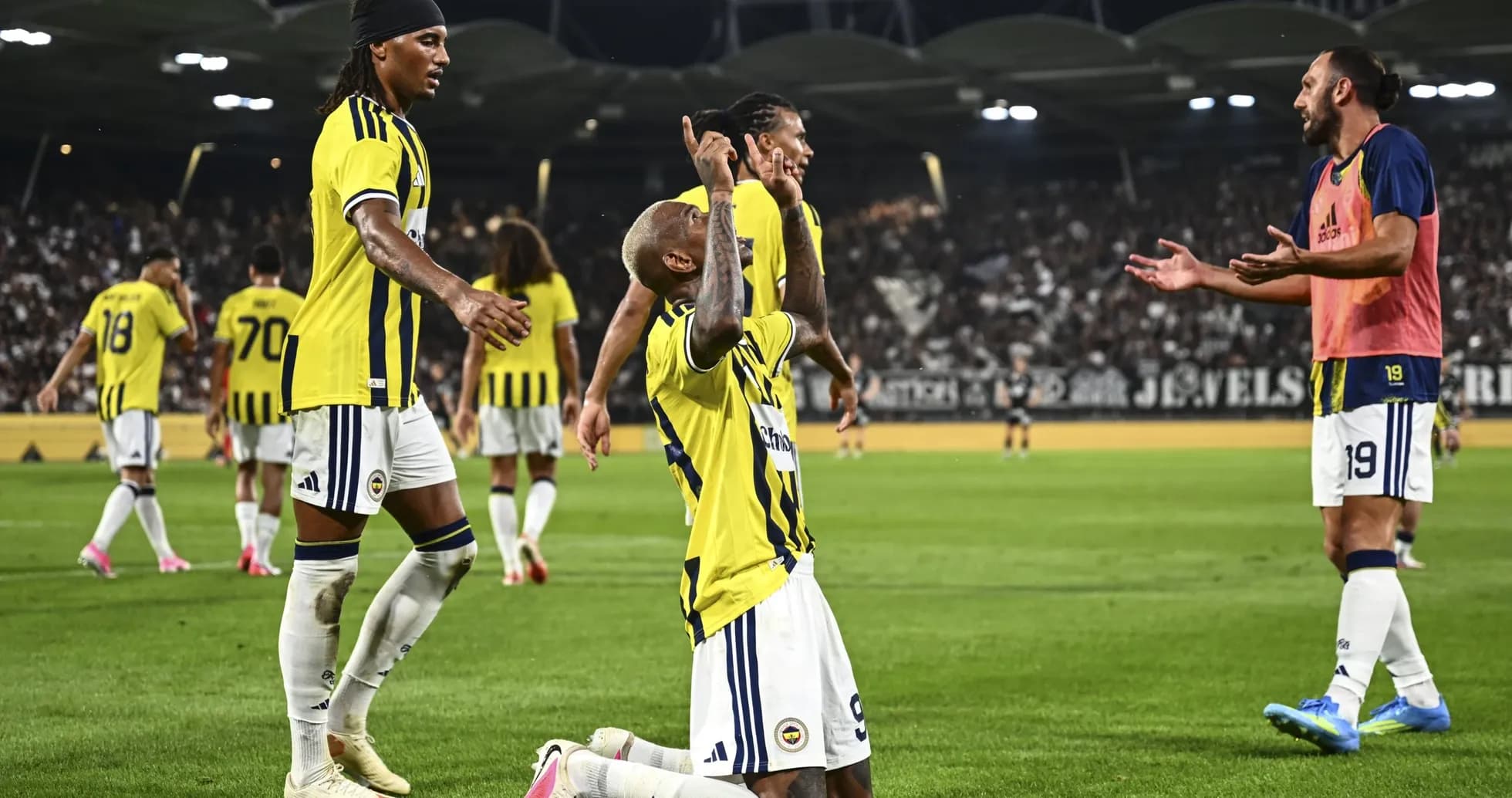
Fenerbahçe vs Lyon: UEFA Champions League Play-Off Preview
At Chobani Stadium Fenerbahce Sukru Saracoglu in Istanbul, Fenerbahçe host Lyon in a UEFA Champions League play-off tie in 2026, a high-stakes gateway to the lucrative group stage where progression or elimination will shape both clubs’ European trajectory and financial planning for the year ahead.
Head-to-Head Tactical Summary
The recent European meeting between these sides came on 23 January 2025 in the UEFA Europa League league stage in Istanbul, where Fenerbahçe and Lyon drew 0-0 at Ülker Stadyumu Fenerbahçe Şükrü Saracoğlu Spor Kompleksi. The half-time score was also 0-0, reflecting a tight, controlled contest in which Fenerbahçe’s home structure limited Lyon’s attacking output, while Lyon showed enough defensive organisation to keep Fenerbahçe from converting territorial advantage into goals.
Global Season Picture
- League Phase Performance: There is no current group-stage standings data for the 2026 UEFA Champions League, but the play-off statistics indicate Fenerbahçe have started strongly with 3 wins and 1 draw from 4 matches, scoring 5 and conceding just 1. Lyon’s early campaign is shorter, with 1 win and 1 defeat from 2 matches, scoring 4 and conceding 2, suggesting more volatility but also higher-scoring games.
- Season Metrics: In the league phase so far, Fenerbahçe have been efficient rather than explosive, averaging 1.3 goals scored and 0.3 conceded per match, with 3 clean sheets in 4 games and no match without scoring. Their preferred shape has been a 4-2-3-1 in all fixtures, pointing to a stable tactical identity, and their disciplinary profile shows yellow cards clustering late in halves, indicating an aggressive edge in key phases. Lyon, also in the league phase, are more open: they average 2.0 goals scored and 1.0 conceded per match, with one clean sheet from two games and no failures to score. They have alternated between 3-4-3 and 4-2-3-1, suggesting tactical flexibility but less continuity.
- Form Trajectory: Fenerbahçe’s form string of WDWW shows an unbeaten, upward curve: an initial draw followed by three wins, underlining growing confidence and a habit of closing ties out. Lyon’s shorter form line, LW, reflects inconsistency: a loss followed by a win, pointing to a side that can respond but has not yet established a stable performance baseline at this stage of the campaign.
Tactical Efficiency
Across the early Champions League phase, Fenerbahçe’s numbers point to a defensively efficient, control-oriented side: conceding only 1 goal in 4 matches and recording 3 clean sheets while maintaining a steady scoring rate suggests their defensive structure and game management are already at near-group-stage standard. Their consistent 4-2-3-1 setup supports a clear pressing and transition scheme, and the pattern of late yellow cards hints at intensive duels when protecting leads. Lyon’s profile is more attack-tilted: 4 goals in 2 games, with a biggest win of 3-0 at home, shows they can overwhelm opponents when their attacking patterns click, but the 2-1 away defeat and absence of an away clean sheet expose a back line that can be stretched, especially on the road. The contrast is likely to manifest in this tie as Fenerbahçe seeking to compress space, minimise transition chaos, and exploit structured attacks, while Lyon aim to increase tempo and create a more open, chance-rich game to leverage their higher scoring rate but at the risk of defensive exposure.
The Verdict: Seasonal Impact
This play-off is season-defining for both clubs. For Fenerbahçe, carrying unbeaten form and an elite defensive record into a home leg, progression would confirm their status as a Champions League-level side in 2026, secure a major revenue stream, and reinforce a tactical model built on stability and control; failure, despite such strong underlying numbers, would be a significant setback and force a recalibration of ambitions back towards secondary European competition. For Lyon, whose early campaign has been shorter but more volatile, reaching the group stage would validate their attacking rebuild and justify continued investment in a flexible, front-foot style; elimination would underline concerns about defensive balance and away resilience, and could reframe the rest of the year as a recovery mission focused on domestic consolidation and a more cautious European re-entry. In strategic terms, the winner positions themselves as a credible group-stage competitor with momentum, while the loser faces an immediate downgrade in European status and a tighter margin for error in domestic objectives for 2026.