Fiorentina vs Sassuolo: A Tactical Stalemate in Serie A
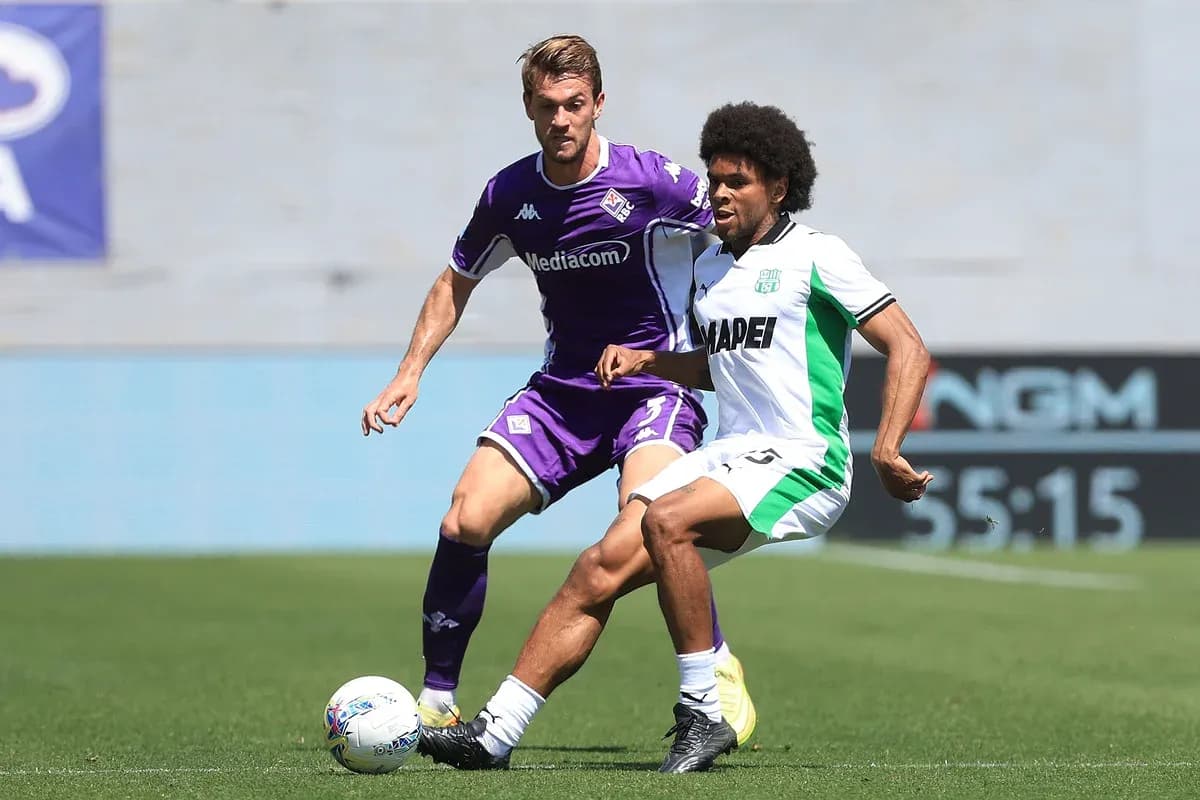
Stadio Artemio Franchi felt oddly suspended in time for this one. The scoreboard froze at 0-0, but beneath the surface the match told a story of two mid-table identities pulling in different directions. Following this result, 15th-placed Fiorentina remain a team defined by balance rather than brilliance: 37 points, a goal difference of -7 from 38 goals scored and 45 conceded in total this campaign. Sassuolo, 10th with 46 points and a goal difference of -3 (41 for, 44 against overall), left Florence still looking more like dangerous spoilers than genuine European contenders.
Both sides lined up in a mirrored 4-3-3, but the symmetry on paper hid very different intentions. Paolo Vanoli’s Fiorentina, with 4-3-3 already their most-used shape this season (11 times in total), leaned into structure and control. Fabio Grosso’s Sassuolo, who have deployed 4-3-3 in 32 of their 34 league games, arrived with the swagger of a side that trusts its attacking patterns even when the table suggests volatility.
For Fiorentina, the season’s statistical DNA is clear. Heading into this game they had played 34 matches in total, winning 8, drawing 13, and losing 13. At home they had been stubborn but unspectacular: 4 wins, 7 draws, 6 defeats, with 20 goals scored and 20 conceded at Stadio Artemio Franchi. Their averages tell the same story of equilibrium—1.2 goals for and 1.2 goals against at home, 1.1 scored and 1.5 conceded on their travels. This is a side that rarely collapses, but rarely overwhelms.
Sassuolo, by contrast, are more volatile but more incisive. Across 34 matches in total they had 13 wins, 7 draws, 14 defeats. At home they have been stronger (8 wins, 2 draws, 7 losses, 21 scored and 23 conceded), but on their travels they remain competitive: 5 away wins, 5 away draws, 7 away defeats, with 20 away goals for and 21 away goals against. Their attacking average is a steady 1.2 goals per game both home and away, while defensively they concede 1.4 at home and 1.2 away. This is a side that carries a consistent offensive threat, even if the back line bends more than it should.
The tactical voids on the teamsheet were impossible to ignore. Fiorentina’s absentee list was heavy on both talent and balance. M. Kean, their joint-top league scorer with 8 goals in total and a key direct outlet, missed out with a calf injury. His 2 penalties scored from 2 attempts this season underline how reliable he has been from the spot. Without him, Vanoli turned to A. Gudmundsson as the central reference, flanked by J. Harrison and M. Solomon. Behind them, the absences of R. Gosens and F. Parisi removed two natural left-sided options, while T. Lamptey’s knee injury and M. Pongračić’s suspension for yellow cards stripped away depth and aggression in the back line.
Sassuolo’s own absences reshaped their identity even more dramatically. D. Berardi, with 7 goals and 4 assists in total and a red card now keeping him out, is normally their emotional and creative heartbeat. D. Boloca’s muscle injury and the injuries to F. Cande, E. Pieragnolo, and D. Bakola thinned Fabio Grosso’s defensive and wing-back options. The result was a starting XI that leaned even more heavily on the front three of A. Laurienté, A. Pinamonti, and C. Volpato, with K. Thorstvedt and I. Kone asked to push from midfield around the deep-lying presence of N. Matic.
Discipline was always likely to colour the contest. Fiorentina’s season-long card profile shows a clear late-game spike: 25.64% of their yellow cards arrive between 76-90', with another 15.38% in the 91-105' window. Their red cards are brutally concentrated—100.00% of them also fall in the 76-90' range. This is a team that frays as fatigue and pressure rise. Sassuolo mirror that tendency in their own way: 28.38% of their yellow cards land between 76-90', and they have red cards spread across 16-30', 46-60', and 76-90'. The closing stages were always going to be a tightrope, and the goalless outcome owed as much to both sides just about keeping their nerve as to any attacking wastefulness.
Within this narrative, the key matchups defined the texture of the game more than the scoreline suggests.
The “Hunter vs Shield” duel revolved around A. Pinamonti. With 8 goals and 3 assists in total, 51 shots and 26 on target, he is Sassuolo’s primary penalty-box predator. He has even carried the burden from the spot, though his record—0 penalties scored and 1 missed overall—shows that responsibility has come with scars. Against him stood a Fiorentina defence that, heading into this game, had conceded 20 at home and 45 in total, but had also produced 8 clean sheets overall (5 at home). L. Ranieri, one of Serie A’s most carded defenders with 8 yellows, and the absent but influential M. Pongračić, who has blocked 22 shots in total, are emblematic of a back line that mixes aggression with last-ditch resilience. In this match, the “shield” held: Pinamonti was contained, the box crowded, and Fiorentina added another clean sheet to their ledger.
The “Engine Room” battle was no less decisive. For Sassuolo, N. Matic remains the metronome and enforcer rolled into one. Across the season he has completed 1537 passes with 85% accuracy, added 42 tackles, 9 blocked shots, and 23 interceptions in total, and carries a disciplinary edge with 6 yellow cards and 1 red. His job in Florence was to smother the influence of R. Mandragora and N. Fagioli, Fiorentina’s twin pivots in this 4-3-3. Mandragora’s left-footed distribution and Fagioli’s ability to break lines with passes into Gudmundsson and Solomon were the home side’s main route to turning sterile possession into incision. The stalemate in midfield was almost literal: Fiorentina kept their structure, Sassuolo kept their distances, and the result was a game long on control but short on chaos.
Statistically, both teams came into this fixture as low-scoring, marginally negative xG profiles rather than wild attacking outfits. Fiorentina’s averages of 1.1 goals for and 1.3 against in total, combined with 9 matches in total where they failed to score, point to a side that often needs set-pieces or penalties to tilt tight games. Sassuolo’s 1.2 goals for and 1.3 against overall, plus 11 total fixtures without scoring, tell a similar story: their attacking reputation often outstrips their actual output.
Following this result, the tactical prognosis for both squads is nuanced rather than damning. Fiorentina proved once again that their defensive structure at home is robust enough to neutralise a capable front line, especially when anchored by experienced figures like D. de Gea behind a disciplined back four. Their problem remains at the other end: without M. Kean, the front three lacked a ruthless finisher to convert territorial control into goals. The reliance on penalties—6 scored from 6 in total this season—cannot be a sustainable attacking plan.
Sassuolo, meanwhile, showed that even without D. Berardi they can construct coherent attacking patterns, but they still struggle to consistently break down organised blocks away from home. Their away record of 20 goals scored and 21 conceded suggests that on their travels they tend to play to the margins; in Florence, those margins tilted to zero.
In a league table where both clubs inhabit the grey zone between safety and ambition, this 0-0 felt less like a missed opportunity and more like a faithful reflection of who they are right now: Fiorentina, the cautious balancers; Sassuolo, the streaky aggressors learning to live without their talisman. The xG models would likely have nodded in agreement with the scoreboard—two mid-table squads, two well-drilled 4-3-3s, and a result that underlined defensive solidity more than attacking daring.