Torino 2–2 Inter: A Clash of Statistics and Spirit
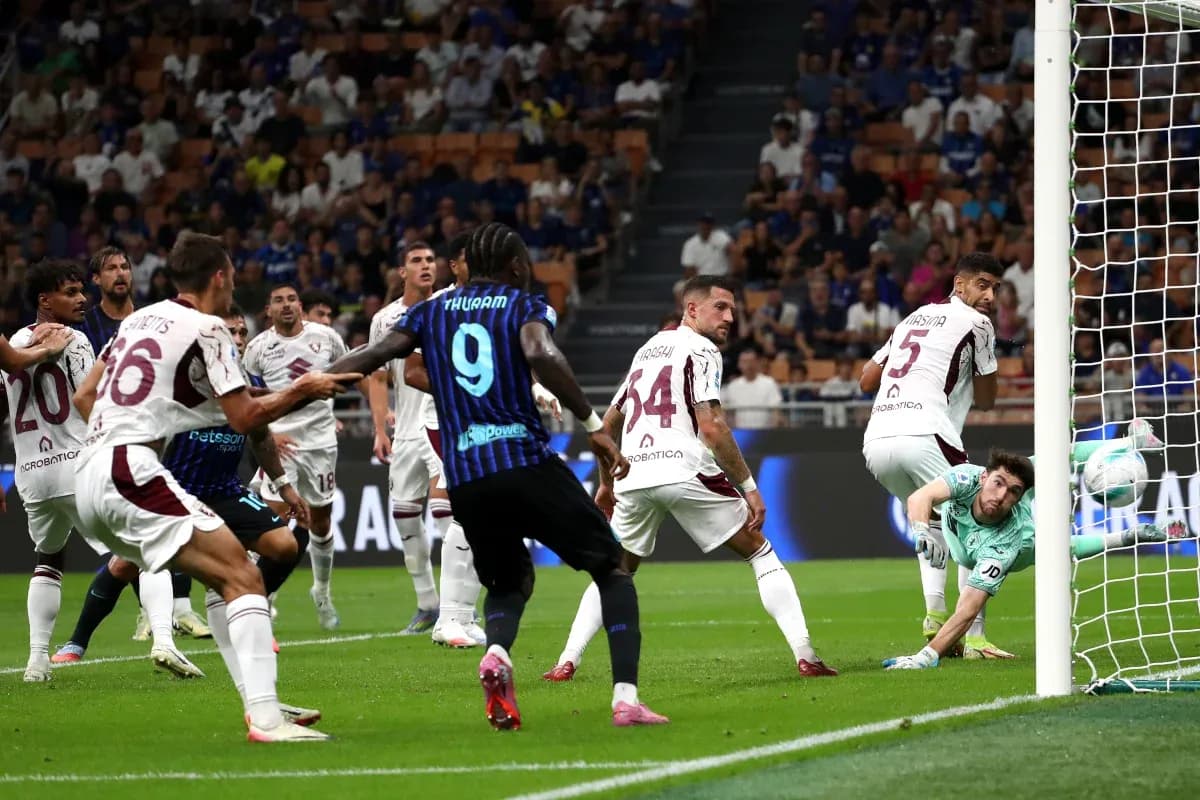
The evening at Stadio Olimpico Grande Torino closed on a knife-edge: Torino 2–2 Inter, a result that felt like a small victory for the hosts and a missed opportunity for the league leaders. Following this result, the table underlines the contrast in their seasons. Torino sit 13th on 41 points, with a goal difference of -17 (39 scored, 56 conceded) across 34 matches. Inter, by contrast, remain top with 79 points and a goal difference of +49 (80 scored, 31 conceded), the most complete statistical machine in Serie A 2025 so far.
Yet over 90 minutes in Turin, those numbers met the chaos of a game that refused to obey the script.
I. The Big Picture: Systems and Identities
Leonardo Colucci rolled out a bold 3-4-2-1, a shape that tried to turn Torino’s season-long resilience into a proactive stance against the champions-elect. A. Paleari anchored a back three of S. Coco, A. Ismajli and E. Ebosse. Ahead of them, the wing-backs V. Lazaro and R. Obrador flanked a double pivot of E. Ilkhan and G. Gineitis, with N. Vlasic and C. Adams tucked in behind lone striker G. Simeone.
This structure mirrored Torino’s broader seasonal DNA: a side that is often compact but rarely dominant. Overall this campaign they average 1.1 goals for and 1.6 against per match, with their home return sitting at 1.4 goals scored and 1.5 conceded. They live on the margins, and their goal timing profile reflects that: a late-game surge, with 29.73% of their goals arriving between 76–90 minutes, often turning tight contests into dramas in the closing stretch.
Cristian Chivu, on the other bench, stayed loyal to Inter’s signature 3-5-2, the shape that has carried them through 34 league fixtures without a single deviation. Y. Sommer marshalled a back line of Y. Bisseck, M. Akanji and Carlos Augusto. The midfield five – M. Darmian, N. Barella, P. Zielinski, P. Sucic and F. Dimarco – formed the technical and tactical heart of the side, while M. Thuram and A. Bonny led the line.
Inter’s numbers are those of a juggernaut: overall 2.4 goals scored per match, only 0.9 conceded, with a clean sheet in 16 of 34 games. On their travels they still average 1.9 goals for and only 0.9 against, a ruthless balance of control and incision.
II. Tactical Voids: Absences and Discipline
Both squads arrived with notable absentees that shaped the bench and the match narrative. Torino were without Z. Aboukhlal (muscle injury), F. Anjorin (hip injury) and Z. Savva (knee injury) – three attacking and creative options who would have offered Colucci different profiles between the lines and in wide channels. Their absence increased the load on Vlasic as the primary conduit and on Simeone as the reference point.
Inter missed Luis Henrique (thigh injury), trimming Chivu’s flexibility in rotating his forward line and wide attacking roles. It pushed more responsibility onto Thuram and the bench presence of L. Martinez as the late-game trump card.
From a disciplinary perspective, the season-long patterns of both sides hovered over the contest. Torino’s yellow-card distribution is heavily back-loaded: 18.75% of their bookings arrive between 76–90 minutes, and a further 21.88% in 91–105. Inter are similar, with 30.00% of their yellows in the 76–90 window. This match did not explode into chaos, but the underlying data paints both teams as emotionally stretched in the dying stages – a factor that often intersects with Torino’s late scoring surge.
III. Key Matchups: Hunter vs Shield, Engine Room vs Enforcer
The headline duel in any Inter match this season is conceptual rather than purely individual: the “Hunter” is not just one player, but a collective spearhead. Lautaro Martínez, with 16 league goals and 4 assists, remains the purest finisher in the squad, but here he started on the bench, altering the dynamic. In his place, Thuram stepped into the role of primary front-line threat. Across the season he has 12 goals and 5 assists, underpinned by 52 shots (27 on target) and a robust duel profile (249 duels, 125 won). His presence against Torino’s back three – particularly the aerial and physical battle with Ismajli and Ebosse – was the central attacking axis for Inter.
On the other side, G. Simeone carried Torino’s goal burden. With 10 league goals from 51 shots (26 on target), he is a penalty-box predator rather than a volume playmaker. His duel volume – 251 contests, 97 won – reflects a striker who thrives in contact, pinning centre-backs and creating second-ball chaos for runners like Vlasic and Adams. Against a defence that concedes only 0.9 goals per match overall, Simeone’s ability to occupy both Akanji and Bisseck was crucial to Torino’s ability to sustain attacks.
The “Engine Room” battle was even more compelling. N. Barella and P. Zielinski, with P. Sucic as the auxiliary interior, formed a technical carousel against Torino’s Ilkhan–Gineitis axis. Barella’s season numbers – 1604 passes with 68 key passes at 85% accuracy – show a midfielder who not only circulates but punctures lines. His duels (218 total, 107 won) and 49 tackles underline his two-way influence.
Torino’s response was less about elegance and more about disruption and transition. Gineitis and Ilkhan were tasked with screening spaces where Barella and Thuram like to combine, while Vlasic – with 8 goals, 3 assists and 47 key passes this season – became the bridge from deep block to counter. His duel volume (313 total, 149 won) and 60 tackles speak to his role as both creator and first presser.
Out wide, the confrontation between F. Dimarco and V. Lazaro/R. Obrador framed the flanks. Dimarco is Serie A’s top assist provider with 16, backed by 91 key passes and 1336 total passes at 82% accuracy. His left-footed deliveries are a systemic weapon, and Torino’s wing-backs had to choose between pressing him early or retreating to protect the box. Every time Dimarco advanced, Torino’s back three were stretched horizontally, creating channels for Thuram’s diagonal runs.
IV. Statistical Prognosis: xG Logic vs Emotional Reality
Even without explicit xG figures, the season-long trends offer a clear probabilistic reading of a fixture like this. Heading into this game, Inter’s profile – 80 goals scored, 31 conceded, 25 wins from 34 – suggested they would generate more and better chances, particularly given Torino’s defensive record of 56 conceded and an average of 1.6 goals against per match.
Torino’s best statistical route into the match lay in three pillars:
- Late Surge Window: With 29.73% of their goals arriving between 76–90 minutes, Torino are at their most dangerous just as Inter’s yellow-card curve spikes (30.00% of bookings in the same period). Fatigue plus emotional strain equals opportunity; this 2–2 draw fit that pattern of a game that opened up late.
- Set-Piece and Delivery Threat: Between Vlasic’s technical quality and Simeone’s penalty-box instincts, Torino were always likely to fashion lower-volume but high-impact chances, especially if Inter’s back line were forced into emergency defending.
- Compact Block vs High Efficiency: Inter’s away average of 1.9 goals for and 0.9 against normally translates into a controlled, low-variance contest. Torino’s compact 3-4-2-1, however, is built to compress central spaces and force Inter wide, where crosses and second balls introduce variance and potential for scrappy goals – exactly the type Simeone thrives on.
From Inter’s perspective, the absence of any missed penalties this season (5 scored from 5) and their 16 clean sheets overall usually tilt tight matches decisively in their favour. That they conceded twice here underlines how Torino managed to drag the game into a more chaotic, transitional territory than Chivu would have preferred.
In narrative terms, this 2–2 is the collision of a champion’s efficiency with a mid-table side’s refusal to bow to the numbers. Inter still look every inch the title winners their metrics suggest. But in Turin, against a Torino side whose late-game spirit is written into their goal-timing map, the statistics met resistance – and, for once, had to share the story.