France vs England: World Cup 2026 3rd Place Final Preview
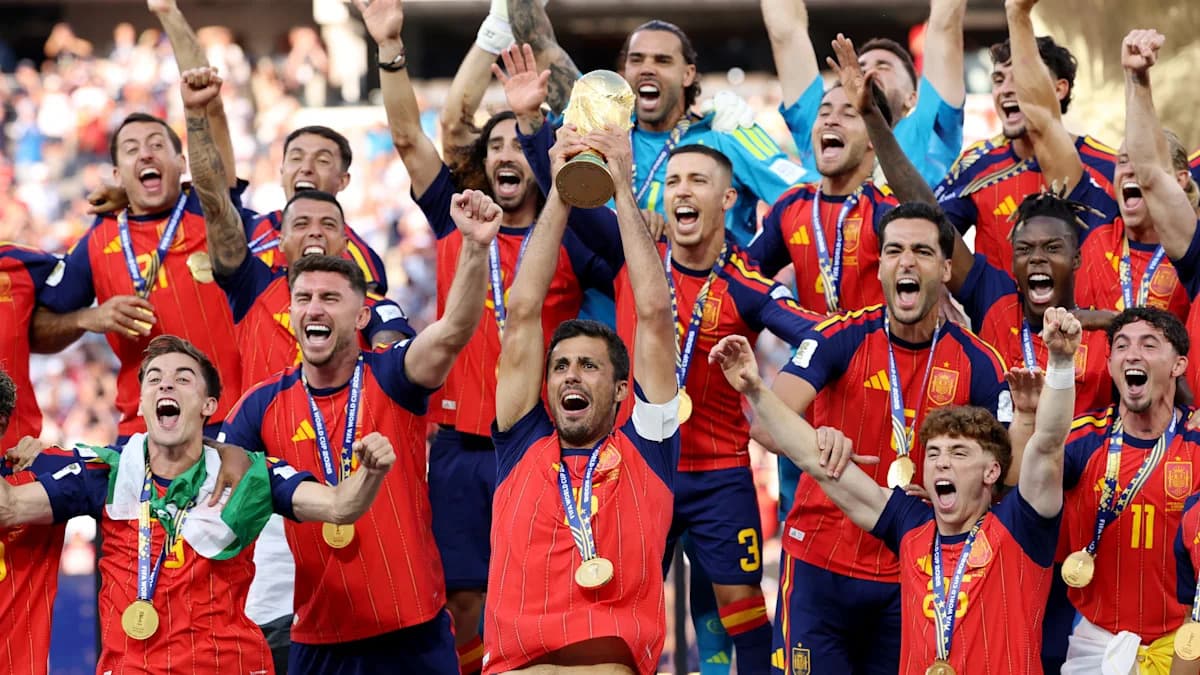
On 18 July 2026, France and England will walk out for a World Cup 3rd Place Final with no second chances and no second legs, on neutral turf with only pride, medals and legacy on the line. The stadium name and city are yet to be confirmed, but wherever this match is staged it will feel like the centre of the football world as a France side that has cut through opponents with ruthless attacking power meets an England team that has blended resilience with star quality in the final third.
Season Context
France arrive as the dominant force of Group I, finishing 1st in the group with a perfect 9 points from 3 matches, scoring 10 goals and conceding just 2. That +8 goal difference underlines how often they have overpowered opponents (10 goals in 3 games) while keeping things largely secure at the back (only 2 conceded), a platform that has carried them deep into the knockout rounds and now into this 3rd Place Final.
England topped Group L, also finishing 1st but with a slightly more hard-fought path: 7 points from 3 matches, thanks to 2 wins and 1 draw. Their 6 goals scored and 2 conceded reflect a side that has been efficient rather than explosive (6 goals in 3 matches) and generally well-organised defensively (2 conceded), but without quite the same attacking margin for error that France have enjoyed.
Form & Momentum
Both teams share the same recent form line from the standings: LWWWW. For France, that run tells of a side that responded to a setback with a surge of four straight victories, powered by a prolific attack (10 goals in 3 group games) and a defence that rarely gives opponents more than a glimpse (2 goals conceded in those 3). The combination of firepower and control has made them look like a heavyweight even in defeat.
England’s LWWWW sequence paints a similar picture of recovery and resilience, but with a slightly different balance. Their 6 goals from 3 group fixtures show they are capable of striking in bursts, often through the individual brilliance of players like J. Bellingham and H. Kane, while the defence has been generally solid (2 goals conceded in 3) but occasionally vulnerable when the game becomes stretched. Momentum is still strong, yet their margins have tended to be narrower than France’s.
Head-to-Head Patterns
Recent competitive history between these two nations has tilted subtly towards France, even if the margins have been thin. The most vivid reference point is the World Cup Quarter-finals on 10 December 2022, when France beat England 2-1 at Al Bayt Stadium (World Cup, season 2022, December 2022). On that night, France’s efficiency in both boxes edged a contest that many felt England had played well enough to take further.
Go back further and the story broadens. A high-scoring meeting in Paris on 13 June 2017 ended with France defeating England 3-2 at Stade de France (Friendlies, season 2017, June 2017), a reminder that when these sides open up, the game can become a shoot-out. Even earlier, in a major tournament setting at Donbass Arena on 11 June 2012, they could not be separated in a 1-1 draw (Euro Championship, season 2012, June 2012), underlining just how finely balanced this rivalry can be when the stakes are high.
Taken together, the pattern is of tight, high-quality encounters where France have often found a way to land the decisive blow, but where England have consistently shown they can match them for long stretches.
Tactical Preview
France’s tournament profile and statistics point strongly towards a 4-2-3-1 structure, the shape they have used in all 7 recorded matches. That system allows them to maximise the devastating transition threat of Kylian Mbappé (8 goals and 3 assists in 7 appearances) and O. Dembélé (5 goals and 2 assists), with M. Olise acting as the creative hub between the lines (5 assists and 355 completed passes at 86% accuracy). With 16 goals scored across 7 matches in the broader tournament sample (2.3 per game) and only 4 conceded (0.6 per game), France can press high in moments, then spring forward with pace and precision, knowing their back line and double pivot are generally secure.
In possession, France are likely to build through technically assured defenders like W. Saliba and J. Koundé, using the full-backs to stretch the pitch and create lanes for Mbappé to attack the inside channels. The presence of midfielders such as A. Tchouaméni and N. Kanté gives them both ball-winning and distribution, which underpins their ability to sustain pressure (4 clean sheets in 7 matches) without overexposing themselves. Set pieces will also matter: with their scoring spread and aerial threats from centre-backs, France can punish England from dead balls as well as open play.
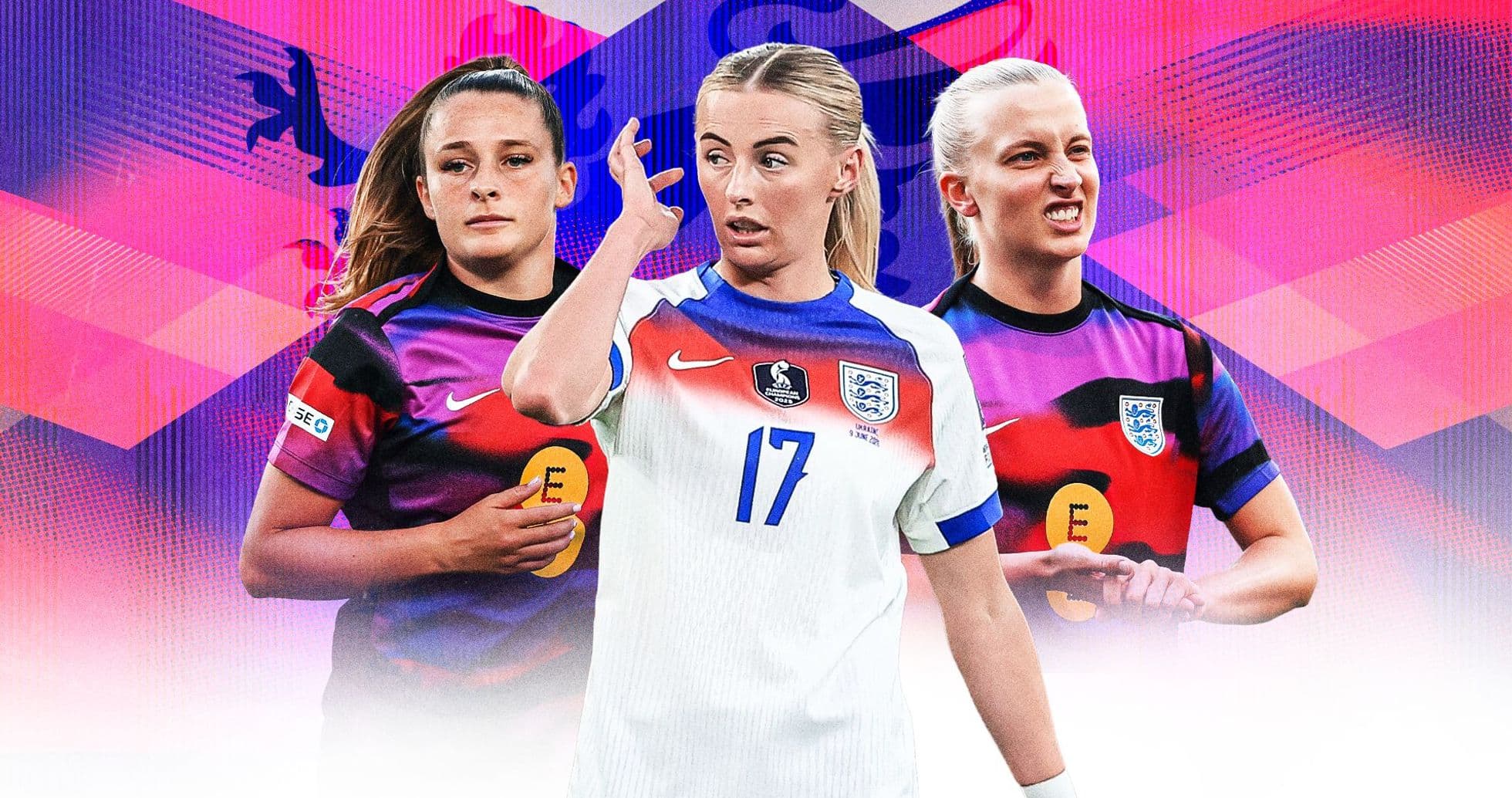
England, too, have leaned heavily on a 4-2-3-1, using it in 6 of their 7 recorded matches, occasionally shifting to a 4-1-4-1. Their attack revolves around the axis of H. Kane (6 goals and 1 assist), J. Bellingham (6 goals and 1 assist) and wide threats like A. Gordon and B. Saka (each with 3 assists). Across 7 matches, they have scored 14 goals (2.0 per game) but conceded 8 (1.1 per game), numbers that suggest a side capable of outscoring opponents but less watertight than France.
Declan Rice’s role at the base of midfield will be crucial. His passing reliability (240 completed passes at 91% accuracy) and positional discipline help England control tempo, but his disciplinary record (2 yellow cards) and the presence of J. Quansah with a red card in limited minutes highlight a potential vulnerability if France can force England into emergency defending. Out wide, Gordon and Saka will look to attack France’s full-backs, testing how adventurous T. Hernández and his counterpart dare to be.
Tactically, this shapes up as a contest between France’s slightly more balanced, control-oriented 4-2-3-1 and England’s version, which leans more towards front-loaded creativity. If France can pin England back and deny clean service into Kane, their superior defensive numbers (4 goals conceded in 7 matches versus England’s 8) could be decisive. If England can drag the game into a more chaotic, end-to-end rhythm, their own attacking depth gives them a genuine puncher’s chance.
Statistical Snapshot
- Competition: World Cup, season 2026 — 18 July 2026.
- Venue: Unknown, Unknown.
- Prediction: Win or draw — Double chance : France or draw.
- Win Probabilities: Home 45% / Draw 45% / Away 10%.
- Model: France 61.3 — England 38.8.
Betting Verdict
The prediction model leans clearly towards France avoiding defeat, with a double-chance angle supported by their stronger defensive record (4 goals conceded in 7 matches versus England’s 8) and more explosive group-stage output (10 goals in 3 games against England’s 6). Head-to-head history in major competitions also nudges in their favour, most notably the 2-1 World Cup win in December 2022. With the probabilities split at 45% home, 45% draw and just 10% away, the analytical case points towards France either winning or taking this to at least extra time in spirit, if not in format. In narrative terms, England have the individual quality to upset those numbers, but the safer betting stance is to side with France or the draw in this 3rd Place Final.