Frank Lampard Remembers Mourinho's Departure
Frank Lampard still remembers the way he walked in.
No entourage. No club statement. Just Jose Mourinho, stepping through the dressing-room door to tell the players himself that it was over.
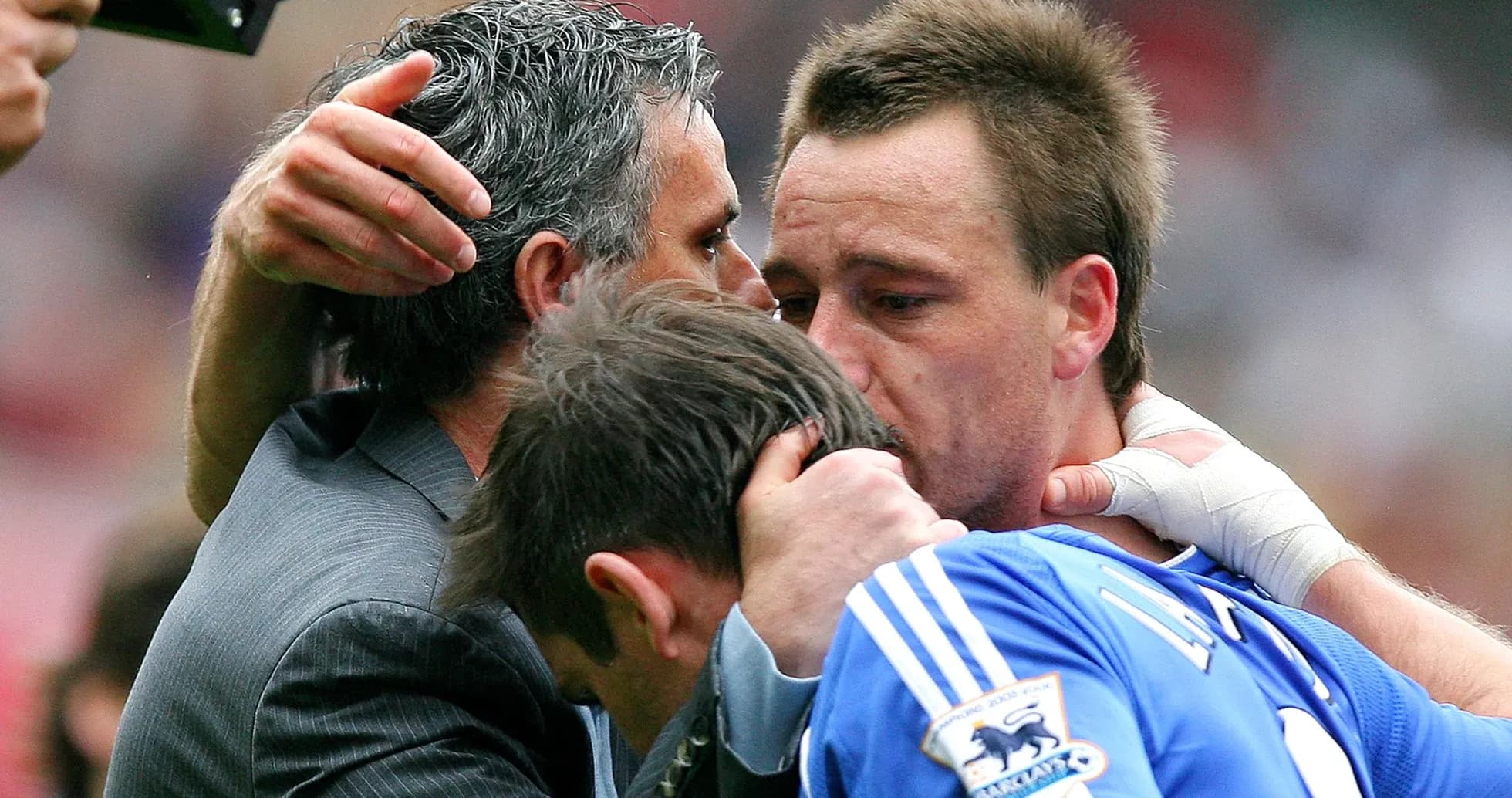
"I remember him coming into the dressing room and he said to me that he’d been sacked," Lampard recalled. The word hung in the air. Sacked. "I couldn’t think about how much this man had helped my career, how much I loved working with him. There were tears, which is not normal in the dressing room when a manager leaves."
This was not the usual polite round of handshakes and half-hearted goodbyes that follow most managerial exits. This was the end of a regime that had changed careers, transformed a club and built unbreakable bonds in a dressing room that suddenly felt very small.
John Terry, captain and standard-bearer of that Chelsea side, felt it just as deeply – and still carries the weight of it.
"I would leave that pitch in a coffin for him," Terry said, his admiration for Mourinho undimmed. "You’ve got grown men, tears running down their face, not really understanding why. And even still today I’m like, that’s my fault."
The moment he cannot escape came in a seemingly routine Champions League group game. A 1-1 draw with Rosenborg at Stamford Bridge, the night that pushed Roman Abramovich towards his most seismic decision.
"When we drew the Champions League game, my man scored," Terry said. "If I didn’t let that person score, would he have lasted another couple of years? Who knows? I still feel kind of responsible for that, if that makes sense."
He paused on the thought, the what-if that refuses to leave.
"It’s just disappointing how it all ended, if I’m honest. I absolutely loved him and adored him and was more upset than anyone, to be honest."
While the players wrestled with guilt and grief, Mourinho had his own version of how the empire began to crack. For him, the problem started long before Rosenborg, in the boardroom and the executive corridors, where the clean lines of Chelsea’s power structure began to blur.
"In my work, the triangle: Jose, Peter Kenyon, Roman was invaded by strangers," he said, lifting the lid on the internal dynamics that soured his relationship with Abramovich.
At first, the setup felt pure, direct, streamlined. "In the beginning, you play at Stamford Bridge, you look to the box, Roman, his wife, with one or two persons of his confidence." Owner, chief executive, manager. A straight line from the pitch to the very top.
Then the faces changed.
"A few seasons later: former players, agents," Mourinho said. "These kinds of people, they know where the money is."
The message was clear. Too many voices, too many interests, too many people reaching for influence around a project he believed had been built on trust and clarity. The triangle that once anchored the club had been pulled out of shape.
One episode, in particular, summed up the shift for Mourinho – a request so surreal it would have sounded like a joke if it hadn’t come from the very top.
"I think Roman changed," Mourinho said. "For example, one day Peter came to me quite embarrassed and he told me, 'Jose, I have to tell you something. The boss is in Sardinia with these boats, and the people that work in these boats they play football against guys from the hotel, and they are losing. Can you go there to win a game for him?'"
The answer was instant.
"'No, Peter, I have training today. I have to prepare for tomorrow; I cannot go'. And he was not happy with that."
There, in that refusal, you can see the fault line. Mourinho, obsessed with preparation and control, choosing a training session over a billionaire’s whim. Abramovich, used to getting what he wanted, bristling at the word "no".
The players saw only the outcome: their leader walking into the dressing room to say goodbye, eyes wet, voice heavy. They felt the loss in the most basic, human way. Lampard in tears. Terry still replaying a single defensive lapse years later.
The politics, the power games, the Sardinia stories – all of that belonged to another level of the club. Down in the dressing room, it was simpler. They had lost the man they would have followed anywhere.