Frosinone vs Juventus: Serie A Season Opener Analysis
Under the late‑August heat of Stadio Benito Stirpe, Frosinone opened their Serie A return with a narrow 0‑1 defeat to Juventus, a result that already sketches the early-season identities of both sides.
I. The Big Picture – Two 4‑2‑3‑1s, Two Very Different Moods
This was Round 1 of the Serie A regular season, and it felt like a meeting of two projects at opposite ends of their cycles.
Frosinone, under Massimiliano Alvini, lined up in a 4‑2‑3‑1 that screamed transition and development: a young goalkeeper in L. Palmisani behind a back four of I. Monterisi, G. Calvani, G. Cittadini and G. Bracaglia, shielded by the double pivot of G. Calo and M. Cichella. Ahead of them, S. Fini and R. Schmid flanked G. Kvernadze behind lone striker A. Raimondo.
Juventus, coached by Luciano Spalletti, mirrored the 4‑2‑3‑1 but with a very different level of individual pedigree. G. Vicario started in goal, protected by P. Kalulu, Bremer, L. Kelly and Z. Celik. The midfield hinge of M. Locatelli and Douglas Luiz underpinned a fluid trio of F. Conceicao, W. McKennie and K. Yildiz, supporting R. Kolo Muani.
Following this result, the standings tell a simple story. Juventus sit 8th with 3 points from 1 match, a goal difference of +1 (1 goal for, 0 against) and an away record of 1 win from 1, scoring 1 and conceding none on their travels. Frosinone are 14th, pointless after 1 game, with a goal difference of −1 (0 scored, 1 conceded) and a home record of 1 defeat from 1, without a goal at Stadio Benito Stirpe.
The underlying team numbers match the scoreline. Overall this campaign, Frosinone average 0.0 goals for and 1.0 goals against per match, with their only defeat a 0‑1 at home. Juventus, by contrast, have begun with a clean sheet and 1.0 goals scored per match away, a compact statistical profile that fits Spalletti’s blueprint: control first, incision second.
II. Tactical Voids – Absences and Discipline
The most conspicuous structural void belonged to Juventus. Three players were ruled out: M. Di Gregorio (transfer negotiations), J. Ekhator (muscle injury) and F. Gatti (injury). The absence of Gatti in particular shaped the back line. Spalletti turned to the pairing of Bremer and L. Kelly in central defence, a combination that leans on Bremer’s dominance and leadership.
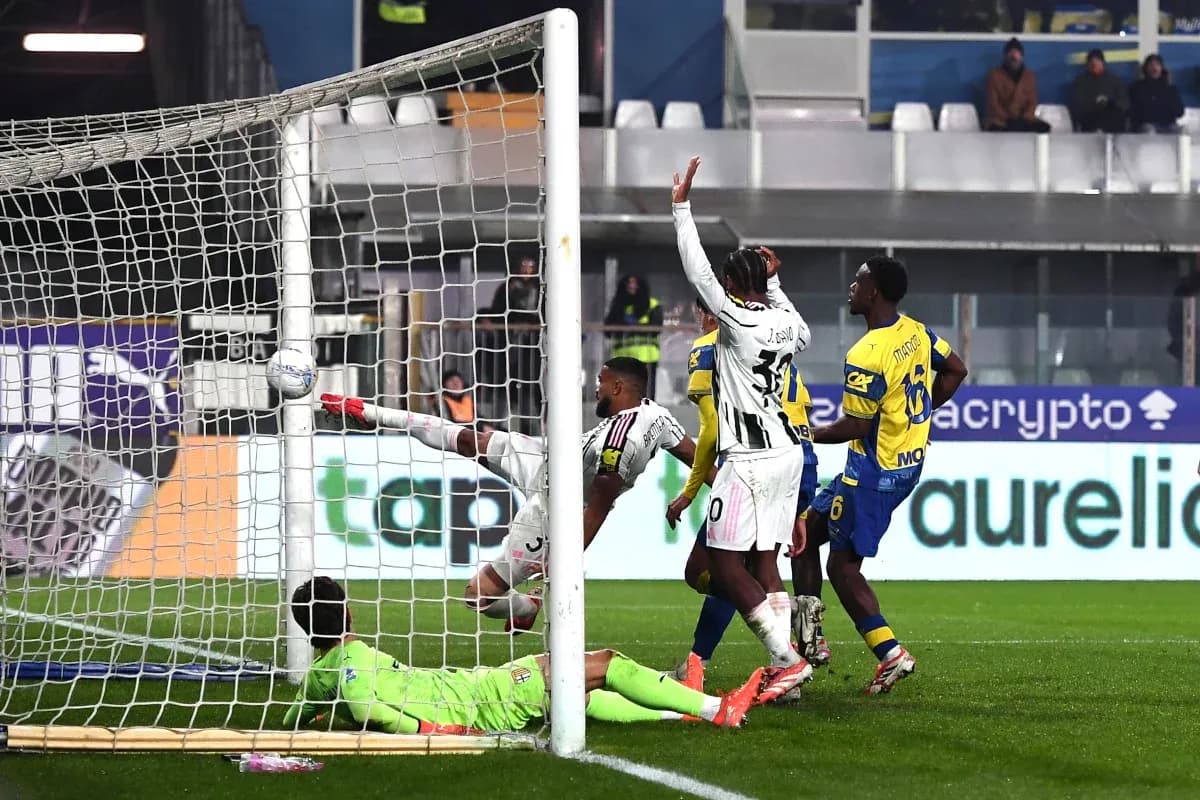
That decision proved decisive. Bremer not only anchored the defence but also emerged as an early‑season talisman. With 1 goal in his only appearance, he leads Juventus’ scoring chart in Serie A 2026 and did it with authority: 2 shots, 1 on target, and 36 passes at 88% accuracy. Defensively, he won 5 of 8 duels, made 2 tackles, 1 interception and crucially blocked 1 shot. He was the defender and the match‑winner rolled into one.
Frosinone had no listed absentees, but their void was of a different kind: experience at this level. Their season statistics already show the strain. Overall, they have failed to score in their only match, and at home they have 1 failed‑to‑score entry from 1 game. The defensive record is not disastrous – 1 goal conceded in total, 1.0 per home match – but with no attacking output, the margin for error is brutal.
Discipline adds another layer. Frosinone’s yellow cards this season are split evenly between two windows: 50.00% of their cautions arrived between minutes 31‑45 and 50.00% between 91‑105. That pattern suggests a side that struggles to manage emotional spikes at the end of each half. R. Schmid embodies that edge: in his 59 minutes he committed 4 fouls, drew 2, and took a yellow card, placing him among the league’s most booked players so far.
Juventus’ yellows, by contrast, cluster around the heart of the contest. Their cautions are split 50.00% between minutes 46‑60 and 50.00% between 76‑90, pointing to a team that tightens the screws when the game becomes stretched. Z. Celik and A. Cambiaso both feature prominently in the disciplinary charts. Celik, starting at right‑back, combined 38 passes at 89% accuracy with 2 interceptions and 2 fouls committed, picking up a yellow card along the way. Cambiaso, introduced from the bench for 21 minutes, also collected a booking, yet still completed 13 passes at 92% accuracy and made 1 tackle.
III. Key Matchups – Hunter vs Shield, Engine Room vs Press
The defining duel of this contest – and of Juventus’ early‑season identity – is the “Hunter vs Shield” paradox inside their own box. The league’s current top scorer for Juventus is not a forward but Bremer, the very shield meant to repel danger. His goal underlines how Spalletti is weaponising set pieces and defensive presence in the opposition area. Against a Frosinone side that has yet to score and has conceded only once, those marginal gains are decisive.
On Frosinone’s side, the “hunter” remains theoretical. A. Raimondo led the line but operates in a structure that is still learning to progress the ball. With Frosinone’s overall xG data not provided, we are left with the blunt truth of their goals‑for column: 0 in total, 0.0 on average at home and overall. Until someone in that front four converts possession into end product, every defensive lapse will be fatal.
In the “Engine Room” matchup, Juventus clearly hold the edge. M. Locatelli and Douglas Luiz form a double pivot capable of both screening and circulating. Ahead of them, F. Conceicao is already among the league’s leading assist providers with 1 assist from his first appearance. He played 69 minutes, delivered 26 passes at 88% accuracy, produced 2 key passes and attempted 9 dribbles, completing 4. His role between the lines – linking Locatelli’s tempo with R. Kolo Muani’s runs – is the creative artery of this Juventus.
For Frosinone, G. Calo and M. Cichella must evolve into more than simple stoppers. With the team failing to score and recording 1 clean sheet in total (none so far) and 1 failed‑to‑score entry at home, their double pivot has to accelerate transitions to give Kvernadze, Fini and Schmid shorter routes to goal. As it stands, their 4‑2‑3‑1 is structurally sound but toothless.
IV. Statistical Prognosis – What This Match Tells Us Going Forward
Following this result, the statistical profiles are stark. Frosinone’s overall record: 1 match played, 0 wins, 0 draws, 1 defeat, 0 goals for, 1 against. The goal difference of −1 is modest, but the attacking void is not. Their card timing – with a late‑game spike between 91‑105 – hints at potential problems in closing out tight matches, especially once fatigue and frustration set in.
Juventus’ overall record is the mirror image: 1 match, 1 win, 0 draws, 0 defeats, 1 goal for, 0 against, goal difference +1. On their travels they are perfect: 1 away game, 1‑0 scoreline, clean sheet preserved. Their defensive solidity is underscored by the season stats: 0 goals conceded in total, 0.0 goals against on average both overall and away. The clean sheet tally – 1 away, 1 overall – confirms that Vicario and his back four are starting from a position of control.
With no penalties taken or missed by either side so far (both teams show 0 total penalties, 0 scored, 0 missed), the margins are being decided in open play and set pieces, where Juventus’ superior individual quality – Bremer in both boxes, Conceicao as creator, Celik and Cambiaso as aggressive full‑backs – is already showing.
Narratively, this match reads as a prologue. Frosinone have the skeleton of a competitive 4‑2‑3‑1 but must quickly find a reliable goal threat and a calmer disciplinary curve at the end of each half. Juventus, even without key squad members like F. Gatti and M. Di Gregorio, have opened with a performance that looks sustainable: low‑risk defensive structure, set‑piece threat through Bremer, and a creative conduit in F. Conceicao.
If these patterns hold, Frosinone’s season will be defined by how fast their young core matures into Serie A end‑product, while Juventus look poised to build a title‑adjacent campaign on the back of a defence that, so far, has not been breached.