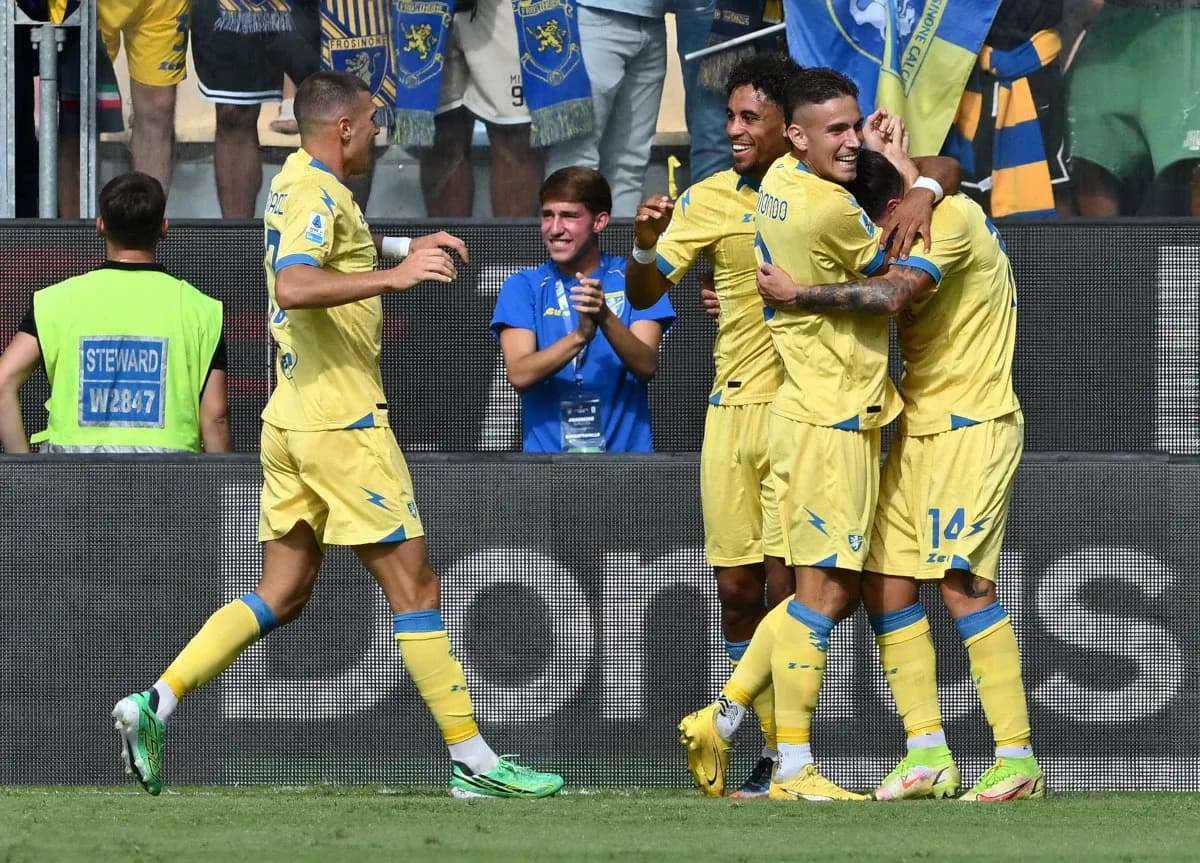
Frosinone's Tactical Masterclass in 2–0 Victory Over Como
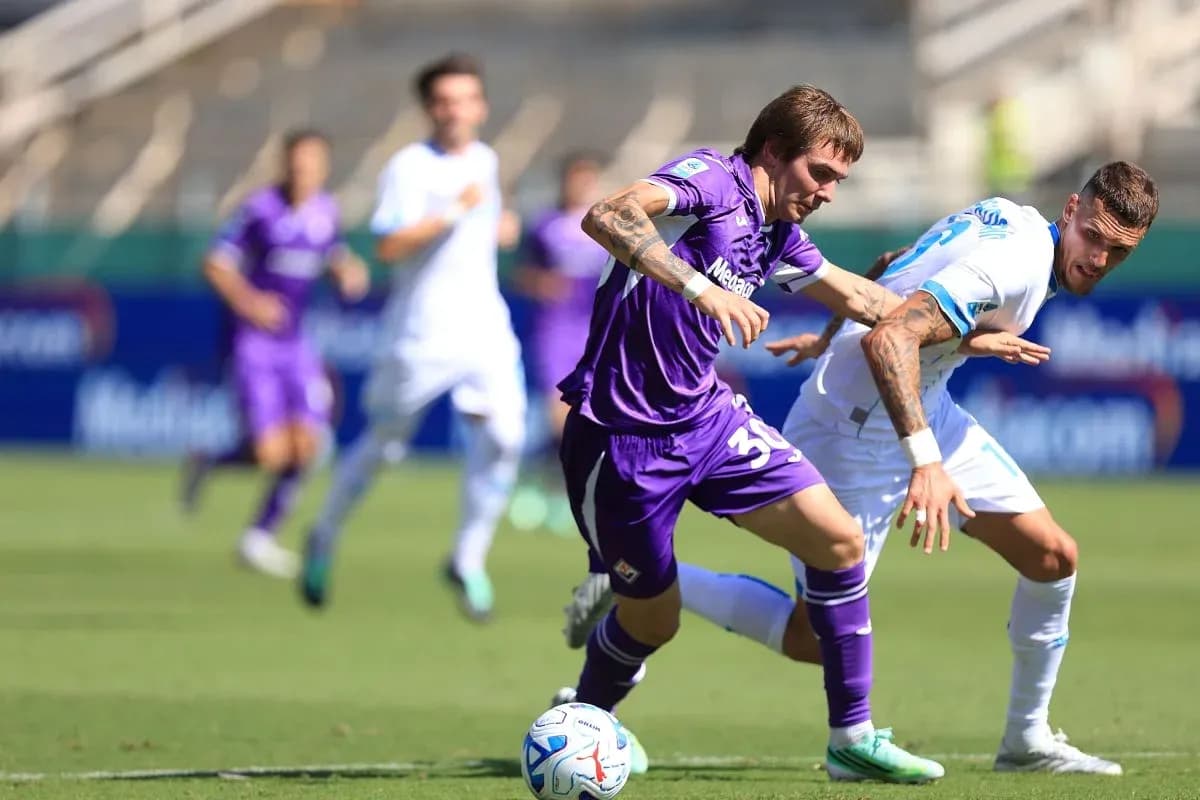
Under the early afternoon light at Stadio Benito Stirpe, Frosinone’s 2–0 win over Como felt less like an upset and more like the confirmation of a new Serie A identity. This was Round 5 of the regular season, a meeting of two ambitious sides who both arrived with 10 points from 5 matches, but left separated by more than just the scoreline.
Heading into this game, Frosinone had quietly built a top‑six profile. Overall they had taken 10 points from 5 matches, with 9 goals for and 4 against, a goal difference of +5. At home they had already scored 5 and conceded 3 in 3 games, averaging 1.7 goals for and 1.0 against. Como, for their part, were not far behind: 10 points, 9 goals for and 6 against overall, a goal difference of +3. On their travels they had been brave and open – 7 goals scored and 5 conceded in 4 away matches, an average of 1.8 for and 1.3 against away from home. It set the stage for a clash between Frosinone’s increasingly balanced structure and Como’s expansive, sometimes loose, attacking style.
Both coaches mirrored each other on the tactical board with a 4‑2‑3‑1, but the interpretations could not have been more different. Massimiliano Alvini’s Frosinone were compact and vertical, while Cesc Fabregas’ Como were built to dominate the ball and overload between the lines.
For Frosinone, the back four of A. Oyono, G. Calvani, I. Monterisi and G. Bracaglia protected young goalkeeper L. Palmisani. In front of them, the double pivot of G. Calo and P. Masini was the hinge of the entire game plan: Calo as the metronome, Masini as the presser and ball-winner. Ahead of them, the line of three – F. Ghedjemis on the right, R. Schmid centrally, G. Kvernadze from the left – fed lone striker A. Raimondo.
On paper, Como’s shape was similar: J. Butez behind a back four of Y. Couto, J. Ramon, T. Chalobah and A. Valle; L. Milla and L. Da Cunha forming the double pivot; A. Diao and M. Baturina flanking N. Paz behind centre‑forward A. Douvikas. In practice, though, Fabregas’ side pushed their full-backs high and asked Milla to manage vast spaces in transition.
First Half
The first half, which ended 2–0 to Frosinone, told the story of that structural risk. Frosinone’s season numbers already hinted at a team comfortable without the ball: overall they averaged 1.8 goals scored and only 0.8 conceded, with 2 clean sheets in 5 matches. They were used to suffering in phases, then striking with precision. Como, by contrast, had yet to keep a single clean sheet this campaign, with 6 goals conceded overall and none of their matches finishing with their goal intact.
Alvini’s key decision was to lean heavily on his left‑side triangle of Bracaglia, Kvernadze and Raimondo. Kvernadze has been one of the league’s standout performers, with 3 goals, 1 assist and 12 key passes in 5 appearances, winning 32 of 73 duels and completing 16 of 30 dribbles. His ability to receive under pressure and drive at the heart of Como’s shape repeatedly exposed the spaces behind Couto and around Milla. Each time Como’s full-backs advanced, Frosinone’s out-ball was simple: find Kvernadze on the half-turn and let him carry.
In the box, Raimondo played the hunter. Coming into this fixture he had 4 goals from 10 shots (6 on target), a ruthless return for a 21‑year‑old spearheading a newly assertive side. His movement across the front line forced Chalobah and Ramon into constant readjustments. With Schmid – already on 3 assists this season – threading passes between the lines, Raimondo always had service. Schmid’s role as the “10” was less about flair and more about tempo: 130 passes at 70% accuracy and 4 key passes overall show a player who keeps attacks alive rather than simply finishing them.
Behind this front line, the defensive axis of Calvani and Bracaglia underpinned everything. Calvani’s numbers – 11 tackles, 6 blocks and 7 interceptions in 5 appearances – paint the picture of a centre-back who steps out aggressively. Bracaglia, with 7 successful blocks and 5 interceptions, added a more reactive, last‑ditch quality. Both are combative: Bracaglia leads the league’s card charts with 3 yellows, while Calvani has 2. That edge was visible whenever Como tried to combine through Diao and Baturina.
For Como, the attacking talent was evident, but the structure betrayed them. Baturina, with 2 goals, 1 assist and 140 passes at 89% accuracy this season, is the natural playmaking hub. Diao, with 2 goals, 1 assist and 13 key passes, offers verticality and direct running. Yet Frosinone’s double pivot smothered their influence between the lines, forcing Como wide and into predictable crosses that Calvani and Bracaglia were happy to clear.
Engine Room Duel
The “engine room” duel between Milla and Calo tilted decisively towards the home side. Milla was often stranded, having to choose between stepping to Schmid or covering the channels for Kvernadze and Ghedjemis. Calo, by contrast, could dictate with Masini sweeping behind him, safe in the knowledge that his back four was rarely exposed to full‑tilt counters.
Discipline also played its part in the tactical narrative. Frosinone have shown a tendency to pick up yellows in the middle phases of games – 25.00% of their cautions come between 46–60 minutes – reflecting how aggressively they defend transitions after half-time. Como’s bookings are more scattered, with 25.00% of their yellows in each of the 31–45, 46–60, 76–90 and 91–105 minute ranges, suggesting a side that struggles to control emotional and tactical swings across the full contest.
From a statistical prognosis perspective, the result aligns neatly with the season’s underlying trends. Frosinone’s overall scoring rate of 1.8 goals per match and defensive average of 0.8 conceded pointed towards a side capable of winning by narrow but clear margins. Como’s away profile – 1.8 scored and 1.3 conceded on their travels – always carried the risk that a more efficient, better‑structured opponent would punish their looseness. With no penalties taken by either team this season and no misses on record, there was no set‑piece lottery to distort the outcome; it was decided entirely in open play and structural superiority.
Following this result, Frosinone look every inch a legitimate top‑six contender, their 4‑2‑3‑1 now a well‑oiled machine built around Kvernadze’s creativity, Raimondo’s penalty‑box instincts and a rugged, proactive back line. Como, despite their technical quality in Baturina and Diao, leave Frosinone with a clear lesson: in Serie A, attacking talent without defensive balance is not enough, especially against a side that has already learned how to win grown‑up games like this.