Fiorentina and Napoli Share Points in Tactical Stalemate
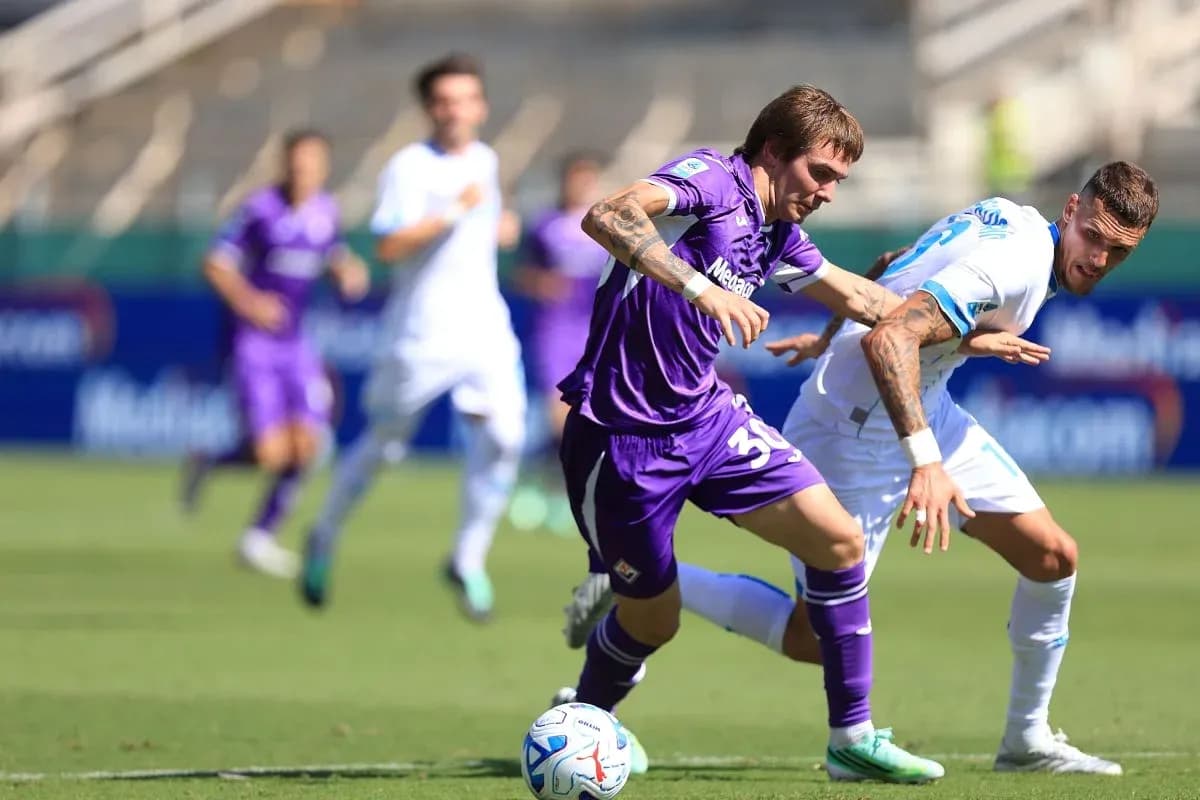
Under a bright late-morning sun at Stadio Artemio Franchi, Fiorentina and Napoli walked out not just to contest a match, but to negotiate their identities in this young Serie A season. By full time, the scoreboard read 1–1, a result that froze both teams in their early-season narratives: Fiorentina still searching for stability near the foot of the table, Napoli still flickering between promise and inconsistency.
Pre-Match Context
Heading into this game, the numbers framed a stark contrast. Fiorentina sat 17th with 4 points from 5 matches, their overall goal difference at -6, the product of 6 goals scored and 12 conceded. At home they had been particularly fragile: 3 matches, no wins, 1 draw, 2 defeats, with just 2 goals for and 6 against. Napoli, in 9th with 7 points from 5, carried a slimmer but healthier overall goal difference of 1, having scored 7 and conceded 6. On their travels they were more balanced: 3 away games, 1 win, 1 draw, 1 loss, with 5 goals for and 4 against.
Tactical Setup
The tactical stage was set by the formations. Paolo Vanoli doubled down on Fiorentina’s structural identity with a 4-3-3, a shape they had already used twice this season and which he clearly sees as the template for recovery. Massimiliano Allegri, in contrast, deployed Napoli in a 4-2-3-1, one of two systems he has alternated between, designed to give control through a double pivot while unleashing creativity ahead.
Team Structures
For Fiorentina, the spine was experienced and raw in equal measure. D. de Gea in goal offered calm behind a back four of A. Jimenez, R. Dragusin, L. Ranieri and Viery. In midfield, C. Ndour, N. Fagioli and A. Atta formed a young, industrious trio tasked with both shielding and supplying. Ahead of them, the front three of F. Mastantuono, M. Pellegrino and A. Njie embodied the club’s gamble on youth and upside.
Napoli’s structure had a more established sheen. V. Milinkovic-Savic started in goal, with G. Di Lorenzo, A. Rrahmani, R. Marin and M. Olivera across the back line. The double pivot of B. Gilmour and S. Lobotka promised control in tight spaces, while the line of three – M. Politano, K. De Bruyne and N. Lang – sat behind lone striker R. Hojlund, a clear “hunter” supported by elite creative supply.
Absentees Impact
The absentees shaped the tactical voids. Fiorentina were without F. Parisi (knee injury) and R. Sottil (back injury), depriving Vanoli of natural depth on the left and a direct wide threat. It made the choice of Viery at left-back and Mastantuono from the flank more consequential: both had to stretch themselves, one defensively, the other in ball progression.
Napoli’s list of missing players was longer and more structural. Alisson Santos, A. Buongiorno, Giovane, L. Marianucci, S. McTominay, A. Meret and L. Spinazzola all missed out. The absence of A. Meret opened the door for Milinkovic-Savic in goal, while the loss of A. Buongiorno and Spinazzola reduced Allegri’s flexibility in the back line and on the left flank. McTominay’s absence, due to heart problems, removed a powerful, vertical presence from midfield, making the reliance on Gilmour and Lobotka’s positional play even more pronounced.
Key Matchups
The “Hunter vs Shield” duel centred on R. Hojlund and Fiorentina’s porous defensive record. Overall this campaign, Fiorentina had conceded 12 goals in 5 games, an average of 2.4 per match. At home, that average rose to 2.0 goals against per game, a worrying figure for a side trying to build a fortress in Florence. Hojlund, backed by the passing range of De Bruyne and the wide craft of Politano and Lang, was always going to test the Dragusin–Ranieri axis and De Gea’s command of the box.
On the other side, Napoli’s back line faced the emergent figure of Franco Mastantuono. Officially listed as a midfielder but used high on the right of the 4-3-3, the 18-year-old arrived at this fixture as Fiorentina’s standout offensive weapon. In total this campaign, he had 3 goals in 5 appearances, with 17 shots (8 on target), 10 key passes and 23 dribble attempts, 9 of them successful. He is not just a finisher; he is Fiorentina’s main conduit between midfield and attack, a player who can carry, combine and shoot from range. Against a Napoli defence that had conceded a total of 6 goals in 5 games – an average of 1.2 per match, and 1.3 on their travels – Mastantuono was always likely to be the one to bend the game in purple.
Midfield Dynamics
The “Engine Room” matchup pitted N. Fagioli and C. Ndour against B. Gilmour and S. Lobotka. Fiorentina’s midfield, more vertical and improvisational, needed to break Napoli’s rhythm and feed early passes into the front three. Napoli’s double pivot, by contrast, sought to dictate tempo, recycle possession and ensure De Bruyne could receive between the lines facing forward. With Fiorentina having failed to keep a single clean sheet in total this season, and Napoli boasting 2 overall clean sheets (1 at home, 1 away), control of that central band was always going to tilt the balance between chaos and structure.
Disciplinary Trends
Disciplinary tendencies added another layer. Fiorentina’s yellow cards this season had clustered in the 61–75 minute window, with 33.33% of their cautions arriving there, and a further 22.22% in both the 16–30 and 76–90 minute ranges. That pattern suggested a side that becomes increasingly stretched and desperate as games wear on, exactly the period when a team like Napoli, with their technical midfield, can draw fouls and set-piece opportunities. Napoli’s own cautions had been more concentrated just before and after half time, with 50.00% of their yellows between 31–45 minutes and 25.00% between 46–60, hinting at a team that occasionally loses composure in transitional phases of the match.
Statistical Prognosis
From a statistical prognosis, this fixture always leaned towards a tight, tactical contest rather than a goalfest. Fiorentina’s overall scoring average of 1.2 goals per game, and just 0.7 at home, suggested limited cutting edge outside of Mastantuono’s individual brilliance. Napoli’s overall attacking output of 1.4 goals per match, including 1.7 on their travels, hinted at a side capable of striking but not relentlessly so. Defensively, Napoli’s greater solidity – conceding 1.2 goals per game overall versus Fiorentina’s 2.4 – tilted the underlying metrics slightly in the visitors’ favour.
Match Conclusion
And yet, the 1–1 draw felt like a fair reflection of where both squads stand. Fiorentina, despite their fragile home numbers and 0 home wins from 3 attempts, showed enough structure in their 4-3-3 and enough invention through Mastantuono to resist Napoli’s higher pedigree. Napoli, even with their superior defensive averages and more complete squad profile, were reminded that controlling territory and possession does not automatically translate into three points.
Following this result, Fiorentina’s struggle to turn performances into home victories remains the central storyline of their season, but the growth of young pillars like Mastantuono offers a clear path forward. For Napoli, the draw underlines a team still in tactical calibration under Allegri: the pieces are there – from De Bruyne’s orchestration to Hojlund’s movement – but the margins between dominance and deadlock remain thin. In Florence, both sides left with a point, and with the sense that their true ceilings in this Serie A campaign are still to be discovered.