Fulham Secures 1–0 Victory Against Aston Villa in Premier League Clash
Fulham edged a controlled 1–0 win over Aston Villa at Craven Cottage in this Premier League Round 34 fixture, decided by a first-half strike from Ryan Sessegnon. Marco Silva’s side accepted a territorial deficit but executed a compact, disciplined 4-2-3-1 that limited Villa to a single shot on target despite 61% possession. Unai Emery mirrored the shape but never solved Fulham’s central screen or their aggressive offside line. With xG reading 1.06 to 0.71 in Fulham’s favour, the scoreline reflected a match where Villa circulated the ball more cleanly, yet Fulham controlled the danger zones and game tempo once ahead.
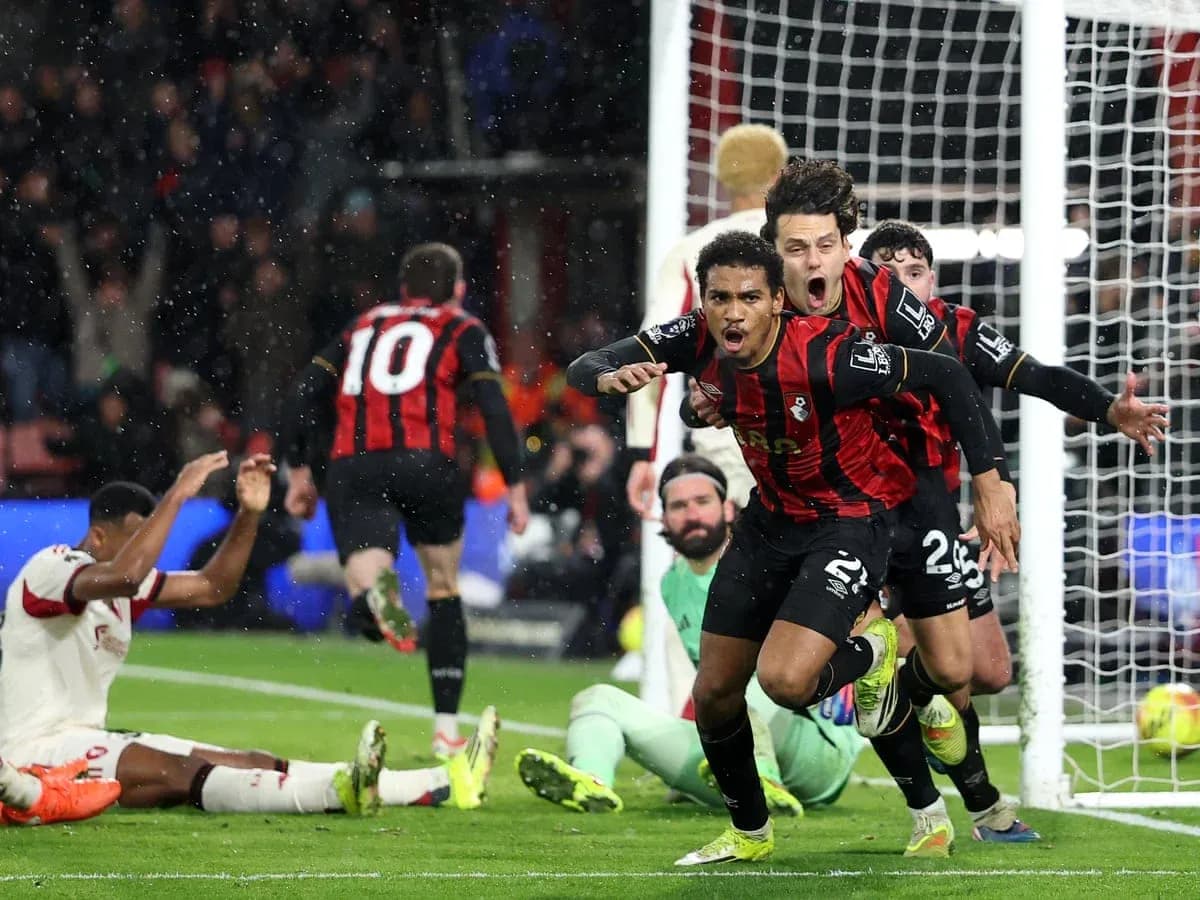
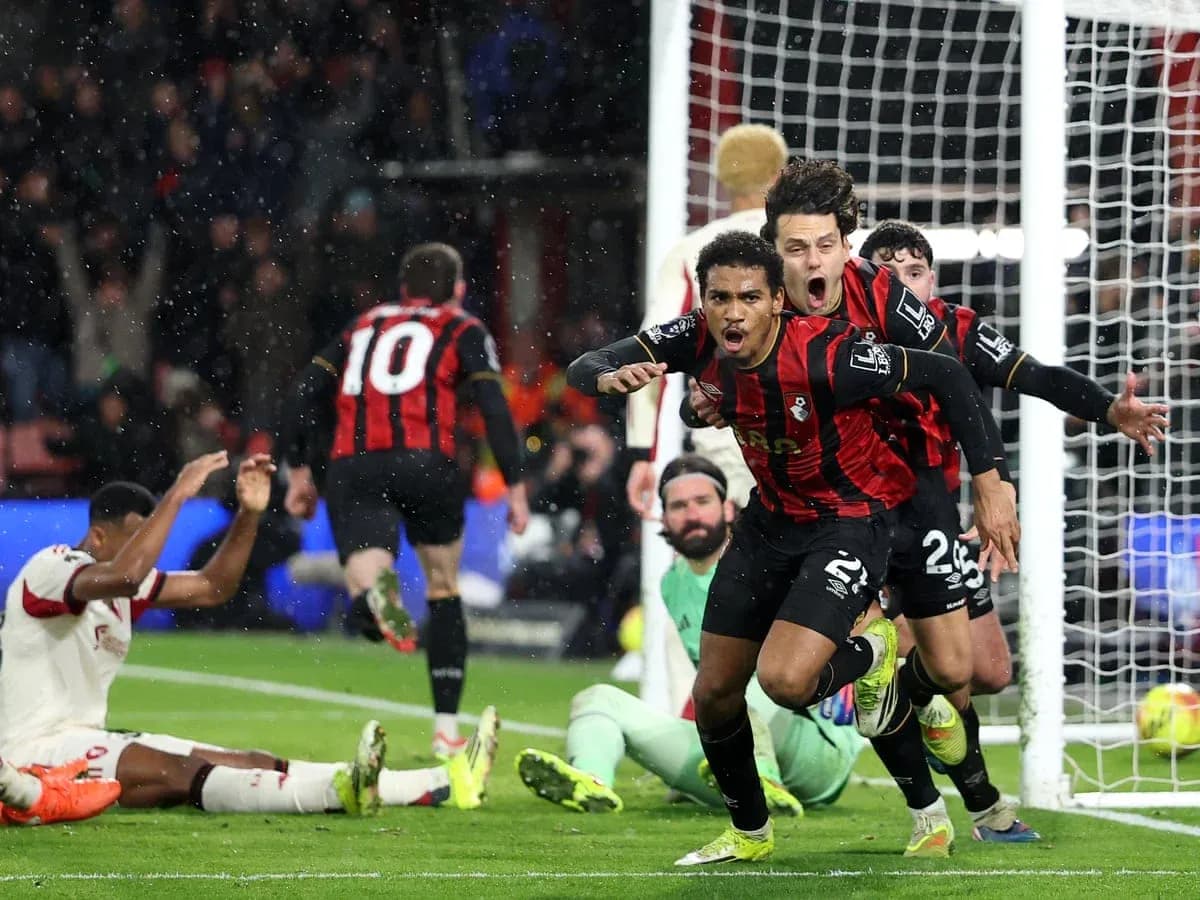
The key attacking moment arrived on 43', when R. Sessegnon advanced from left-back to score a normal goal for Fulham, the only strike of the afternoon and the difference at both half-time and full-time (1–0). That lead allowed Silva to lean even harder into a mid-to-low block after the interval.
Discipline was generally controlled but had clear tactical implications. The first card came immediately after the restart: Timothy Castagne was booked on 46' for a foul, a signal of Fulham’s intent to disrupt Villa’s early second-half tempo on the flanks. Three minutes later, Pau Torres saw yellow on 49' for a foul as he stepped high from the Villa back line to counter Fulham’s transitional threat, particularly through Raúl Jimenez’s hold-up play and the three narrow attacking midfielders.
As the game grew more stretched and substitutions reshaped both midfields, the emotional temperature rose late. On 90+1', Harry Wilson received a yellow card for argument, reflecting Fulham’s desire to contest every decision as they protected the lead. Finally, Douglas Luiz was booked on 90+4' for a foul, emblematic of Villa’s increasingly desperate attempts to recover the ball as Fulham ran down the clock. In total, Fulham collected two yellow cards (Castagne 46', Wilson 90+1'), and Villa likewise finished with two (Pau Torres 49', Douglas Luiz 90+4'), with no reds issued.
Both sides lined up in a 4-2-3-1, but their interpretations of the system diverged sharply. Fulham’s structure was built on a double pivot of S. Lukic and S. Berge in front of centre-backs J. Andersen and C. Bassey, with R. Sessegnon and T. Castagne as full-backs. In possession, Berge often dropped to form a situational back three, allowing Sessegnon to push high on the left. That pattern underpinned the decisive goal: with Villa’s wide midfielder tucked in, Sessegnon could advance aggressively, joining the line of E. Smith Rowe, H. Wilson, and S. Chukwueze behind R. Jimenez.
Out of possession, Fulham’s block was compact and horizontally tight. The front four screened passes into Y. Tielemans and L. Bogarde, forcing Villa wide. The back line then defended the box with numbers, which explains why Villa managed 10 total shots but only 1 on goal and just 1 blocked shot: most efforts were rushed or from less dangerous positions. Fulham’s defensive discipline is further highlighted by the low number of saves required from B. Leno—only 1 all match—yet Villa’s xG still reached 0.71, indicating that the few chances they did create were of moderate quality but infrequent.
In goal, the contrast was instructive. B. Leno faced 1 shot on target and made 1 save, with his xG against (0.71) and goals conceded (0) matching a solid, controlled outing rather than a high-volume shot-stopping performance. His distribution supported Fulham’s more direct phases, with 338 total team passes at 82% accuracy, showing a willingness to play longer or more vertical when under Villa’s press. At the other end, E. Martinez had to make 5 saves from Fulham’s 6 shots on goal. Despite Villa’s higher pass volume (526 passes at 86% accuracy) and territorial control, Martinez was busier, underlining how Fulham’s attacks were more purposeful when they did break forward.
The substitution pattern reinforced the tactical story. On 66', Rodrigo Muniz (IN) came on for R. Jimenez (OUT), keeping a like-for-like focal point to stretch Villa’s high line and offer an outlet. Emery responded with a quadruple attacking shift on 74': R. Barkley (IN) for J. McGinn (OUT), L. Bailey (IN) for E. Buendia (OUT), Douglas Luiz (IN) for L. Bogarde (OUT), and J. Sancho (IN) for Y. Tielemans (OUT). This flipped Villa into a more aggressive, creative midfield but also loosened their central protection, giving Fulham transition lanes to attack.
Silva’s counter-move on 76'—O. Bobb (IN) for S. Chukwueze (OUT) and J. King (IN) for E. Smith Rowe (OUT)—freshened the pressing unit and added ball-carrying in wide and half-space zones. On 81', A. Robinson (IN) replaced goalscorer R. Sessegnon (OUT), a defensive substitution that solidified the left flank against Bailey and Sancho. Villa’s final attacking gamble saw T. Abraham (IN) replace O. Watkins (OUT) on 81', but Fulham’s centre-backs continued to dominate aerially, and the structure in front of them held.
Statistically, Villa’s overall form in possession looked superior—61% of the ball, 526 passes, and a higher pass completion rate. Yet the defensive index tilts toward Fulham: they conceded only 1 shot on target, committed 14 fouls mostly in controlled zones, and drew 7 offsides from Villa, reflecting a well-drilled back line. Fulham’s 13 total shots, with 6 on goal and xG of 1.06, show that their more limited possession produced clearer chances. Both goalkeepers finished with 0 goals prevented relative to xG, aligning with a match where finishing and defensive structure, rather than spectacular saves, decided the outcome.
In sum, this was a classic example of low-possession control. Fulham’s 4-2-3-1, anchored by a disciplined double pivot and an aggressive but well-timed full-back in Sessegnon, neutralised Villa’s technically superior midfield. Emery’s extensive second-half changes increased volume but not clarity in the final third, and Fulham’s compactness ensured that the single first-half goal was tactically sufficient to secure all three points.