Genoa vs Napoli: Serie A Season Opener Analysis
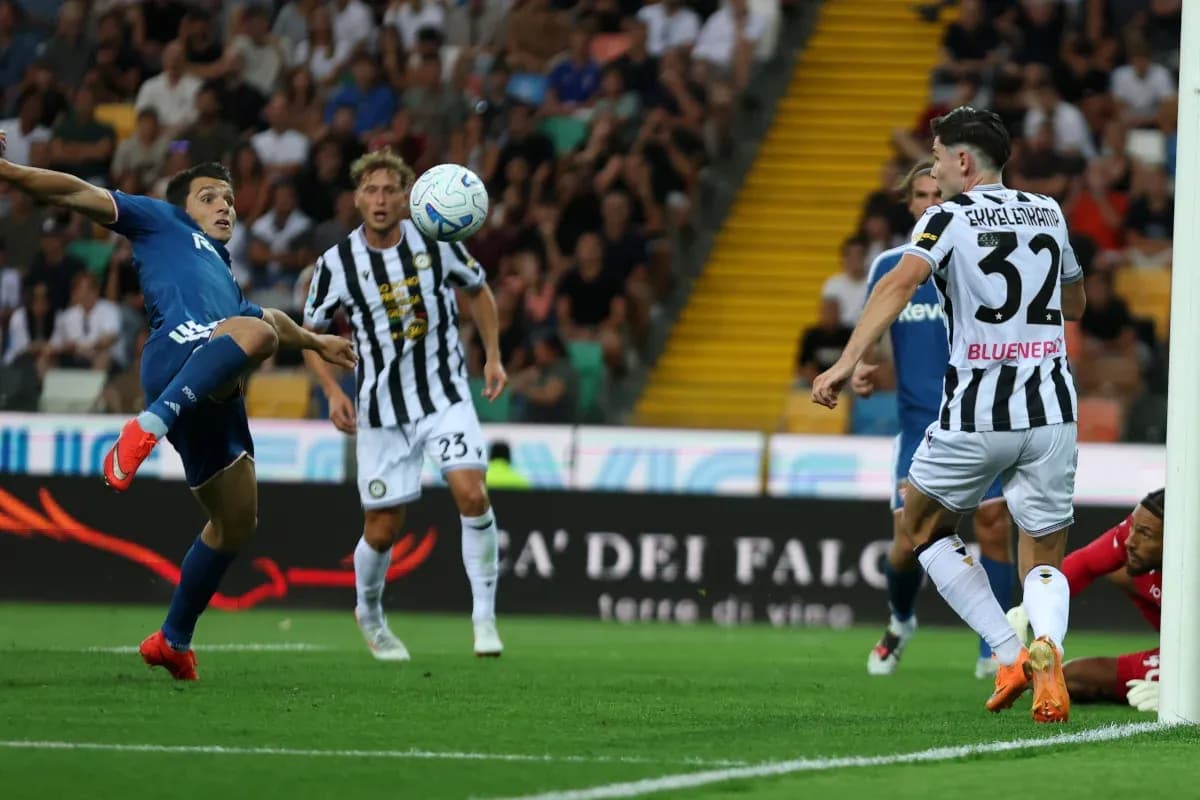
Under the floodlights of the Luigi Ferraris, the opening night of Genoa’s Serie A season became a study in contrasts. On one side, a Genoa side trying to stitch together a new identity under Daniele De Rossi, set up in a bold 3-4-2-1. On the other, Napoli, reshaped and hardened under Massimiliano Allegri, arriving with a pragmatic 4-3-3 and leaving with a 2–0 away win that already hints at the direction of both campaigns.
Following this result, the table tells a stark story. Genoa sit 18th with 0 points, a goal difference of -2 from 0 goals scored and 2 conceded in total. Their only game so far has been at home: 1 match, 1 defeat, 0–2 on the night and at home overall. Napoli, by contrast, are up in 2nd place with 3 points, their goal difference +2 after scoring 2 and conceding none in total. All of that has come on their travels: 1 away match, 1 win, 2 goals for and 0 against away, and a clean sheet banked immediately.
I. The Big Picture: Structures and Intent
De Rossi’s 3-4-2-1 was aggressive in theory. J. Bijlow anchored a back three of J. Vasquez, L. Ostigard and A. Marcandalli, with width provided by B. Norton-Cuffy on the right and M. E. Ellertsson on the left. In the middle, M. Frendrup and Amorim were tasked with knitting play and protecting transitions, while T. Baldanzi and Vitinha floated behind L. Colombo.
The structure promised a front five in possession, but it also demanded flawless timing and bravery from the back line. Genoa’s season numbers so far underline the cost of that ambition: in total they have played 1 match, lost 1, with 0.0 goals scored on average overall and 2.0 conceded overall. At home, those figures are identical: 0.0 scored and 2.0 conceded at home. They have already failed to score in their only game, and have yet to keep a clean sheet.
Napoli’s 4-3-3, by contrast, looked like Allegri’s signature: compact, controlled, and quietly ruthless. A. Meret sat behind a back four of G. Di Lorenzo, A. Rrahmani, R. Marin and L. Spinazzola. S. Lobotka anchored midfield, flanked by F. Anguissa and S. McTominay, while M. Politano and Alisson Santos worked the flanks around central forward R. Hojlund.
The early-season data reflects that clarity. Napoli have played 1 match in total, and it is a 1-for-1 in away wins: 1 away, 1 victory, 2 goals scored and none conceded away. Their total averages are clean and simple: 2.0 goals scored and 0.0 conceded overall, with a total of 1 clean sheet already and no failures to score.
II. Tactical Voids: Absences and Discipline
Both sides came into this fixture with notable absentees that shaped their options. Genoa were without E. Havel (thigh injury), H. J. Traore (muscle injury) and L. Venturino (knee injury). For a coach trying to build pressing layers and ball progression, losing midfield and defensive depth limited De Rossi’s ability to adjust mid-game, especially once the match state turned against him.
Napoli’s absentees were more concentrated in the defensive and squad-rotation zones: A. Buongiorno and L. Marianucci (both knee injuries), P. Mazzocchi (knee injury) and M. Folorunsho (inactive). Allegri still had the luxury of a deep bench, including K. De Bruyne, A. Vergara, B. Gilmour, N. Lang and David Neres, allowing him to alter the game’s rhythm without compromising quality.
Disciplinary patterns also hint at the emotional undercurrent. Genoa’s season card data is messy: they have 2 yellow cards in total, but both are logged outside the standard minute ranges, suggesting late or post-interval bookings that speak to frustration more than tactical fouling. Napoli’s discipline is more controlled: they have 1 yellow card in total, and it came between minutes 46–60, a classic phase for tactical adjustment and calculated risk. M. Politano embodies that edge: in his 67 minutes he collected 1 yellow card, made 2 tackles and was involved in 8 duels, committing 1 foul and drawing 1. His aggression is a feature, not a bug, in Allegri’s pressing scheme.
III. Key Matchups: Hunter vs Shield, Engine Room Battles
The “Hunter vs Shield” dynamic for Genoa revolved around L. Colombo and the support band of Vitinha and Baldanzi against Napoli’s central block of Rrahmani and Marin. Genoa’s total of 0 goals and 0.0 goals per game overall underlines how thoroughly that shield held. Rrahmani and Marin, protected by Lobotka’s positioning and Anguissa’s athletic coverage, denied Genoa’s forwards the central pockets they needed. Without goals in their only home match, Genoa’s front line looked more like a sketch than a finished portrait.
For Napoli, the attacking threat was more diversified. Even though R. Hojlund led the line, the league’s early attacking stars are actually from the bench: K. De Bruyne and A. Vergara. Both have 1 goal and 1 assist in total, each from just 23 minutes of action. De Bruyne produced 24 passes with 2 key passes at 79% accuracy, while Vergara added 10 passes with 1 key pass at 90% accuracy, plus 4 tackles and 8 duels with 6 won. This is a devastating bench profile: creative output combined with defensive intensity.
That leads directly into the “Engine Room” battle. For Genoa, M. Frendrup and Amorim had to handle Lobotka, Anguissa and McTominay. The numbers from the standings and season stats show Genoa overrun in key phases: they have conceded 2.0 goals on average overall in their single match and have not yet found a way to turn their midfield work into chances. L. Ostigard’s profile encapsulates the strain on the back line: 52 passes at 92% accuracy, 2 tackles, 1 blocked shot and 2 interceptions, plus 9 duels (4 won) and 2 fouls committed. He is already among the league’s notable card recipients with 1 yellow card, highlighting how often he has been forced into last-ditch interventions.
Napoli’s midfield, by contrast, looks balanced and deep. Lobotka’s metronome role allows Anguissa to surge and McTominay to press. When Allegri turns to the bench, he can drop in De Bruyne or Vergara without losing defensive work rate. Vergara’s 4 tackles and 8 duels (6 won) alongside his goal and assist make him a hybrid enforcer-creator, perfectly suited to closing out matches where Napoli lead.
IV. Statistical Prognosis: Patterns Taking Shape
With only 1 match played each, the data is embryonic, but the patterns are already sharp. Genoa’s total record is 1 loss from 1, 0 goals scored and 2 conceded overall, with 1 failure to score and 0 clean sheets. At home, that same 0–2 profile repeats. Their biggest defeat so far is exactly this 0–2 at home, and their most-used formation is already set: 3-4-2-1, played once.
Napoli, meanwhile, have started with the template Allegri will want to repeat: 1 win from 1, 2 goals scored and 0 conceded in total, all away from home. They have 1 clean sheet away and have not yet failed to score. Their biggest away win is this 0–2, and their 4-3-3 has been used once, with immediate success.
In xG terms we lack explicit values, but the structural indicators are clear. Napoli’s ability to create two goals on their travels while allowing 0 goals against suggests a side whose chance quality and defensive solidity are already aligned. Genoa’s 0.0 goals scored and 2.0 conceded overall point to a team still searching for balance between their back three, adventurous wing-backs and narrow front line.
Following this result, the tactical arc is obvious. Genoa must decide whether to persist with a high-risk 3-4-2-1 or add an extra layer of protection in front of a back line already stretched to the limit. Napoli, on the other hand, have found a winning spine and a devastating bench. With De Bruyne and Vergara already among the league’s most productive players per minute, and with a defensive record of 0.0 goals conceded in total so far, they look built not just to control matches, but to suffocate them.