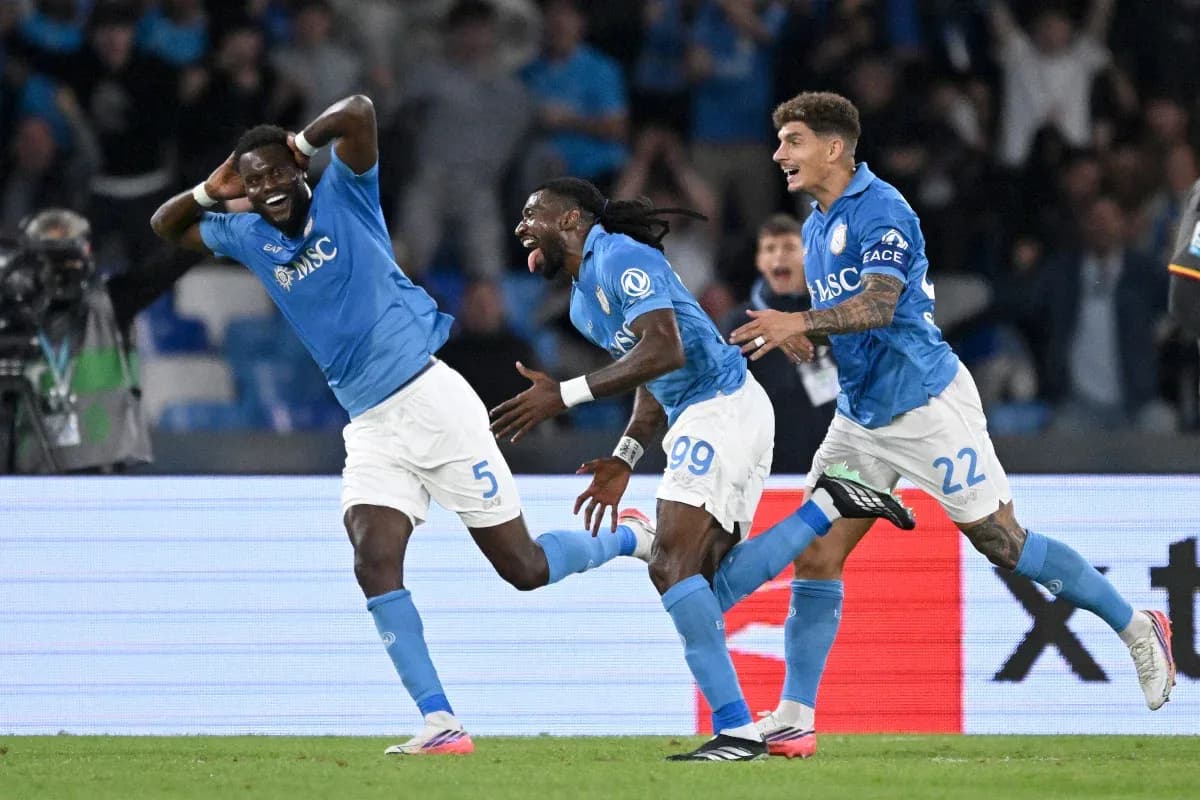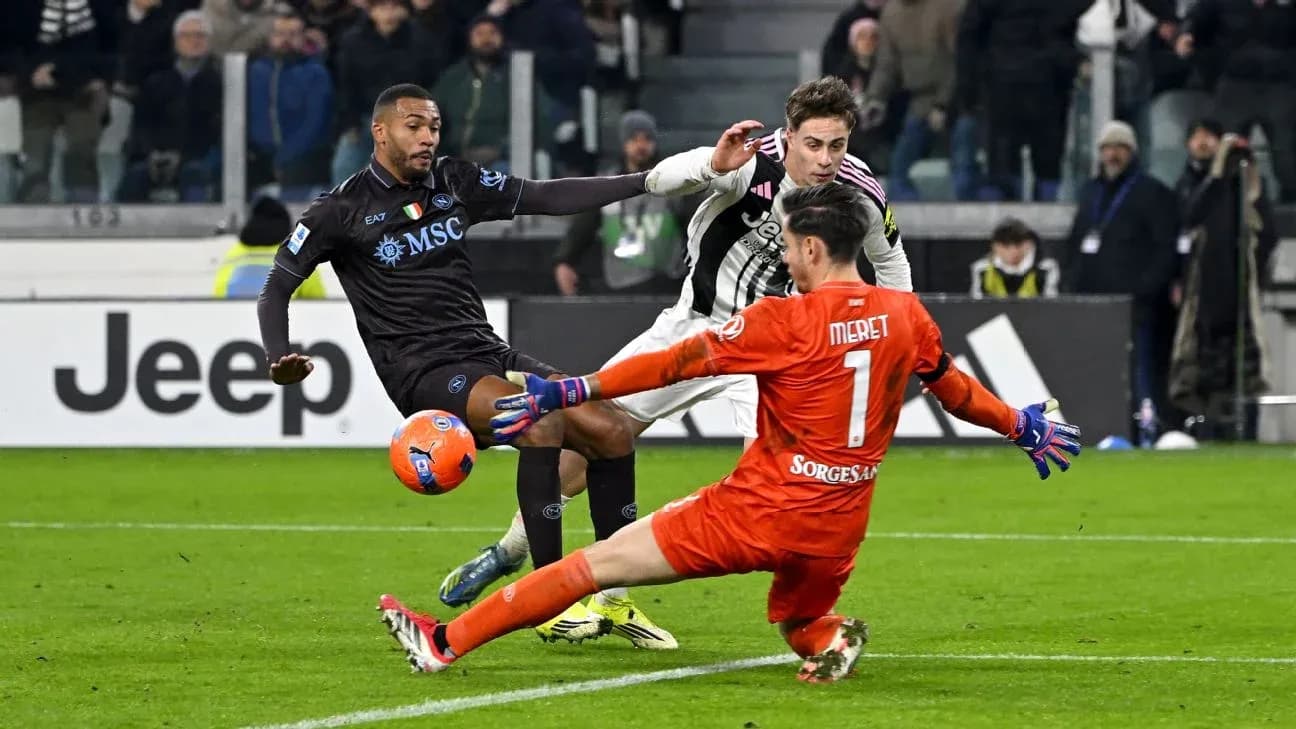
Genoa's Tactical Masterclass in 2–0 Win Over Juventus
On a damp Genoese night at Luigi Ferraris, Genoa’s 2–0 win over Juventus felt less like an upset and more like a tactical unveiling. In a Serie A season where margins are thin and identities still forming, this Regular Season - 9 clash pitted a side clinging to mid-table survival against a giant trying to remember how to dominate. By full time, it was clear which project looked more coherent.
Heading into this game, Genoa were 13th with 10 points from 9 matches, their overall goal difference at -5 from 8 goals scored and 13 conceded. The pattern was stark: at home they had been competitive, with 7 goals for and 8 against across 6 matches, while on their travels they had scored just 1 and conceded 5 in 3 outings. Juventus arrived in 8th, on 14 points from 9, with a total goal difference of +1 (11 scored, 10 conceded). Away from home they had been solid if unspectacular: 6 goals for and 6 against in 5 matches.
Both coaches mirrored each other on the board, sending their teams out in a 3‑4‑2‑1. But the systems lived very different lives.
For Genoa, Daniele De Rossi doubled down on the structure that has defined their season. The back three of A. Marcandalli, L. Østigård and J. Vásquez has been the spine of their resistance. Østigård, one of Serie A’s most combative centre-backs this season, came into the match with 14 successful tackles, 14 blocked shots and 7 interceptions, as well as 441 completed passes at 87% accuracy. His duel numbers – 84 contested, 53 won – underline why Genoa are comfortable defending deep and narrow; he is the stopper who steps out, wins the first contact, and resets the block.
On the left, Vásquez adds a slightly different profile: 13 tackles, 10 interceptions and 4 blocked shots, with 429 passes at 85% accuracy. If Østigård is the hammer, Vásquez is the hinge, shuttling wide to cover wing-back spaces and stepping into midfield when Genoa look to compress the pitch. That duo’s disciplinary record – 4 yellows for Østigård and 3 for Vásquez, plus a yellow-red on Vásquez’s ledger – is the tax Genoa willingly pay for an aggressive back line.
In front of them, the four-man band of K. Ehizibue, M. Frendrup, Alexsandro Amorim and M. Ellertsson was less about artistry and more about occupation. Genoa’s season data tells the story: at home they average 1.2 goals for and 1.3 against, with 2 clean sheets and only 1 home match where they failed to score. They do not overwhelm teams; they constrict them. The wing-backs pin opposition wide men, the double pivot screens, and the two attacking midfielders – Vítinha and T. Baldanzi – float into pockets to connect with lone forward M. Osmajić.
Osmajić is the clearest expression of Genoa’s attacking identity. Heading into the match he had 3 goals and 1 assist in Serie A, from 11 shots (4 on target). Those numbers are modest in volume but sharp in impact: 9 key passes from 74 total passes, and 14 fouls drawn. He is less a penalty-box poacher and more a chaos generator, someone who runs channels, takes hits, and forces defensive lines to bend. The fact he has blocked 2 shots also speaks to the defensive graft De Rossi demands from his spearhead.
If Genoa’s shape felt rehearsed, Juventus’ 3‑4‑2‑1 looked like an adaptation forced by circumstance. Luciano Spalletti’s preferred blueprint this season has leaned more towards a back four – they have used 4‑2‑3‑1 in 5 of their 9 league matches – but a long injury list pushed him into a mirror match. Missing were an entire tier of potential difference-makers: Z. Celik, F. Conceicao, J. Ekhator, N. Gonzalez, K. Grabara, M. Locatelli, A. Milik, K. Thuram and K. Yildiz all listed as out, mostly with knee, muscle, calf or foot issues, plus one “Inactive”.
In their place, Spalletti built a spine around Bremer at the heart of a back three, shielded by Douglas Luiz and P. Sarr. Out wide, P. Kalulu and A. Cambiaso were tasked with stretching the field, while W. McKennie and Kerim-Sam Alajbegović operated as advanced midfielders behind R. Kolo Muani.
Juventus’ season numbers suggested a side comfortable in tight games: overall they average 1.2 goals for and 1.1 against per match, with 4 clean sheets split evenly between home and away. On their travels they score 1.2 and concede 1.2 per match. They are not expansive, but they are usually resilient. That resilience, though, is typically built on the familiarity of a back four and a more settled midfield triangle. Here, in a three-at-the-back mirror, their automatisms were dulled.
The “Hunter vs Shield” duel was always likely to be Osmajić against the Juventus defensive unit. Genoa’s home attacking average of 1.2 goals per game put them up against a Juventus away defence conceding 1.2; numerically, it was a meeting of equals. The difference lay in cohesion. Genoa’s back three has been their most-used structure – they have lined up in 3‑4‑2‑1 six times already this season – while Juventus had only used this shape twice before. In a system where distances and timing are everything, Genoa’s muscle memory told.
In the engine room, M. Frendrup and Alexsandro Amorim squared off against Douglas Luiz and Sarr. Juventus’ midfield pair is built to circulate and control, but Genoa’s card distribution this season hinted at their plan: a flurry of yellows between 46–60’ (14.29%) and then a sustained spike from 61’ onwards, with 19.05% of yellows in each of the 61–75’, 76–90’ and 91–105’ windows. They foul more as the game stretches, happy to disrupt rhythm and turn matches into a series of broken phases. Against a Juventus side that collects 30% of its yellows between 16–30’ and another 20% between 76–90’, the midfield battle was always going to be attritional rather than expansive.
One subtle subplot came from the penalty spot. Genoa had won 1 penalty this season and failed to convert it, with 1 miss and a 0% success rate. That is not a trivial detail; it shapes decision-making in the final third, encouraging more cut-backs and low crosses rather than hunting for contact. Juventus, by contrast, had not yet taken a penalty in the league, sitting at 0 taken, 0 scored, 0 missed. In a tight fixture, the side more comfortable generating open-play chances was always likely to hold the edge.
Statistically, the pre-match prognosis tilted slightly towards Juventus on overall quality, but towards Genoa on situational fit. Genoa’s home record – 3 wins, 1 draw, 2 defeats – combined with a defensive block anchored by Østigård and Vásquez, suggested they could keep the game within one goal either way. Juventus’ away profile – 2 wins, 1 draw, 2 losses, with a perfect balance of 6 scored and 6 conceded – pointed to volatility rather than control.
Overlay the tactical context, and the picture sharpens. Genoa were in their most natural shape, with their key defensive personalities and their primary goalscorer all on the pitch. Juventus were in a compromise system, stripped of several creative and structural pillars. In such conditions, xG models would lean towards a low-scoring contest, with Genoa’s settled back three suppressing Juventus’ chance quality and Osmajić’s efficiency giving the hosts a slight edge on the break or from structured wide attacks.
The 2–0 scoreline ultimately reflected that balance: not a freak result, but the logical outcome of a night where one 3‑4‑2‑1 was an identity and the other a workaround.