Germany's World Cup Defeat: A Historic Collapse Against Paraguay
Germany’s World Cup crash in Boston will live long in the country’s footballing nightmares. Not just for the opponent, not just for the manner of the defeat, but for the brutal realisation that the four-time world champions no longer belong among the game’s elite.
Paraguay, ranked 41st in the world, sent Julian Nagelsmann’s side home with a 4-3 win on penalties after a 1-1 draw, ending Germany’s perfect World Cup shootout record and triggering a ferocious backlash – with Florian Wirtz squarely in the firing line.
Underdogs bite, giants stumble
The script was supposed to be simple. Germany, fresh from putting seven past Curacao and edging past Ivory Coast, were meant to swat aside Paraguay and ease into the last 16. Instead, they froze.
Julio Enciso struck first, punishing slack German defending in the first half and giving the South Americans something to cling to. From that moment, the tension wrapped itself around Nagelsmann’s team and never really let go.
Germany did respond. Wirtz, who has endured a miserable debut season at Liverpool, finally found a moment of quality, whipping in a teasing cross that Kai Havertz glanced home. On paper, it was the kind of contribution expected from a £116million signing. In reality, it was a rare flash in another underwhelming display.
Jonathan Tah thought he had completed the escape act late on, bundling in what looked like a dramatic winner. The celebrations didn’t last. VAR intervened, spotting a foul on goalkeeper Orlando Gill in the build-up. Goal ruled out. Momentum gone. Doubt back.
Shootout shatters an illusion
Germany’s relationship with penalty shootouts at World Cups has always bordered on the mythical. Not anymore.
Havertz stepped up first and saw his effort saved by Gill. Nick Woltemade followed and suffered the same fate. Even when Paraguay blinked – Antonio Sanabria and Fabian Balbuena both missing their chances to win it – Germany couldn’t grasp the reprieve.
Tah, the man who thought he had been the hero in normal time, ballooned his penalty over the bar. Jose Canale did what the Germans could not, burying his kick to seal a 4-3 shootout triumph and one of Paraguay’s most famous victories.
For Germany, it was more than a defeat. It was a historical rupture: their first ever World Cup penalty shootout loss, and their first shootout defeat in any international tournament since 1976.
Wirtz under the spotlight
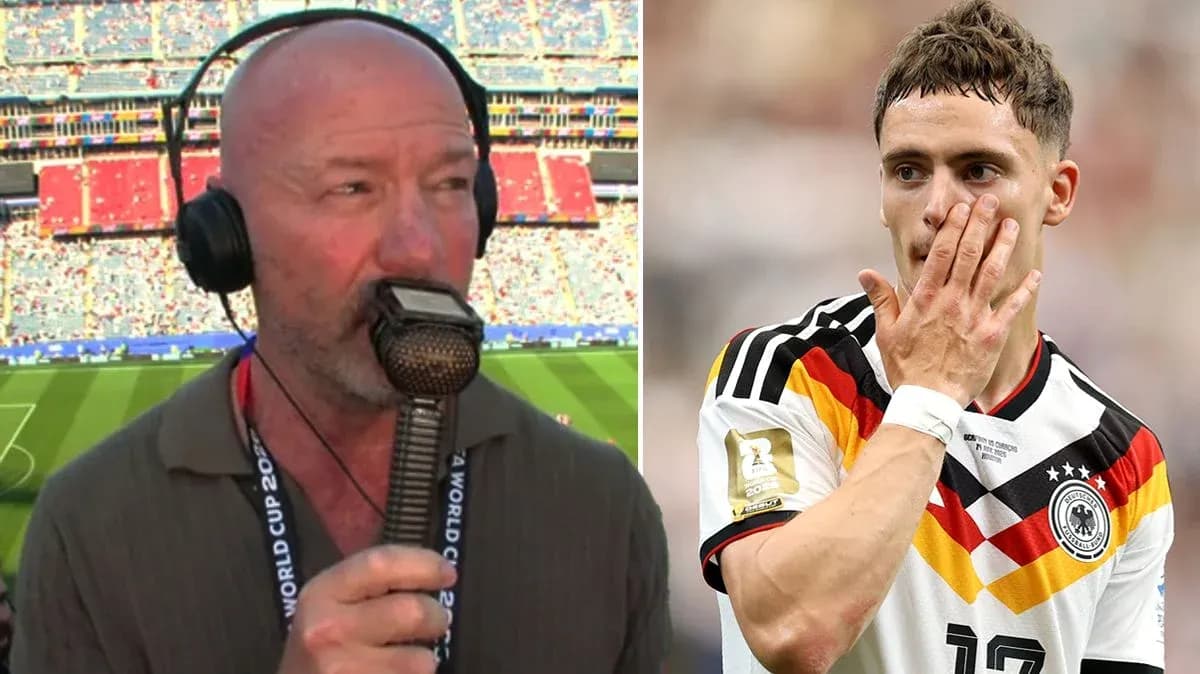
On the Netflix show The Rest is Football, Alan Shearer didn’t bother with diplomacy. He went straight for Wirtz.
“They've got the quality in names and on paper, but they just didn't deliver,” the former England striker said, lumping Wirtz in with a group of high-profile underperformers. Leroy Sane’s poor season, Denis Undav’s late call to inject life into a blunt attack, it all fed into the same story: big reputations, small returns.
“Wirtz has had a terrible season at Liverpool, he hasn't performed again at this World Cup,” Shearer added, cutting through the comfort of excuses. An assist, yes. Influence when it really mattered? Nowhere near enough.
Micah Richards pushed back, pointing to that huge Liverpool transfer fee. “He's a superstar,” Richards argued. “We've not seen the best of him, totally agree with that, but we can't say he's not a good player.”
The debate captured Germany’s wider problem. Havertz has scored in Champions League finals and just won the Premier League. Tah has earned his move to Bayern Munich. Antonio Rudiger remains a rock at Real Madrid. Young Nathaniel Brown has impressed. The names scream quality.
The performances don’t.
“We've seen them put seven past Curacao, well that's alright,” Shearer said. “But when it really mattered, the quality wasn't there at all.”
Nagelsmann stands his ground
If the players are under scrutiny, Nagelsmann is under siege.
“This is the third elimination in a row, so we are not part of the first-class teams any more,” the 38-year-old admitted after the game, his words as stark as the result. Germany failed to reach the last 16 in each of their last three World Cup appearances. The expanded format has only made this early exit feel even more damning.
“When you exit the World Cup after you play Paraguay it is very bitter. It is very hurtful,” he said. He knows what awaits him back home. “If we're going to do a survey today in Germany, people are not going to speak about me positively obviously.”
Yet he refused to offer his resignation as a solution. “I'm not going to step back only because we are eliminated. If the DFB want me to continue, I am going to continue. I know how the industry works and a lot of people now want me to leave. I want to continue if the German FA wants me to.”
He praised the fans who stayed with the team in Boston, even after the penalty heartbreak, calling their support “amazing and impressive.” It was one of the few things Germany could feel remotely proud of on a bleak night.
Legends lose patience
Former internationals Thomas Hitzlsperger and Arne Friedrich didn’t share Nagelsmann’s defiance.
“It’s hard to explain how Germany got into this tournament with so many problems. It's unacceptable,” Hitzlsperger said on BBC One. “It doesn't look good for Nagelsmann. In the last few months, he hasn't dealt with situations well. With the expanded World Cup format, to go out so early would be tough to take for any big nation.”
Friedrich, speaking on BBC Radio 5 Live, was even more blunt. “If you consider the whole tournament, the way we played, it is a deserved loss. Nagelsmann has to face the consequences. It is very disappointing, but that is sport. I would definitely say the journey continues without Nagelsmann.”
Three tournaments, three early exits. A historic shootout aura shattered. A £116m playmaker being torn apart on global platforms. A coach fighting to keep his job while his own legends call time on his tenure.
Germany arrived in Boston as a heavyweight with a famous past and a fragile present. They leave as something more troubling: a giant that keeps falling, and no longer scares anyone when the pressure rises to 12 yards.