Guardiola's Warning for Manchester City: Managing Young Talent
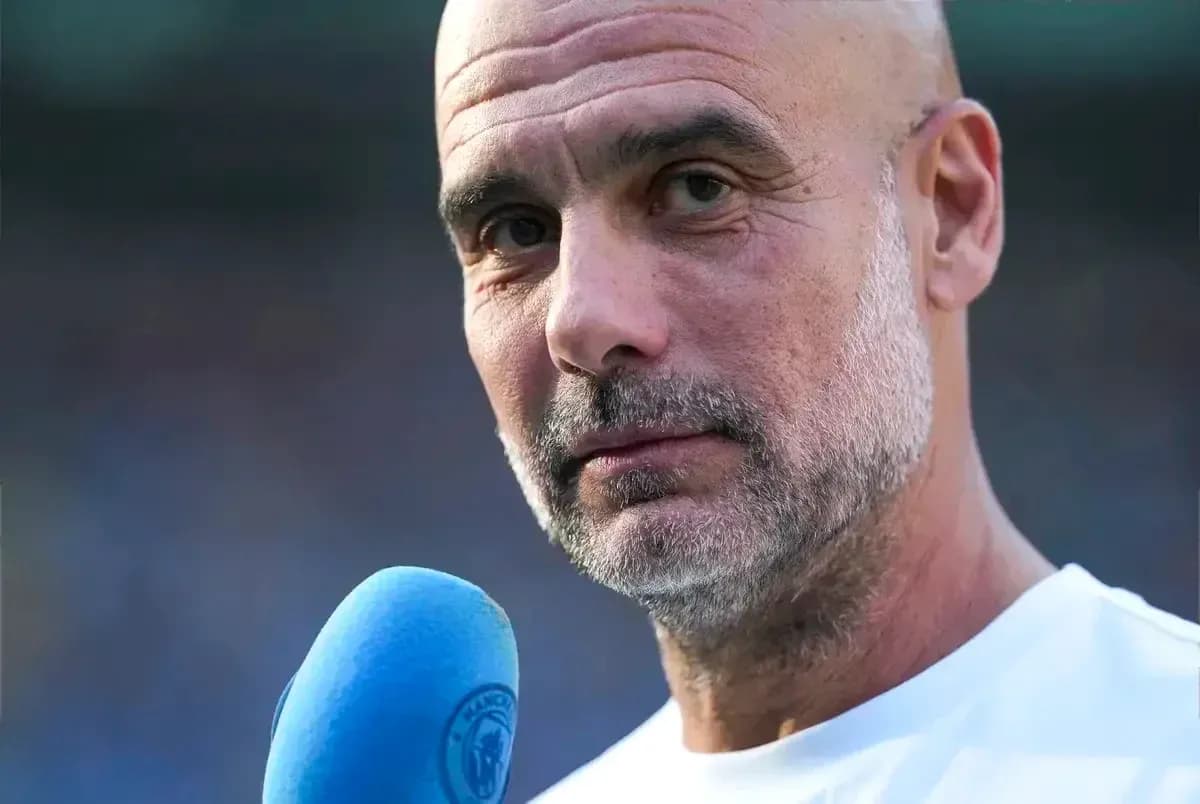
Pep Guardiola has never been one for gentle whispers. When he speaks about how to build a squad, people at Manchester City listen – and right now, his words land like a warning flare over the Etihad.
Fresh from a decade that rewrote the club’s history – four Premier League titles in a row, three FA Cups, a first Champions League – Guardiola has turned his attention to the men now charged with keeping City at the summit: new head coach Enzo Maresca and sporting director Hugo Viana.
And his message is blunt.
The myth of the “young team for years”
In a new interview with OKX, Guardiola laid bare one of modern football’s great illusions – the idea that once a club assembles a talented young group, the future is automatically secure.
“I spoke many times with the Manchester City sporting director(s) (former) Txiki Begiristain and (current) Hugo Viana, and said, ‘Now we have a young team for the next three or four years!’” he recalled.
Then he cut straight through that notion.
“It’s not true. You don’t know why, but it doesn’t work. A lot of players, young players, don’t play and say, ‘I want to leave! I’m here in cold Manchester, not playing, I want to leave!’ And you have to replace those guys.”
That is the reality Maresca and Viana inherit. Not a neat long-term project with a locked-in core, but a moving target: ambitious young footballers who will not sit quietly on the bench while their careers tick away.
Cold Manchester, hot competition
Guardiola’s comments arrive at a delicate moment. Maresca is only just into his first pre-season in charge. Viana is overseeing one of the most extensive rebuilds City have attempted in recent years. Around them, uncertainty.
Several players are already understood to be exploring exits. Others want clarity on roles and minutes before committing to the 2026-27 campaign. The competition for places that powered Guardiola’s era now cuts both ways: it drives standards, but it also drives players out.
This is the tension Guardiola is pointing at. Manchester City offer trophies, elite coaching, and the Champions League. They also offer a brutal selection reality. For a young player, “potential” means very little if it comes with 15 appearances a season and a winter spent watching from the stands.
The result? Agitation. Loan requests. Transfer pushes. Exactly the churn Guardiola is warning Viana to anticipate and control.
Recruitment as a collective test
Guardiola did not single out Viana for criticism. Quite the opposite. He made it clear that getting recruitment right is a club-wide examination.
“The big task is how the club, organisation, sporting director, manager, CEO, hierarchy recruit the right players you need – everyone makes mistakes, but make as few as possible. That’s the key point.”
This is vintage Guardiola: process over comfort, responsibility over excuses. By name-checking Begiristain and Viana, then widening the frame to the CEO, manager and “hierarchy”, he underlined a truth that often gets lost in the noise of deadline day – transfers are never just one person’s call.
And at City, the margin for error is tiny. A bad signing doesn’t just cost money. It blocks a pathway, clogs a position, and feeds the frustration of the next young player in line.
Viana’s first big exam
So what does this look like in practice? Look at City’s summer so far.
The club-record £116 million move for Elliot Anderson from Nottingham Forest is not the act of a club scrambling to plug a hole. It is the opposite: a long-tracked, high-conviction addition aimed at fitting into a very specific footballing model.
Guardiola’s mantra – “make as few mistakes as possible” – hangs over that deal. Anderson is not being brought in to “see what happens”. He is being brought in because City believe he can live at the level Guardiola created and Maresca must now protect.
Around that headline signing, Viana faces the grind Guardiola knows all too well: deciding who goes on loan, who is sold, who is renewed, and who is trusted to fight for a place in a squad where nothing is guaranteed.
Each decision has a ripple effect. Keep one young midfielder, and another may demand to leave. Sell a versatile defender, and suddenly the squad looks thin when injuries hit in February. This is the puzzle Guardiola is effectively laying out for his successors.
Life after Pep: the real challenge
Strip away the trophies and the tributes, and Guardiola’s legacy at City can be measured in something more demanding than a honours list: the standards he has set for every decision the club makes from here.
His warning about restless young players is not theory. It is lived experience from a decade of managing a large, elite group where even Champions League winners could find themselves on the bench for weeks.
Maresca and Viana now operate in that shadow. They must keep City fresh without losing stability, keep young players hungry without leaving them starving for minutes, keep recruitment aggressive without becoming reckless.
Guardiola has given them the rule of thumb. Make as few mistakes as possible.
The question that will define City’s next era is simple: in a market this volatile, with ambition this high and patience this short, how close can they get to that unforgiving standard?