Guenther Steiner Supports Liam Lawson as Future F1 Champion
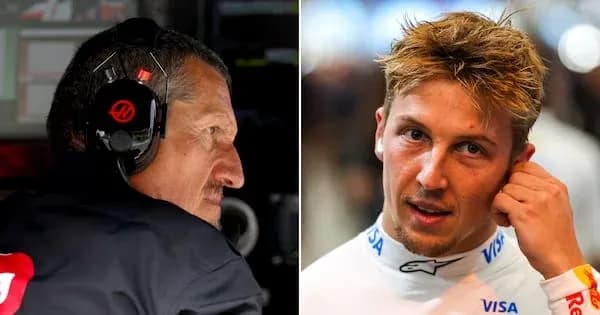
Guenther Steiner has never been one for sugar-coating. So when the former Haas team principal says Liam Lawson can be a Formula 1 world champion, people tend to listen.
The catch? He believes the Kiwi will have to get out of the Red Bull system to do it.
Speaking to More FM in the wake of Lawson’s charge from the back of the grid to ninth on track – and seventh in the final classification – at the Mexico Grand Prix, Steiner was clear: the 24-year-old has the tools. The question is whether the sport will give him the stage.
“I think his promotion back to the Red Bull team from Racing Bulls, I don’t think that will happen,” Steiner said, cutting straight through the usual junior-team optimism.
Racing Bulls have yet to confirm whether Lawson’s contract will run through to 2027, leaving his immediate future in the balance despite a string of performances that have made dropping him a much harder sell.
Steiner, who ran Haas for a decade and knows exactly how unforgiving the midfield can be, expects Racing Bulls to keep him. But he doesn’t see Lawson’s long-term ceiling inside the Red Bull family.
He believes the New Zealander needs to carve his own path.
“In the right car, he can be”
Pressed on whether Lawson truly has world championship potential, Steiner didn’t hesitate.
“I think in the right car, he can be,” he said.
That’s not a throwaway line. Formula 1 is littered with drivers of immense talent who never found themselves in the right machinery at the right time. Steiner knows that, and he framed Lawson squarely in that context.
“There are a lot of them with similar talent to him at the moment in Formula 1,” he added. The margins at the top are razor-thin; the difference is often the logo on the nose of the car, not the name on the overalls.
But Steiner pointed to what Lawson is already doing in a Racing Bulls outfit that sits outside the sport’s elite.
“When you get in the right team at the right place at the right time, he could achieve it. I think he has shown in this moment he can do a very good job with Racing Bulls, who are not in the top four teams.
“He has shown he can do a good job, but now he needs to be in one of the top four teams.”
That is the crux of it. Performances like Mexico – and what followed in Brazil – are not just padding his CV; they are his argument for a front-running seat.
Brazil strengthens the case
If the debate over Lawson’s future needed another data point, Interlagos provided it.
On Saturday in Brazil, Lawson stuck his Racing Bulls car third on the grid. Not in a rain lottery. Not in a chaotic sprint. Straight qualifying, straight speed.
When the lights went out, he made it count. Lawson launched better than Lando Norris, jumped the McLaren, and slotted into second, hunting down world champion Kimi Antonelli in the opening laps. For a few corners, a Racing Bulls was the only car between the reigning champion and the rest of the field.
Reality eventually bit as quicker cars found their way through and Lawson slipped back to eighth. But the fight didn’t end there.
A clash with Ferrari’s Charles Leclerc – the Monegasque penalised for hitting Lawson’s wheel while attempting an overtake – lifted the Kiwi back up to seventh in the final result. Another top-10. Another afternoon where he traded blows with Ferraris, McLarens and Mercedes in a car that, on paper, has no right to live in that company.
Afterwards, Lawson sounded like a man intent on enjoying the ride while knowing exactly what it might be worth.
“[I’m] just trying to enjoy driving at the moment, the car is in a great place,” he said. “The fact that we’re fighting the Ferraris, McLarens, and Mercedes at different points in the race today is obviously cool.”
Cool for now. Potentially career-defining later.
A crossroads in the desert and the neon
The immediate road ahead is clear. Lawson will be back in the cockpit on November 20 for first practice at the Las Vegas Grand Prix, a weekend built for spectacle and pressure.
What isn’t clear is what comes after that.
Racing Bulls must decide whether a driver who qualifies on the front two rows and dices with established stars is a long-term pillar or a temporary convenience. Red Bull must decide whether there is any route back to the senior team. And Lawson, as Steiner bluntly suggests, may soon have to decide whether his best chance at a title lies outside the empire that brought him this far.
He has shown he can wring more from a midfield car than most. Now the sport has to answer a simple question: who will give him one of those top four seats Steiner keeps talking about?