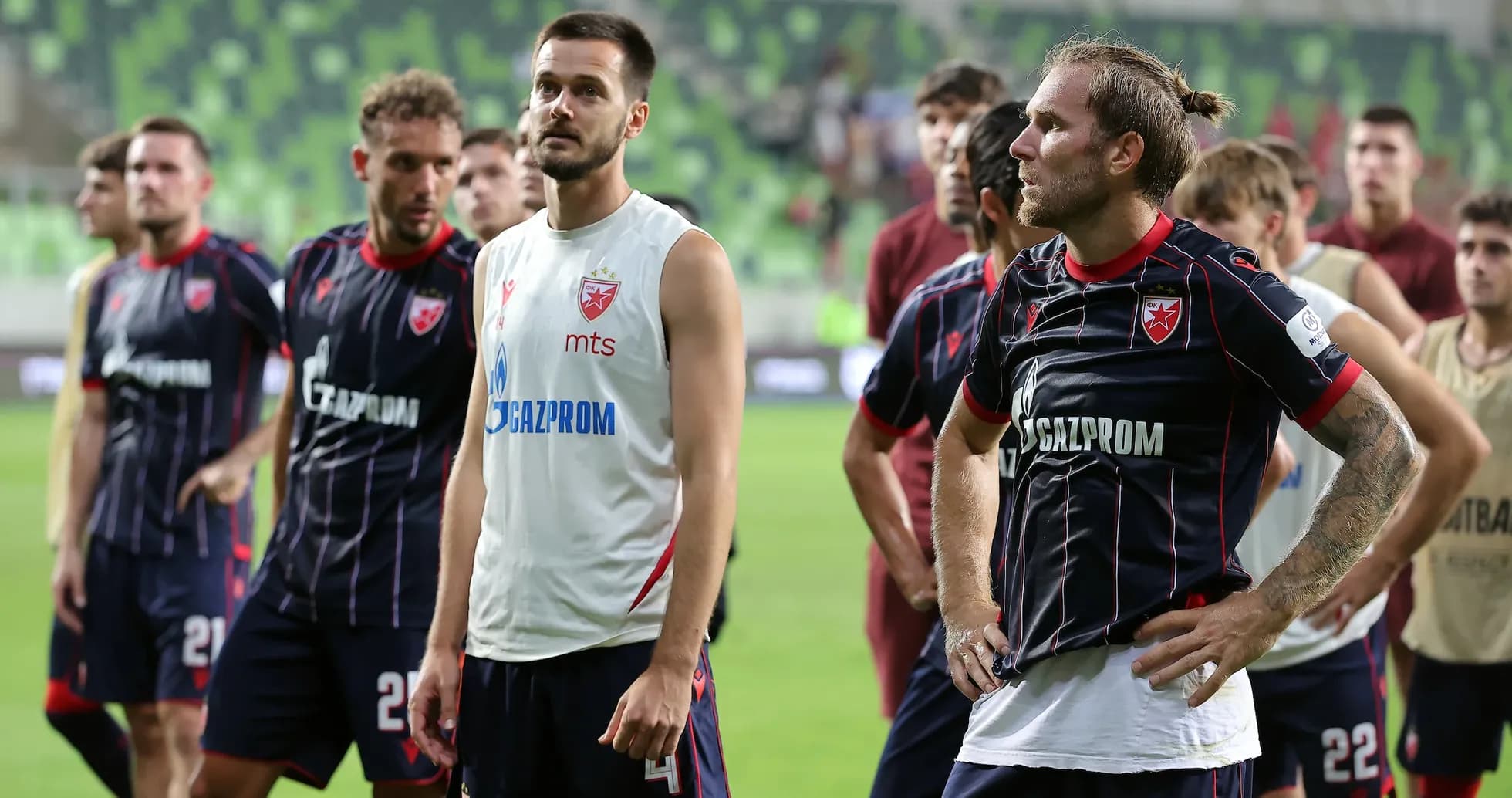
Hapoel Beer Sheva Dominates FK Crvena Zvezda in Champions League Clash
FK Crvena Zvezda’s 0-2 home defeat to Hapoel Beer Sheva at Stadium Rajko Mitić in the UEFA Champions League 3rd Qualifying Round was defined by an extreme territorial imbalance and a structural collapse once reduced in numbers. With Hapoel Beer Sheva enjoying 96% of the ball against just 4% for the hosts, the match became a prolonged defensive exercise for Dejan Stankovic’s 4-2-3-1, while Ran Kozuch’s 4-3-3 controlled rhythm, spacing and pressing triggers almost without interruption. The visitors translated that dominance into a clear shots advantage (6 shots on goal to 2) and forced two red cards that broke any remaining resistance.
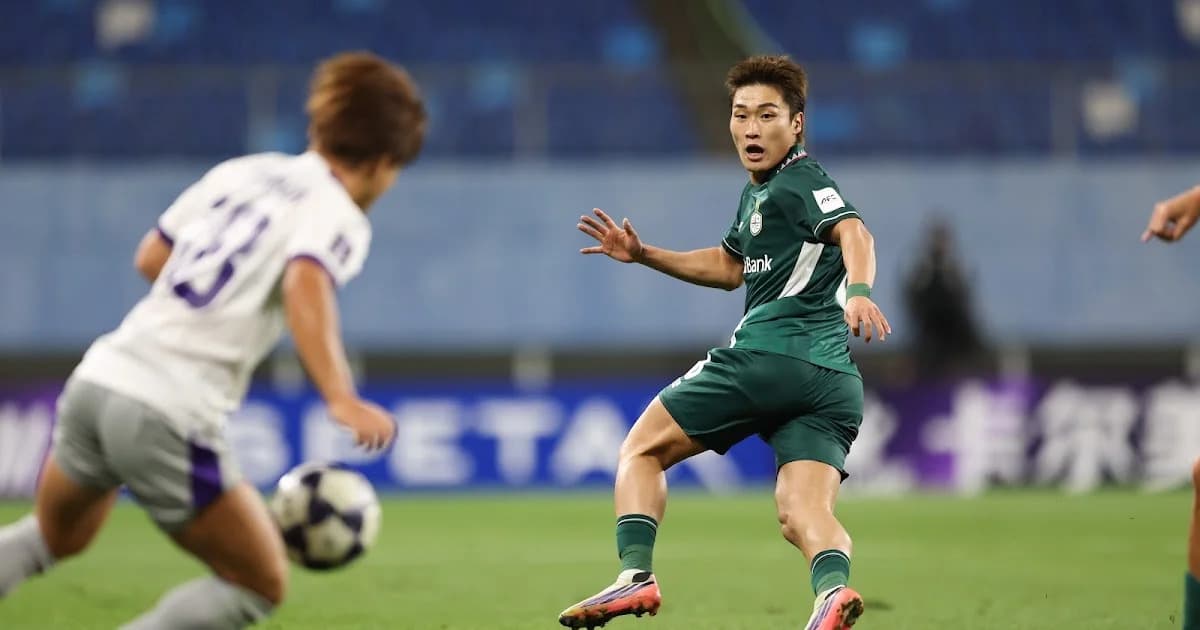
FK Crvena Zvezda started in a nominal 4-2-3-1 with Matheus in goal, a back four of Seol Young-Woo, D. Luckassen, S. Erakovic and N. Tiknizyan, a double pivot of T. Elsnik and R. Krunic, and an attacking band of O. Bukari, V. Kostov and Bruno Duarte behind J. Enem. On paper, this structure should have allowed for compactness in the central lane and counter-attacking outlets via Bukari and Enem. In practice, the near-total loss of possession meant the double pivot was constantly pinned deep, with Elsnik and Krunic forced into a flat screen in front of the centre-backs rather than stepping out to press.
The most striking tactical data point is the 4% possession. This suggests that Zvezda either attempted an ultra-low block and direct transitional play and failed to connect passes, or were simply unable to build under Hapoel Beer Sheva’s press. With no passing data available, the foul count (10 fouls to Hapoel’s 5) and the two red cards indicate a side defending for long stretches, often late to duels and increasingly reactive. The 3-2-1 structure ahead of the double pivot never really materialised as an attacking unit; instead, the front players were isolated, with very limited ability to hold the ball and advance the block.
Stankovic’s in-game adjustments underline how much the match tilted away from his plan. At 46', he made a double change: M. Arnautovic (IN) came on for J. Enem (OUT), and M. Abu Fani (IN) came on for T. Elsnik (OUT). Swapping the centre-forward early suggested a search for more physical presence or pressing energy up front, while Abu Fani’s introduction for Elsnik aimed to refresh the pivot and possibly add more ball progression. Later, at 62', M. Ivanic (IN) replaced V. Kostov (OUT), and at 73' M. Cham (IN) replaced O. Bukari (OUT), before A. Katai (IN) came on for N. Tiknizyan (OUT) at 80'. These moves gradually tilted the side toward more attacking profiles (Ivanic and Katai) and fresh legs in the half-spaces, but the lack of possession and the numerical disadvantage made it almost impossible to translate these changes into sustained pressure.
The disciplinary events were tactically decisive. D. Stankovic’s red card at 57' removed a key figure from the technical area, disrupting in-game management and emotional control. Then, at 90+2', M. Abu Fani received a red card for “Roughing”, leaving Zvezda further depleted. Even though the second dismissal came late, it capped a pattern: Zvezda’s attempts to disrupt Hapoel Beer Sheva’s circulation increasingly came through physical interventions rather than coordinated pressing traps.
Despite the defensive posture, Zvezda still produced 2 shots on goal and 2 blocked shots, indicating a few isolated forays and some willingness to shoot early when entering the final third. However, with only 3 corner kicks and no offsides, there is little evidence of sustained pressure or a high defensive line that might have compressed the field. The 0-2 half-time scoreline (0-0 at the break) shows that the low block initially held, but once the first goal arrived, the structure lost coherence.
Hapoel Beer Sheva’s 4-3-3, by contrast, functioned exactly as the statistics suggest: a possession-dominant, territorially aggressive unit. O. Marciano in goal had so little to do that no goalkeeper saves are recorded, underlining how effectively the back four of G. Mizrahi, Miguel Vitor, I. Rotman and P. Amador controlled depth and prevented clear chances. With only 2 fouls conceded by defenders (as inferred from the card data: Rotman’s “Holding” yellow at 22' and Lucas Ventura’s “Roughing” yellow at 63'), the back line and midfield managed to defend largely through positioning rather than last-ditch interventions.
In midfield, the trio of E. Peretz, Lucas Ventura and N. Yehoshua dictated tempo. The 96% possession figure implies constant recycling and short passing chains, likely with Peretz acting as a key distributor. Their ability to keep the ball forced Zvezda’s front four into long defensive runs, sapping energy and making transitions increasingly rare. Offensively, the front three of J. East, I. Zlatanovic and Z. Ahmed provided vertical threat. Zlatanovic’s opening goal at 61', assisted by East, rewarded their occupation of central channels and combination play. East then added the second at 79', assisted by Peretz, a sequence that reflects midfield dominance translating into high-quality final-third actions.
Kozuch’s substitutions were methodical and game-state driven. At 66', H. Kanaan (IN) came on for G. Mizrahi (OUT), and M. Abu Rumi (IN) replaced N. Yehoshua (OUT), refreshing both full-back and midfield legs to maintain intensity on the flanks and in central circulation. At 76', D. T. Diop (IN) replaced Zlatanovic (OUT), adding fresh energy up front to press and attack space against a tiring and numerically reduced Zvezda. In added time at 90+2', O. Davidzada (IN) came on for P. Amador (OUT) and A. Ohana (IN) for J. East (OUT), consolidating control and running down the clock with fresh wide players rather than risking fatigue-induced errors.
Statistically, Hapoel Beer Sheva’s 6 shots on goal to Zvezda’s 2 align with the territorial picture and the 2-0 scoreline. The blocked shots numbers (2 for Zvezda, 1 for Hapoel) suggest that while both defences managed occasional last-line interventions, the visitors were far better at preventing attacks from developing in the first place, whereas Zvezda were often forced to block from within their own box after prolonged pressure.
The foul balance (10 committed by Zvezda, 5 by Hapoel) and card distribution (Hapoel: 2 yellow; Zvezda: 2 red) complete the tactical story: a match in which one side controlled space and tempo so thoroughly that they could defend minimally and cleanly, while the other, starved of the ball and chasing shadows, slid into increasingly desperate and ultimately costly challenges. In the context of a two-legged Champions League 3rd Qualifying Round tie, this performance leaves FK Crvena Zvezda with significant tactical and psychological adjustments to make for the return fixture, while Hapoel Beer Sheva will feel their possession-first 4-3-3 has been fully vindicated.