Hellas Verona and Lecce Stalemate in Serie A Clash
Hellas Verona 0–0 Lecce at the Stadio Marcantonio Bentegodi leaves both sides stuck in their respective battles: Verona’s survival hopes are hanging by a thread as they remain deep in the relegation zone, while Lecce fail to put real daylight between themselves and the bottom three despite edging the balance of play.
Verona’s evening began nervously, and the first flashpoint came on 12 minutes when Lecce midfielder Lassana Coulibaly was booked for tripping, an early sign of the visitors’ willingness to disrupt Verona’s rhythm. The first half unfolded as a scrappy, stop-start contest with few clear chances, reflected later in the low xG for both sides.
The game’s pattern shifted after the interval. On 51 minutes, Hellas Verona made the first change of the night as Nicolás Valentini replaced Armel Bella-Kotchap, a like-for-like swap aimed at refreshing the back line. A minute later, Verona’s midfield balance was compromised when Jean Daniel Akpa-Akpro was shown a yellow card for roughing on 52 minutes, forcing him to tread carefully in duels.
Lecce responded with a double substitution on the hour to inject energy and attacking threat: at 60 minutes Oumar Ngom replaced Omri Gandelman, and moments later Walid Cheddira came on for Nikola Štulić. Verona countered two minutes later, on 62 minutes, when Sandi Lovrić replaced Tomáš Suslov in the advanced midfield role, followed swiftly by another attacking tweak on 63 minutes as Amin Sarr came on for the already-booked Akpa-Akpro, signalling Verona’s intent to chase a decisive moment despite the risk of losing midfield control.
The game grew increasingly combative. Ylber Ramadani went into the book for a foul on 67 minutes as Lecce’s midfield aggression continued. With 80 minutes played, Lecce made a third attacking adjustment, Konan N’Dri replacing Lameck Banda on the flank to add fresh pace in transition. Verona’s earlier substitute Valentini then collected a yellow card on 82 minutes, underlining the tension in a match where both sides sensed that a single goal could decide it.
Cheddira, already introduced as a central striker, was himself booked for a foul on 86 minutes, encapsulating Lecce’s physical approach in the final stages. Verona responded with a late double substitution at 87 minutes to chase the win: Pol Lirola replaced Rafik Belghali on the right, and Ioan Vermesan came on for Antoine Bernede, adding fresh legs out wide and in the attacking band.
In the 90th minute, Lecce made their fourth change, with Francesco Camarda replacing Santiago Pierotti to provide a late attacking spark. Stoppage time brought yet more disciplinary action: Konan N’Dri was booked for a foul at 90+3 minutes, as the visitors continued to commit tactical fouls to break up Verona’s counters.
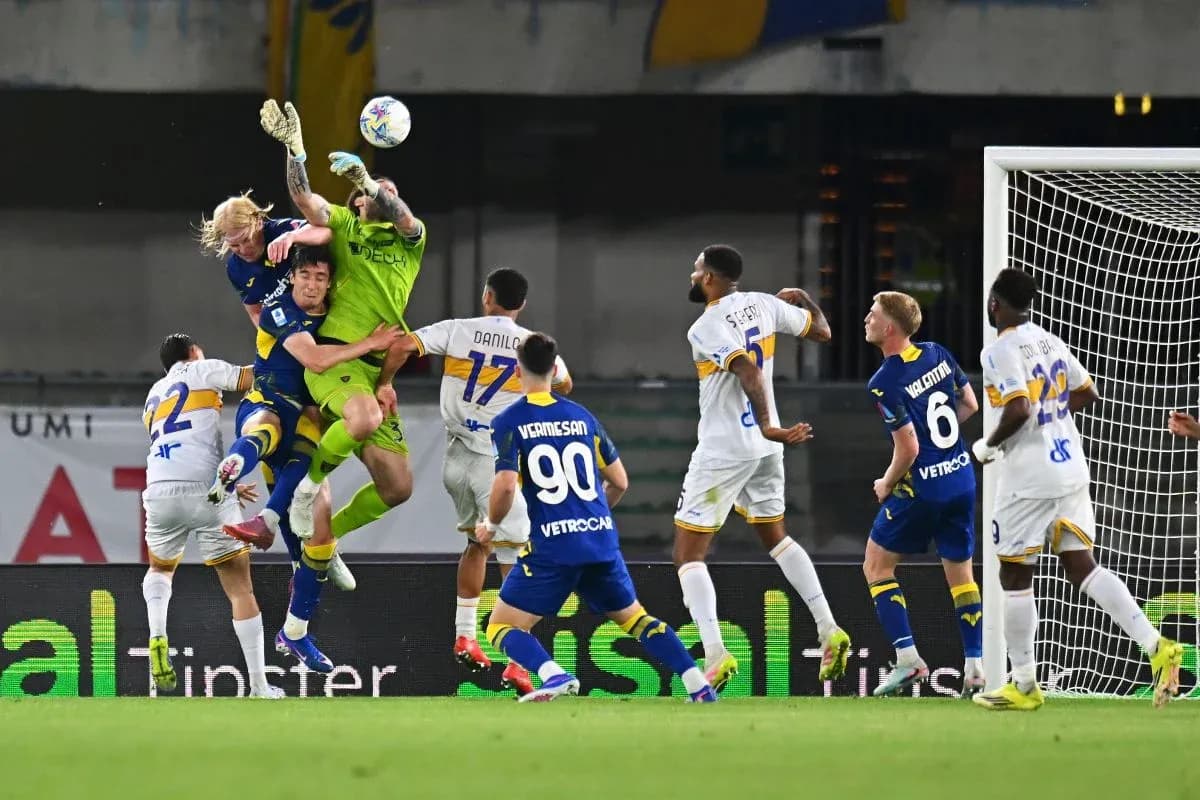
The game’s most dramatic moment arrived at 90+4 minutes when Andrias Edmundsson thought he had snatched a stoppage-time winner for Hellas Verona, only for VAR to intervene and rule the goal out for a foul in the buildup. The disallowed goal preserved the stalemate and summed up Verona’s frustration. There was still time for another yellow card at 90+7 minutes, as Danilo Veiga was booked for tripping, closing a match defined more by fouls and interruptions than by attacking fluency.
Fixture Statistics & Tactical Audit
- xG (Expected Goals): Hellas Verona 0.32 vs Lecce 0.64
- Possession: Hellas Verona 46% vs Lecce 54%
- Shots on Target: Hellas Verona 3 vs Lecce 2
- Goalkeeper Saves: Hellas Verona 2 vs Lecce 3
- Blocked Shots: Hellas Verona 2 vs Lecce 5
The numbers underline a cagey contest where neither side truly imposed themselves in the final third. Lecce had more of the ball and territory (54% possession, 12 total shots) but generated only a modest xG of 0.64, suggesting that Verona’s defensive structure in their back three largely limited the visitors to low-quality efforts (Lecce 2 shots on target, 5 blocked). Verona, for their part, created even less (0.32 xG, 6 total shots, 3 on target), relying on sporadic transitions rather than sustained pressure. The near miss with Edmundsson’s disallowed goal was the exception rather than the rule. Overall, the goalless scoreline is a fair reflection of a match in which both attacks lacked incision and clear-cut chances were at a premium (combined xG 0.96).
Standings Update & Seasonal Impact
For Hellas Verona, the point marginally improves their situation but does little to alter the bigger picture. They came into the game with 19 points, 23 goals scored and 56 conceded (goal difference -33). The 0–0 draw moves them to 20 points, still with 23 goals for and now 56 against, keeping their goal difference at -33. They remain 19th in Serie A and firmly in the relegation zone, with time and fixtures running out to overturn the deficit to safety.
Lecce arrived on 29 points, with 22 goals scored and 46 conceded (goal difference -24). This draw lifts them to 30 points, still on 22 goals for and 46 against, maintaining a goal difference of -24. They stay 17th and, while they edge slightly further away from immediate danger, they have not created a decisive gap to the teams below them. The lack of attacking threat in a game against a struggling Verona side will concern Eusebio Di Francesco as the relegation battle tightens in the final weeks.
Lineups & Personnel
Hellas Verona Actual XI
- GK: Lorenzo Montipo
- DF: Victor Nelsson, Armel Bella-Kotchap, Andrias Edmundsson
- MF: Rafik Belghali, Jean Daniel Akpa-Akpro, Roberto Gagliardini, Antoine Bernede, Martin Frese
- FW: Tomáš Suslov, Kieron Bowie
Lecce Actual XI
- GK: Wladimiro Falcone
- DF: Danilo Veiga, Jamil Siebert, Gaby Jean, Antonino Gallo
- MF: Ylber Ramadani, Lassana Coulibaly, Santiago Pierotti, Omri Gandelman, Lameck Banda
- FW: Nikola Štulić
Expert's Post-Match Verdict
This was a match defined by defensive organisation rather than attacking quality. Verona’s 3-5-1-1 gave them a solid central block, and despite their perilous league position they managed to restrict Lecce to just 2 shots on target and an xG of 0.64, indicating disciplined defending and effective shot suppression (Lecce 12 shots, 5 blocked). However, Verona’s own attacking play remained blunt, with only 0.32 xG and 6 total attempts, underlining a lack of creativity and penetration in the final third.
Lecce’s 4-2-3-1 offered more possession and territorial control (54% possession, higher pass completion at 73%), but the visitors struggled to convert that into high-quality chances. Their reliance on physical duels and repeated fouls, reflected in five yellow cards, disrupted Verona but also fractured their own rhythm. The raft of second-half substitutions from both benches brought energy but not clarity; neither coach found the adjustment that could tilt the game decisively. In the end, this was a stalemate born of conservative risk management and limited attacking invention, a result that feels justified by the underlying numbers and leaves both sides with plenty to worry about in the run-in.