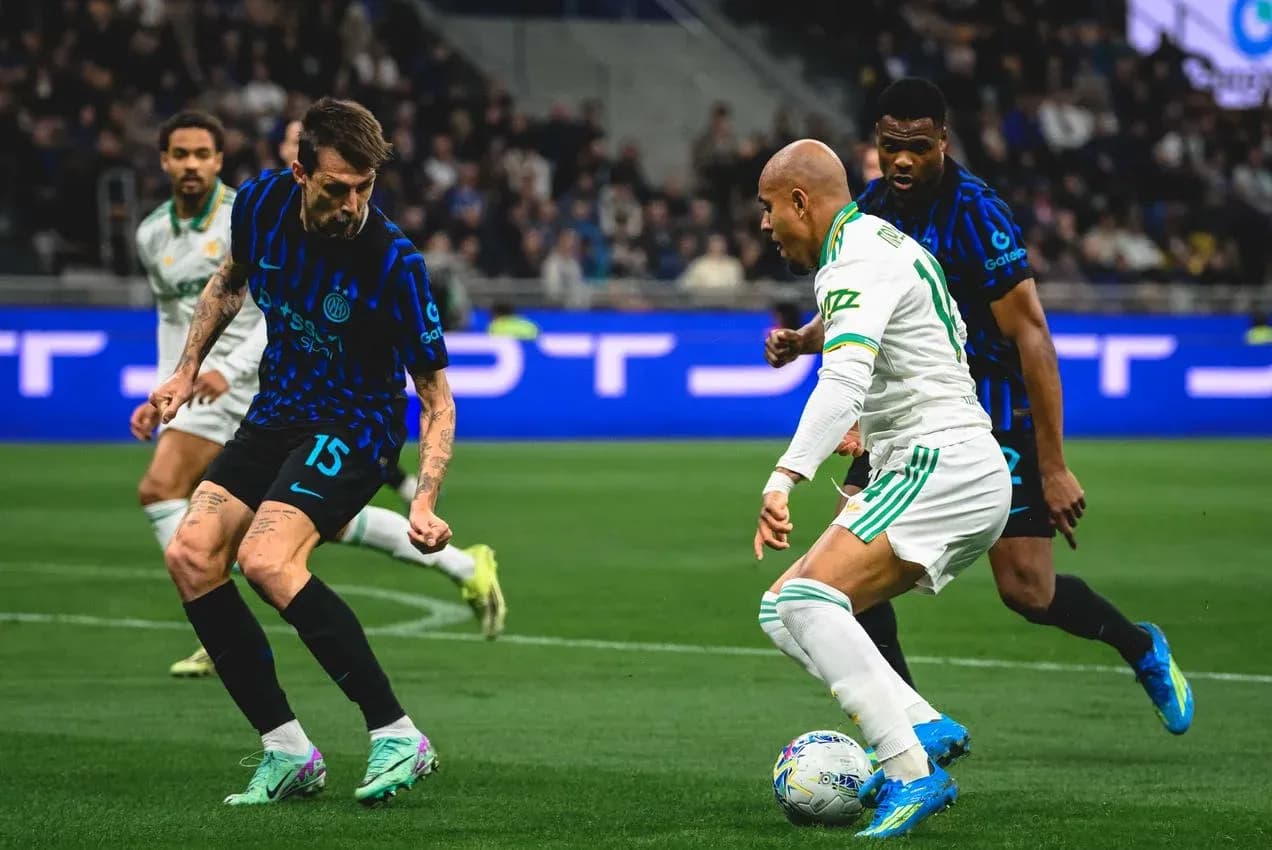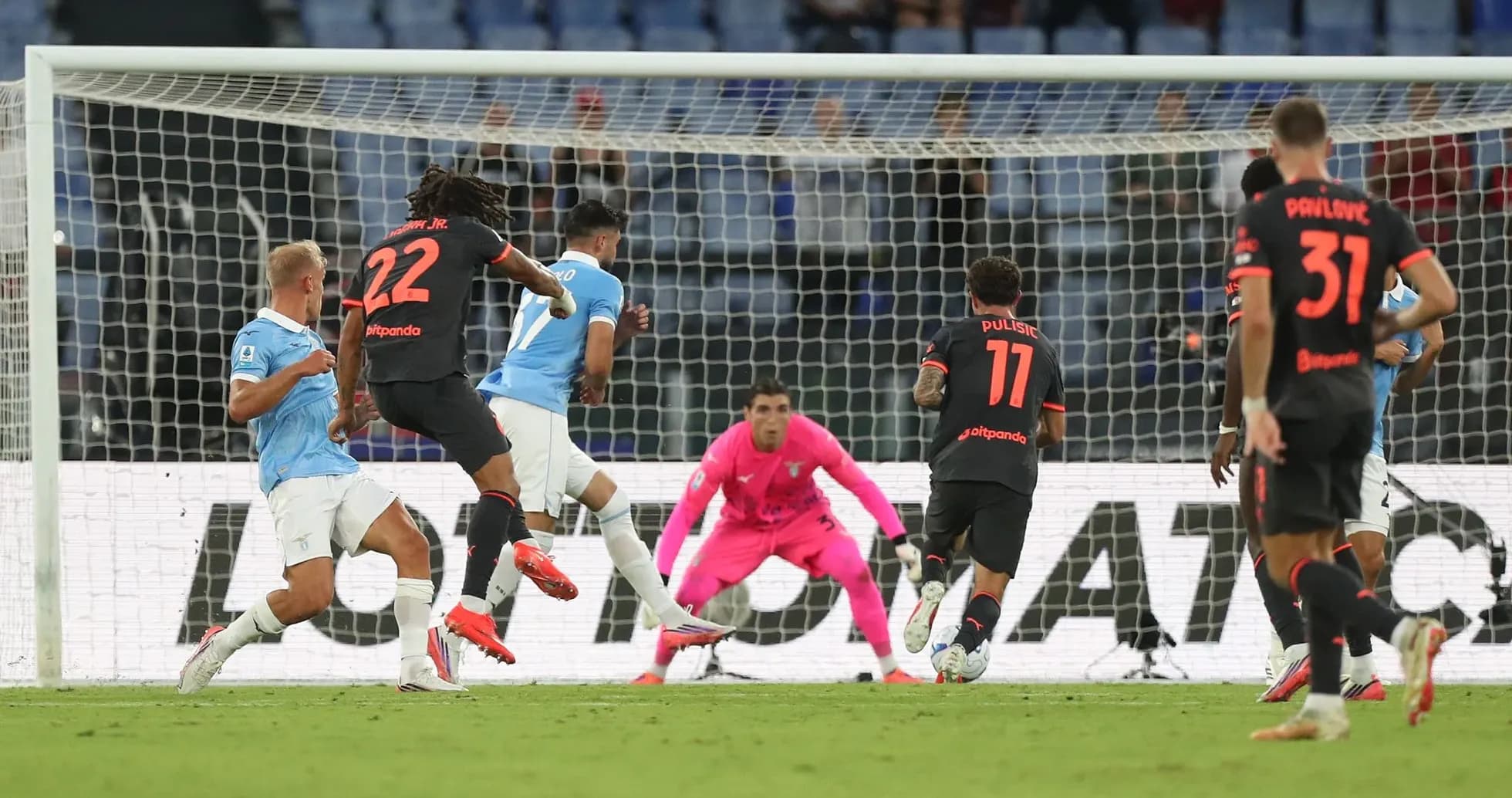
Inter's Dominance Shines in 5–3 Thriller Against Udinese
Under the San Siro lights, this was billed as a statement game for Inter and a character test for Udinese. By full time, the 5–3 scoreline had the feel of a wild Serie A throwback, but beneath the chaos the squads and structures told a clear story about where these teams stand in the early weeks of the season.
I. The Big Picture – Form, Table, and Structural DNA
Following this result, Inter’s perfect start continues: they sit 2nd with 12 points from 4 matches, having won every game. Overall this campaign they have scored 13 goals and conceded 6, giving them a goal difference of +7. At home, the numbers are even more extreme: 12 goals scored and 6 conceded across 3 outings, an average of 4.0 goals for and 2.0 against at San Siro. This is a side built to overwhelm rather than merely edge opponents.
Udinese, by contrast, leave Milano stuck in mid-table turbulence. They are 13th with 4 points from 4 matches, with 8 goals scored and 10 conceded overall, for a goal difference of -2. On their travels, they have been thrilling but fragile: 6 away goals scored and 7 conceded, averaging 3.0 for and 3.5 against. They arrive and depart as one of the league’s purest transition teams—dangerous, but always on the brink.
Both coaches leaned into their seasonal identities. Cristian Chivu once again trusted the 3-5-2 that has underpinned all four of Inter’s lineups so far. Kosta Runjaic mirrored the back three with Udinese’s 3-4-2-1, a shape he has also used in all four matches, but with very different intentions: Inter’s structure is about territorial dominance, Udinese’s about springing forward from compact blocks.
Inter’s back three of J. Martinez behind M. Akanji, J. Stones, and A. Bastoni offered an aggressive starting point, with Carlos Augusto and A. Diouf stretching the width from midfield. N. Barella and H. Mkhitaryan occupied the half-spaces, while P. Zielinski linked midfield and attack. Up front, the pairing of M. Thuram and F. Esposito blended power, movement, and penalty-box instinct.
Udinese’s line of three – J. Abankwah, C. Kabasele, E. Ebosse – sat in front of M. Okoye, with wing-backs M. Vojvoda and H. Kamara tasked with enormous vertical workloads. J. Karlstrom and L. Miller formed the central screen, while U. Gomez and J. Ekkelenkamp floated behind K. Davis as the lone striker.
II. Tactical Voids – Absences and Discipline
Both squads came into this fixture with notable absentees that shaped their benches and potential in-game adjustments.
Inter were without H. Calhanoglu, missing through a muscle injury, and D. Spence, out injured as well. Calhanoglu’s absence removed Inter’s most natural deep-lying controller and set-piece specialist, forcing Chivu to lean more heavily on Barella’s tempo-setting and Zielinski’s distribution from higher zones. It also made the presence of A. Diouf, already one of Serie A’s leading assist providers with 3 so far, even more central to ball progression.
Udinese’s list was longer and more structurally disruptive: J. Arizala (thigh), M. Palma (muscle), J. Piotrowski (heart problems), O. Solet (injury), N. Zaniolo (thigh), and A. Zanoli (knee) all missed out. The absence of Piotrowski, who has already combined 1 goal with 2 yellow cards and 1 red card in just 146 minutes, stripped Runjaic of his most combative midfield enforcer—someone who usually sets the tone both in duels and in disciplinary risk. Without Solet and Zanoli, Udinese also lacked alternative profiles in the back line and at wing-back, narrowing their tactical palette.
Disciplinary trends framed the risk profiles. Inter’s yellow cards this season are spread but spike after half-time: 40.00% of their cautions arrive between 46–60 minutes, with further 20.00% in each of 0–15, 31–45, and 61–75. Udinese’s bookings are more evenly distributed, with 22.22% in both the 16–30 and 31–45 windows and 11.11% in most other ranges up to 91–105. In a match that turned frantic, these patterns hinted at when each side might wobble under pressure.
III. Key Matchups – Hunter vs Shield, Engine Room Battles
The headline duel in attack was between Inter’s front two and Udinese’s creaking away defence. On their travels this season, Udinese concede an average of 3.5 goals per game; Inter at home score 4.0. The arithmetic favoured Chivu’s side, and the pitch bore that out.
F. Esposito, already on 2 goals and 1 assist in the league before this fixture, is emerging as more than just a penalty-box finisher. His 9 shots (5 on target) and 4 key passes overall speak to a forward comfortable linking play and attacking space. Alongside him, M. Thuram arrived with 2 goals, 1 assist, and a 7.57 average rating, combining 9 shots and 4 key passes with 2 successful dribbles from 2 attempts. Against a Udinese back three that has already allowed 10 goals overall and 5 in their heaviest away defeat, their movement across the channels was always likely to drag Kabasele and company into uncomfortable territory.
On the other side, Udinese’s own attacking trident posed questions of an Inter defence that, for all its dominance, still concedes 2.0 goals per home game. J. Ekkelenkamp, with 2 goals, 1 assist and 6 shots (4 on target), is a late-arriving threat between the lines, while H. Kamara’s numbers are quietly elite: 2 goals, 1 assist, 7 shots (5 on target), 106 passes at 80% accuracy, and 12 tackles with 1 blocked shot. Kamara’s duel with Carlos Augusto down Inter’s left was a pure two-way battle—Inter’s wing-back pinning Udinese deep with his runs, Kamara ready to explode into space whenever Udinese broke.
In the engine room, A. Diouf’s creative volume – 13 key passes and 3 assists from 127 passes at 91% accuracy – set him up as the game’s primary orchestrator. His opposite numbers, Karlstrom and Miller, were less about invention and more about survival: screening passing lanes into Thuram and Esposito, and trying to slow Barella’s surges. Without Piotrowski’s bite, Udinese lacked a true destroyer to disrupt Diouf’s rhythm, and Inter’s midfield triangles frequently carved open central channels.
IV. Statistical Prognosis – What the Numbers Say
Even in a match already played, the season’s numbers frame the logic of how a 5–3 can happen between these particular squads.
Inter’s overall attacking average of 3.3 goals per game, combined with Udinese’s overall concession rate of 2.5, almost guarantees a high-scoring pattern when they meet—especially at San Siro, where Inter’s 4.0 goals for collide with Udinese’s 3.5 goals against on their travels. Defensively, Inter’s 1.5 goals conceded per game overall leaves room for a transition-heavy side like Udinese, who score 3.0 away, to land blows of their own.
Neither team has taken a penalty this season, and both have zero penalties missed, so the chaos here was always likely to be generated in open play rather than from the spot. With no clean sheets at home for Inter and none at all for Udinese, the structural expectation was mutual scoring, tilted heavily in favour of the hosts’ superior firepower and depth—reinforced by a bench featuring L. Martinez, Luis Henrique, and A. Bonny as late-game weapons.
In narrative terms, this 5–3 felt less like an anomaly and more like a crystallisation of both teams’ early-season truths: Inter as a relentless, high-octane juggernaut whose 3-5-2 suffocates and then slices opponents apart; Udinese as a brave, undermanned side whose 3-4-2-1 can hurt anyone in transition but remains too porous, especially away, to withstand the league’s elite.