Inter Dominates Lazio 3–0: A Tactical Breakdown
Under the late-afternoon light of the Stadio Olimpico, a meeting between ambition and authority ended with a ruthless verdict. Lazio, clinging to European hopes, were taken apart 3–0 by a relentless Inter side whose season-long dominance at the top of Serie A simply translated into another cold, controlled dismantling.
I. The Big Picture – Power vs. Fragility
Following this result, the table tells a clear story. Inter remain leaders on 85 points after 36 matches, with a towering overall goal difference of 54, built from 85 goals scored and just 31 conceded. On their travels they have been remorseless: 13 away wins from 18, with 36 goals for and 16 against, an away scoring average of 2.0 and an away defensive average of 0.9. Lazio, by contrast, sit 8th on 51 points, their overall goal difference a modest 2 (39 scored, 37 conceded). At home they have been competitive rather than dominant: 7 wins, 6 draws, 5 defeats, with 25 goals scored and 24 conceded, averaging 1.4 goals for and 1.3 against at the Olimpico.
This match, then, pitted a side whose seasonal DNA is built on balance and efficiency against one that lives on fine margins. Inter’s overall scoring rate of 2.4 goals per game and defensive average of 0.9 were always likely to collide violently with a Lazio team whose overall averages of 1.1 for and 1.0 against leave little room for error. Over 90 minutes, those structural truths were laid bare.
II. Tactical Voids – Absences and the Cost of Thin Margins
Lazio arrived shorn of important pieces. The absence of I. Provedel through a shoulder injury handed the gloves to E. Motta, altering the build-up rhythm from the back. Without M. Zaccagni, out with a foot injury, Maurizio Sarri lost one of his most aggressive ball-carriers and a player who normally stretches the left side. D. Cataldi’s groin problem removed a deeper-lying organiser and set-piece option. These were not cosmetic losses; they cut into Lazio’s capacity to manage tempo and territory.
Sarri still trusted his familiar 4-3-3, with E. Motta behind a back four of A. Marusic, Mario Gila, A. Romagnoli and L. Pellegrini. The midfield of T. Basic, N. Rovella and F. Dele-Bashiru was functional but lacked Cataldi’s metronomic passing. Up front, M. Cancellieri and Pedro flanked T. Noslin, a trio more geared towards vertical runs and improvisation than structured combination play.
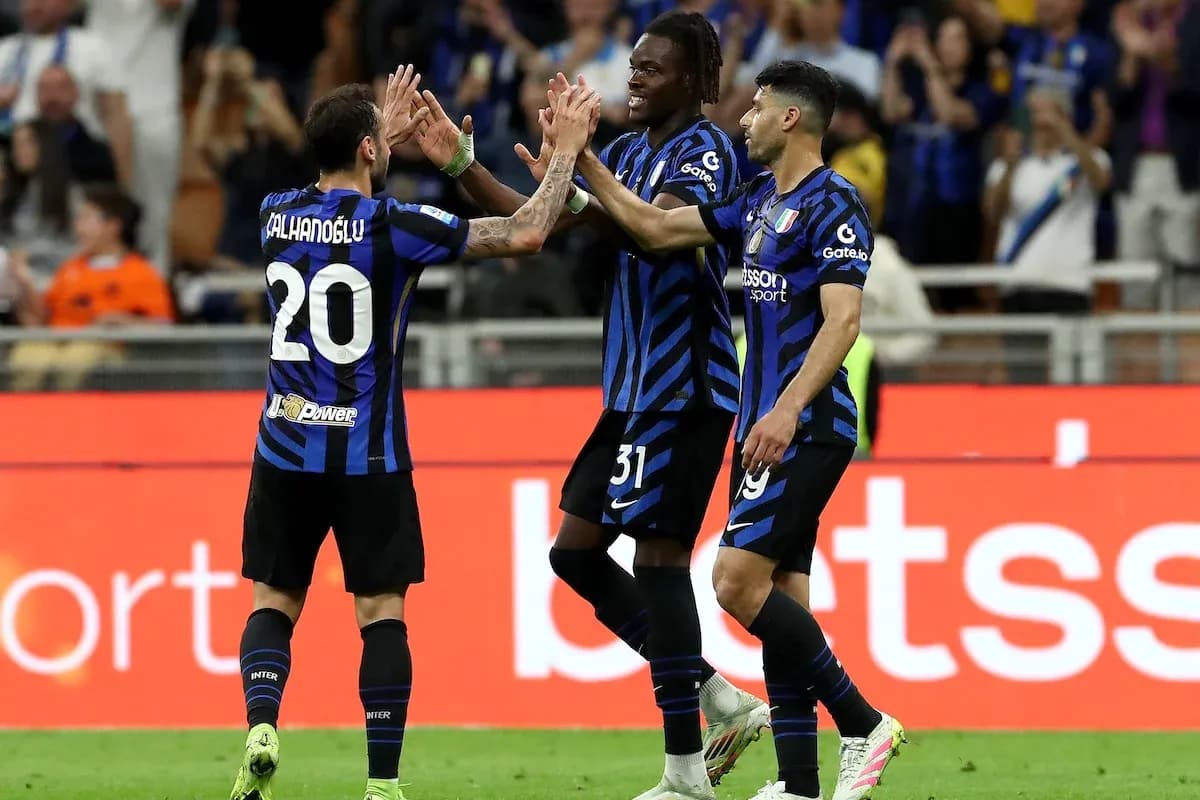
Inter had their own notable absence in H. Çalhanoğlu, sidelined with a calf injury. His nine league goals, four assists and deep-lying orchestration have been central to Inter’s control phases. Yet Cristian Chivu’s 3-5-2 showed the depth of this squad. J. Martinez started in goal, protected by a back three of Y. Bisseck, F. Acerbi and A. Bastoni. Across midfield, Carlos Augusto and A. Diouf worked the flanks, while N. Barella, P. Sucic and H. Mkhitaryan formed a technically rich central trio. Up front, the partnership that has defined Inter’s cutting edge – M. Thuram and Lautaro Martínez – led the line.
Inter’s disciplinary profile this season has been composed: no red cards at all, and a yellow-card pattern that spikes late, with 30.65% of their cautions arriving between 76-90 minutes. Lazio, by contrast, carry a more volatile edge. Their yellow cards peak in the final quarter too, with 27.40% between 76-90 minutes, and their red-card distribution is strikingly back-loaded: 62.50% of reds come in that same 76-90 window. In a match where they were chasing shadows, that propensity for late-game emotional spillover loomed as a hidden risk.
III. Key Matchups – Hunter vs. Shield, Engine vs. Enforcer
The headline duel was always going to be the “Hunter vs. Shield”: Inter’s front two against Lazio’s central defence. Lautaro Martínez arrived as Serie A’s leading scorer in this dataset, with 17 goals and 6 assists from 28 appearances, supported by 66 total shots and 37 on target. His partner M. Thuram added 13 goals and 6 assists from 29 appearances, with 56 shots (29 on target) and an imposing duel presence, winning 129 of 258 duels.
Facing them, Lazio’s central pairing had to be perfect. Mario Gila’s season has been quietly excellent: 29 appearances, 7.26 average rating, 44 tackles, 16 successful blocks and 23 interceptions, winning 127 of 188 duels. Beside him, A. Romagnoli offers leadership and distribution – 1,942 passes at 93% accuracy – but also a disciplinary edge, with 6 yellows and 1 red. The plan was clear: Gila to step out aggressively, Romagnoli to marshal the line and build from deep. Against the league’s most ruthless attack, the margin for error was almost non-existent.
In the “Engine Room” battle, N. Barella’s all-action profile – 8 assists, 52 tackles, 72 key passes – was pitted against a Lazio midfield lacking its usual anchor. N. Rovella, tasked with screening and circulating, had to contend with Barella’s constant pressing, P. Sucic’s vertical running and H. Mkhitaryan’s ability to find half-spaces. Without Cataldi, Lazio’s capacity to slow Inter’s transitions and impose their own rhythm was inevitably diminished.
On the flanks, Lazio’s full-backs faced a double jeopardy. L. Pellegrini and A. Marusic had to contain the wing threat of Carlos Augusto and A. Diouf while also tracking the outward movements of Thuram and Lautaro into the channels. With Inter comfortable in their 3-5-2 – they have used it in all 36 league matches – the automatisms of their wide combinations were always likely to probe the spaces behind Lazio’s advanced wingers.
IV. Statistical Prognosis – Why 3–0 Felt Inevitable
Inter’s season-long metrics framed this as a contest of probabilities more than possibilities. With 27 wins from 36, they have turned control into results better than any side in the league. Their 18 clean sheets overall, including 10 away, underline a defensive structure that travels well. Lazio, for their part, have 15 clean sheets overall but have also failed to score in 16 matches, including 6 at home. That fragility in the final third, combined with Inter’s defensive parsimony, made a home blank entirely plausible.
Offensively, Lazio’s biggest home win this season is 4-0, and their maximum home goals in a single match is 4, but those are spikes rather than norms. With an overall scoring average of 1.1 and an away colossus in front of them, the expectation – in xG terms – was that Lazio would need to be hyper-efficient to stay in the game. Inter, by contrast, could reasonably project something close to their away average of 2.0 goals, especially against a side whose home goals-against average sits at 1.3.
Layer in the absences – Provedel’s command of the box, Zaccagni’s one-v-one threat, Cataldi’s control – and the tactical picture sharpens. Inter’s structure, continuity in formation, and the individual quality of their attacking core meant that any xG model would tilt heavily in their favour. A 3-0 scoreline does not feel like an outlier; it feels like the logical convergence of Inter’s attacking volume and Lazio’s limited margin for error.
Following this result, the squads tell the story of two different trajectories. Inter’s is that of a champion-level machine, fine-tuned and repeatable. Lazio’s is that of a capable side whose structure can hold against most, but whose squad depth and attacking ceiling are exposed when faced with the league’s most complete unit.