Fiorentina vs Genoa: Tactical Analysis of a Goalless Draw
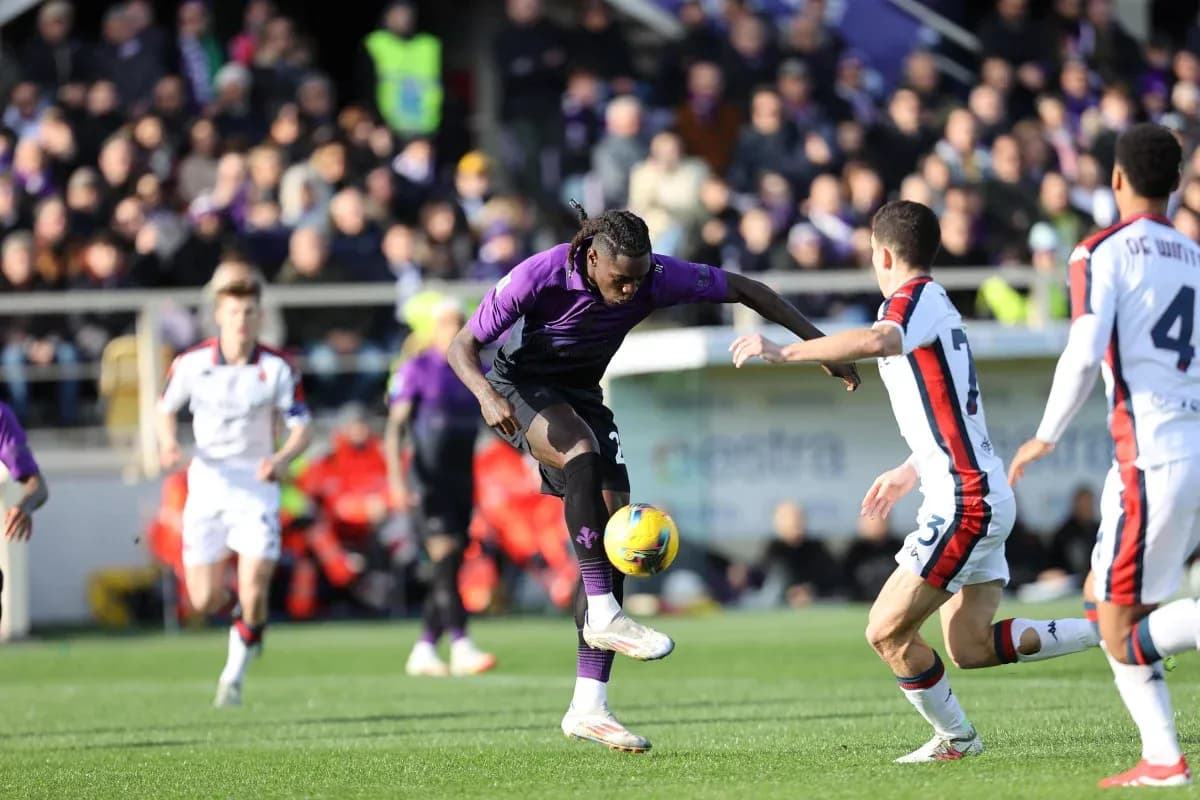
Fiorentina and Genoa shared a goalless draw at Stadio Artemio Franchi, but the underlying structure of the contest was tactically rich. Fiorentina, under Paolo Vanoli in a 4-3-3, controlled territory and possession, while Daniele De Rossi’s Genoa, in a 3-4-2-1, prioritised compactness and vertical threat. The statistical profile – 57% possession and 13 shots for Fiorentina against 43% and 9 shots for Genoa, with xG at 0.97 vs 0.58 – underlines a match where the hosts probed more consistently but failed to convert territorial superiority into clear, repeatable chances.
With no goals or cards recorded, the game’s narrative is driven by structure, spacing, and in-game adjustments rather than set-piece drama or disciplinary swings.
The scoring sequence is, by definition, empty: both sides went into half-time at 0-0 and finished 0-0 after 90 minutes, with no extra time or penalties. The lack of goals is consistent with the underlying expected goals: neither team reached an xG of 1.0, reflecting a match of half-chances and blocked efforts rather than high-value situations in front of goal.
Disciplinary events were non-existent in the data. No yellow cards, red cards, or VAR interventions are recorded for either Fiorentina or Genoa, so there were no momentum shifts driven by bookings, dismissals, or overturned decisions. The referee Luca Massimi oversaw a game that, while containing 13 fouls by Fiorentina and 14 by Genoa, did not reach the threshold for formal sanctions according to the available data. That absence of cards also meant both coaches could keep their defensive lines and midfield screens intact without the risk-management adjustments that typically follow early bookings.
From a tactical standpoint, Fiorentina’s 4-3-3 was built on controlled possession and wide occupation of the final third. With 417 total passes, 353 accurate (85%), Vanoli’s side circulated the ball well enough to pin Genoa back for long spells. The front three of F. Parisi, R. Braschi and M. Solomon were supported by a midfield triangle of R. Mandragora, N. Fagioli and C. Ndour, giving Fiorentina a stable rest-defence behind attacks and multiple passing lanes between the lines.
The shot map implied by the stats – 13 total shots, 9 from inside the box, but only 1 on target and 5 blocked – points to a structural issue in Fiorentina’s chance creation. They were able to reach the box and shoot, but Genoa’s back three plus double screen frequently got bodies in the way. That high number of blocked efforts reflects Genoa’s compact 3-4-2-1, with L. Ostigard anchoring a narrow line in front of J. Bijlow and wing-backs M. E. Ellertsson and A. Martin dropping deep to form a back five when out of possession.
In goal, D. de Gea’s reality was relatively controlled. He made 3 saves, consistent with Genoa’s 3 shots on target and xG of 0.58. The “goals prevented” metric at 0 indicates he was not forced into extreme, xG-defying interventions; Genoa’s chances were present but not of the highest quality. At the other end, Bijlow did not register a single save, which, combined with Fiorentina’s single shot on target, suggests that most of the hosts’ threat was either off target or smothered before testing the keeper.
De Rossi’s Genoa leaned into efficiency rather than volume. With 316 total passes, 255 accurate (81%), they accepted a lower share of the ball but remained clean enough in possession to launch selective attacks. Their 9 shots, 6 inside the box and 3 on target, show that when they did advance, they could reach decent zones, often through quick transitions from the front three of J. Ekhator, Vitinha and L. Colombo, supported by M. Frendrup and Amorim from midfield.
The substitution pattern in the second half subtly reshaped both teams. At 58', C. Ekuban (IN) came on for L. Colombo (OUT), giving Genoa a more mobile, channel-running option to exploit spaces behind Fiorentina’s high line. Fiorentina responded at 61' with R. Piccoli (IN) for R. Braschi (OUT), adding a different reference point up front.
De Rossi doubled down on fresh legs at 71', introducing R. Malinovskyi (IN) for J. Ekhator (OUT) and W. L. Ouedraogo (IN) for A. Martin (OUT). Malinovskyi’s profile as a long-range shooter and set-piece threat aligned with Genoa’s need to generate shots from outside crowded central zones, while Ouedraogo offered energy in the wide defensive lanes. Vanoli countered with M. Brescianini (IN) for R. Mandragora (OUT) at 72' and G. Fabbian (IN) for C. Ndour (OUT) at 73', refreshing the interiors to maintain pressing intensity and late runs into the box.
In the closing stages, Genoa rotated their defensive line and central engine: M. Doucoure (IN) for A. Marcandalli (OUT) and P. Masini (IN) for Amorim (OUT) at 82' preserved the compact 3-4-2-1 but with fresher legs to defend crosses and second balls. Fiorentina’s final attacking tweak came at 86', with A. Gudmundsson (IN) replacing F. Parisi (OUT), a move aimed at injecting creativity and unpredictability into the left side in search of a late breakthrough.
Statistically, Fiorentina’s Overall Form in this match is that of a possession-dominant side that lacked incision: superior ball share, more total shots, more corners (4 vs 3), and slightly better passing accuracy, yet an xG under 1.0 and only one effort on target. Their Defensive Index is solid: allowing just 9 shots and 0.58 xG while keeping Genoa to 3 shots on goal, all handled by De Gea without high-difficulty stops.
Genoa’s Overall Form reflects a disciplined away performance: less of the ball but a respectable 81% passing accuracy, a nearly even foul count, and an attacking output that, while modest, still produced 6 box shots from limited possession. Defensively, their low saves figure is deceptive; the real work was done by the block line, as evidenced by Fiorentina’s 5 blocked shots and the suppressed shot quality.
In synthesis, the 0-0 feels tactically logical. Fiorentina controlled the game’s shape but could not consistently break Genoa’s compact 3-4-2-1 into high-value chances, while Genoa’s transitional threat and structural discipline ensured that, on balance, a draw aligned with both the scoreboard and the underlying numbers.